

Workplace culture is not limited to company values displayed on a wall or occasional employee activities. It is reflected in how people are hired, how leaders respond to problems, how employees treat one another, and ultimately, how customers experience the business.
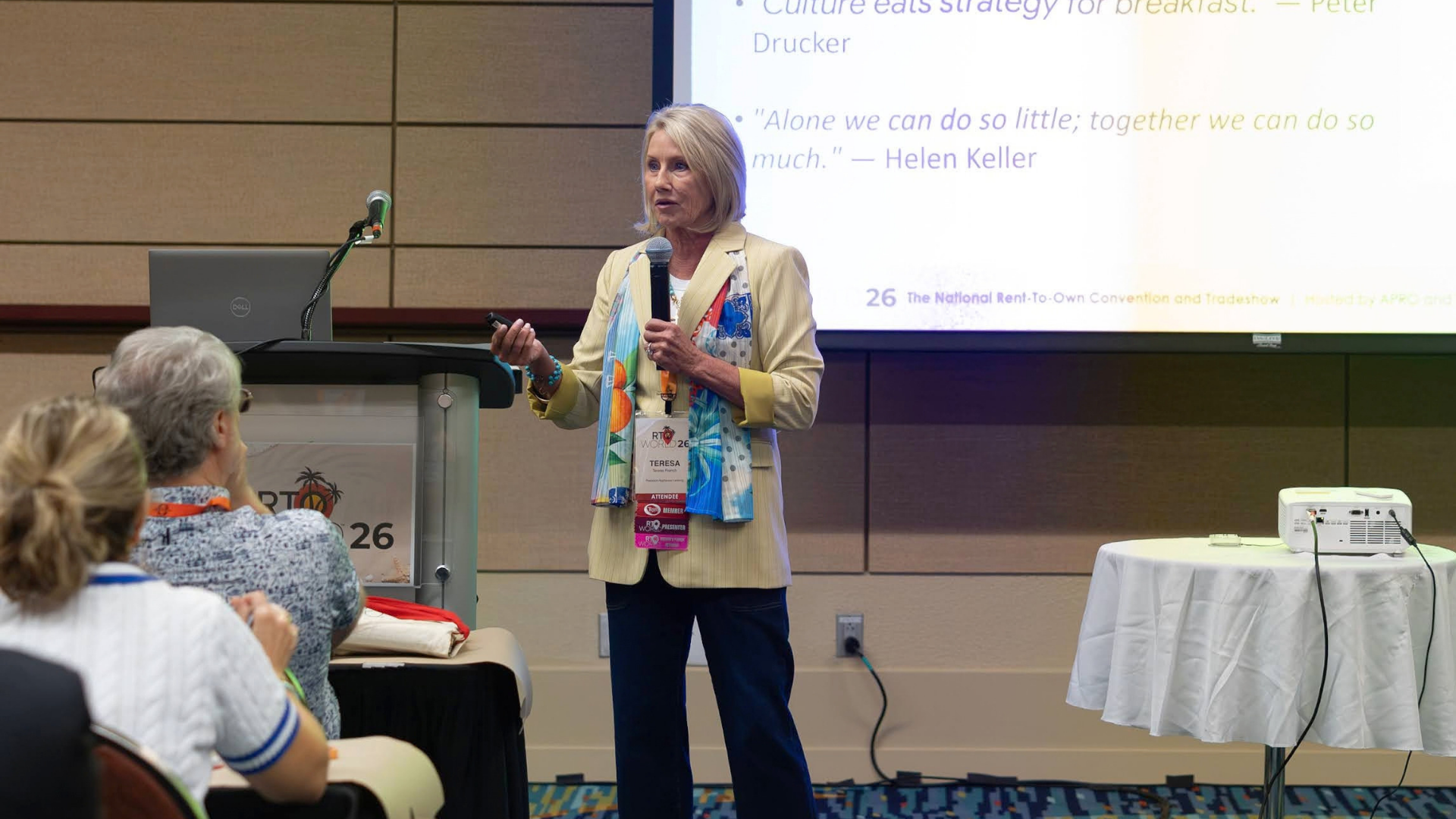
That was the focus of Culture: The Invisible Force Driving Everything, an education session at RTO World 2026 led by Teresa French, CEO of Precision Appliance Leasing. French, who previously led Bestway Rent-to-Own, drew on her experience building teams to explore how leaders can intentionally shape a culture that supports employees, customers, and business performance.
Workplace Culture Leadership Starts With People
For French, culture begins before an employee’s first day. She encouraged leaders to define what their organization stands for and then incorporate those values into the hiring process.
At Precision Appliance Leasing, French said the company looks closely at a candidate’s attitude and whether that person will embrace its established values. She also uses interactive exercises during interviews to give candidates a taste of the company’s culture while assessing qualities that matter for the role. The process works both ways, she noted, because candidates are also deciding whether the organization is right for them.
French cautioned against lowering those standards simply because a business is short-staffed. Hiring someone to fill an immediate opening may solve today’s staffing problem while creating a longer-term culture problem if that person is not a good fit for the team.
She also encouraged leaders to build teams with different strengths rather than surrounding themselves with people who think and work exactly as they do. Different personalities can bring structure, connection, growth, and creativity when those strengths come together around common expectations.
Turn Company Values Into Everyday Behaviors
One of French’s central messages was that culture becomes meaningful through behavior.
“Culture is your values plus your behaviors,” French said.
That means leaders have to do more than define their values. They must consistently demonstrate them, reinforce them with employees, and connect them with how the organization operates.
French described small actions as an important part of that process. She regularly writes personal notes recognizing employees for good work, birthdays, and anniversaries. Her company also holds recurring meetings that include employee recognition and opportunities for team members to connect.
Consistency is critical. French encouraged attendees to identify a manageable number of culture-building practices they can realistically maintain rather than focusing on programs that require significant resources. Whatever leaders choose, she said, employees need to see them follow through repeatedly because that consistency helps build trust.
Listen, Respond, and Close the Loop
Listening to employees was another recurring theme. French used the phrase “close the loop” to describe leaders’ responsibility after employees raise an issue. Rather than simply collecting feedback, leaders should verify concerns, determine what needs attention, and follow through. Even responding to a seemingly small issue can show employees they are being heard.
Her company applies that idea through scheduled “culture calls” with new employees at several points during their first year and annually afterward. The conversations give employees an opportunity to discuss their experience, identify gaps between expectations and reality, and suggest improvements. French said some company ideas have originated from those conversations.
The approach reflects a broader lesson from the session: asking for feedback matters only when leaders are prepared to act on what they learn.
Culture Reaches the Customer
French also connected internal culture directly with customer experience. Employees with clear expectations, the right tools, and confidence that mistakes can be addressed constructively are better positioned to deliver the experience the organization expects.
She shared an example of an employee who damaged equipment shortly after joining the company and feared losing his job. Instead, leadership focused on what the mistake could teach and what additional training might help. The employee remained with the company for years afterward.
For French, leadership ultimately means setting the example. Culture cannot simply be assigned to human resources or delegated to another employee. Leaders establish expectations through what they consistently do, recognize, address, and follow through on.
“The leaders have to go first,” French said. “You’ve got to be intentional. You’ve got to live the values.”
For RTO leaders, that provides a practical place to begin: define the behaviors that represent the culture you want, model them consistently, listen to employees, and follow through on your promises.
APRO members can watch the full Culture: The Invisible Force Driving Everything session replay for more of French’s examples and practical culture-building ideas from RTO World 2026.

