

Leading several rent-to-own (RTO) locations requires more than expanding the responsibilities of a successful store manager. Multi-unit leaders must guide managers across different locations, priorities, and performance levels while giving each leader enough ownership to run their store effectively.
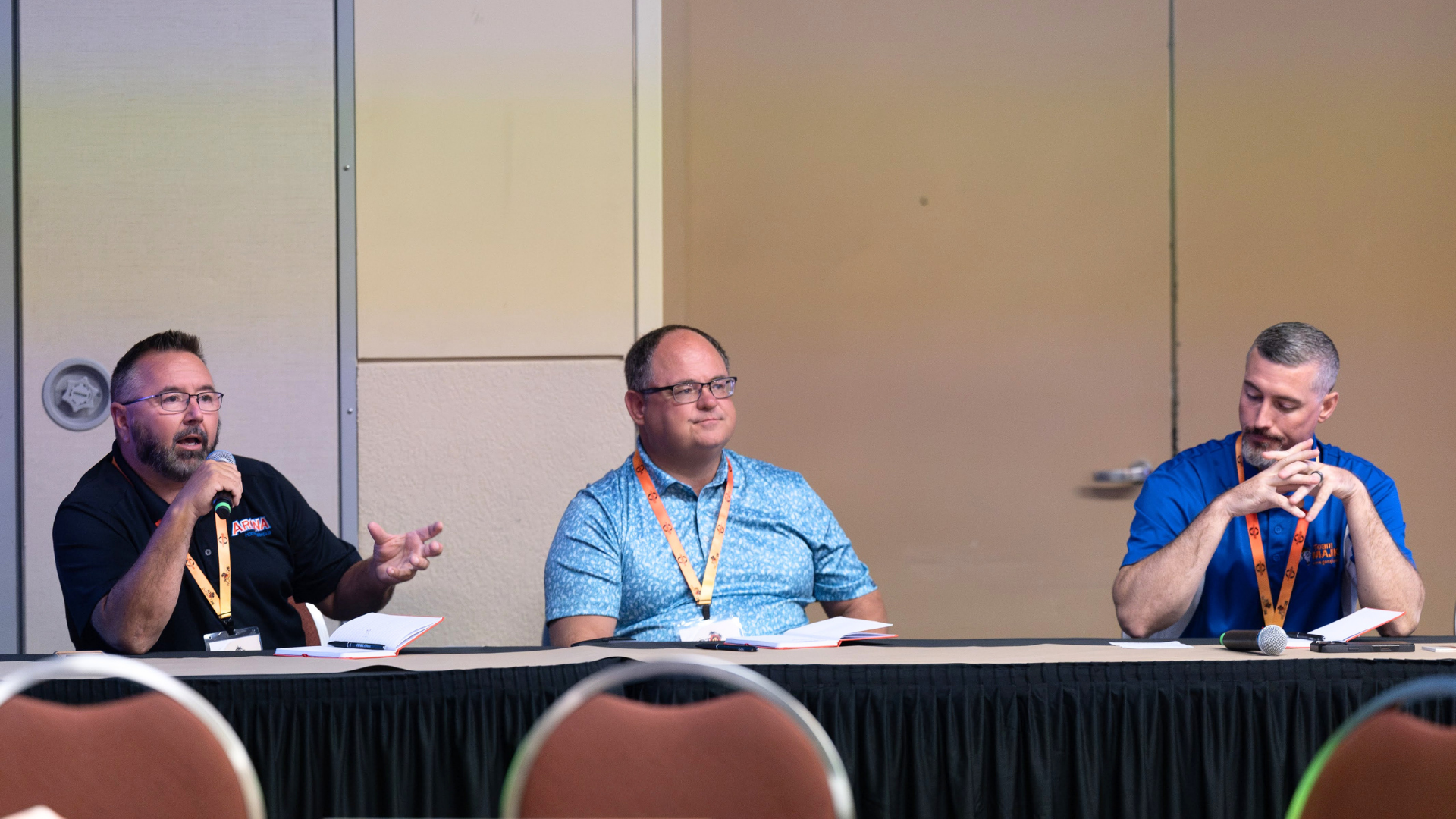
The RTO World 2026 session Power Panel: Mastering Multi-Unit Leadership in Today’s RTO Environment – moderated by Chris Kale Jr., Operating Partner of Happy’s Home Centers Inc. – explored that challenge with John Doroba, Operations Manager of Bolin Rental Purchase; Patric Hartman, District Manager of Blue Ocean Brands, LLC dba Majik Rent-To-Own; and Sean Knupp of Arona Corporation, dba Arona Home Essentials. The panelists shared approaches to communication, store visits, coaching, accountability, and manager development based on their experience overseeing multiple RTO locations.
Multi-Unit RTO Leadership Requires Intentional Communication
Multi-unit leaders need to keep managers informed without creating unnecessary complexity. The panelists use different communication tools and routines, but they agreed on the importance of consistent contact.
Knupp described using separate messaging groups for different teams, along with video meetings that allow employees to see and interact with one another. Doroba described regular conference calls and group texts that help his stores stay connected throughout the week. Hartman also emphasized the usefulness of direct, timely communication.
The specific tool matters less than creating a reliable communication rhythm that helps managers understand current priorities and gives them a way to respond.
Give Every Store Visit a Purpose
Hartman identified intentionality as one of the most important elements of an effective store visit. Instead of arriving and simply observing operations, he prepares by reviewing performance, staffing, and other information that can help identify where the manager needs support.
He also makes time to connect with individual employees and spends dedicated time with the store manager to follow up on previous action plans.
Knupp takes a similarly structured approach. Before a visit, he identifies two areas he wants to address and asks the store manager to choose another area for attention. He also adjusts his coaching to the manager’s experience level. A newer manager may need help developing leadership skills, while an experienced manager may need coaching on how to develop other employees.
That preparation helps turn a store visit into a development opportunity rather than another operational inspection.
Coach Managers Instead of Taking Over
Multi-unit leaders often earned their positions because they knew how to operate successful stores. That experience can also create a temptation to step in and solve problems themselves.
The panelists encouraged a different approach.
Knupp described using self-discovery coaching after employee interactions. Instead of immediately explaining what someone did right or wrong, he asks what went well and what the employee would change if given another opportunity. When employees identify the answer themselves, they take greater ownership of the solution.
The same principle applies to store managers. When managers bring Knupp questions, he often responds by asking what they think they should do. He wants managers to bring potential solutions rather than rely on him to make every decision.
“Present a solution to me and odds are I’m going to say, okay,” Knupp said.
Hartman described learning a similar lesson after moving from store management into multi-unit leadership. Instead of implementing his own methods everywhere, he learned to establish boundaries and teach managers how to handle responsibilities themselves.
“Teach them, right? Don’t do it for them,” Hartman said.
Turn Store Visits Into Accountability
An effective visit should continue producing results after the multi-unit leader leaves.
Hartman recommended limiting follow-up to a few important priorities rather than overwhelming managers with a long list of corrections. Knupp sends a recap after his visits and keeps it available so he can follow up on the agreed plan. Doroba uses his proximity to his stores to return and check progress on items he and the manager identified together.
The panel also acknowledged how easily multi-unit leaders can become distracted during store visits. Calls, messages, emails, and problems at other locations compete for their attention. Knupp said he tries to protect the first part of a visit so the employees in that store receive his full attention.
Ultimately, multi-unit leadership requires leaders to multiply their impact through other managers. Clear communication, purposeful visits, focused follow-up, and coaching that encourages independent decision-making can help store managers build the skills and confidence to lead their own teams.
For multi-unit RTO leaders, the goal is not to become the manager of every store. It is to develop managers who can take ownership, solve problems, and lead effectively when the multi-unit leader is somewhere else.
APRO members can watch the full Power Panel: Mastering Multi-Unit Leadership in Today’s RTO Environment replay for more strategies and examples from RTO World 2026.
About Arona Home Essentials
Arona Home Essentials is a national rent-to-own dealer with more than 50 locations across the United States. The company offers furniture, electronics, appliances, tires, and other home essentials through flexible weekly, biweekly, and monthly rental-payment options. Arona Home Essentials has been an APRO member since 2004.
About Blue Ocean Brands, LLC dba Majik Rent-To-Own
Majik Rent-To-Own is a rent-to-own company operating locations throughout central Pennsylvania. Founded in 1984, Majik Rent-To-Own offers furniture, mattresses, appliances, electronics, computers, and other home essentials through flexible rental-purchase options. Majik Rent-To-Own has been an APRO member since 2002.
About Bolin Rental Purchase
Bolin Rental Purchase is a locally and family-owned rent-to-own company serving communities throughout Middle Tennessee and Western Kentucky. Founded in 2004 in Clarksville, Tennessee, the company offers furniture, appliances, electronics, mattresses, and other home essentials through flexible rental-purchase options. Bolin Rental Purchase has been an APRO member since 2004.
About Happy’s Home Centers
Happy’s Home Centers is a locally owned rent-to-own company serving communities throughout Florida. Founded in 2010 in South Tampa, the company offers furniture, appliances, electronics, mattresses, and other home essentials through flexible rent-to-own payment options. Happy’s Home Centers has been an APRO member since 2010.

