

The skills that make someone a standout employee do not automatically make that person an effective leader. For rent-to-own (RTO) businesses, recognizing that difference can be especially important when deciding how to prepare high performers for greater responsibility.
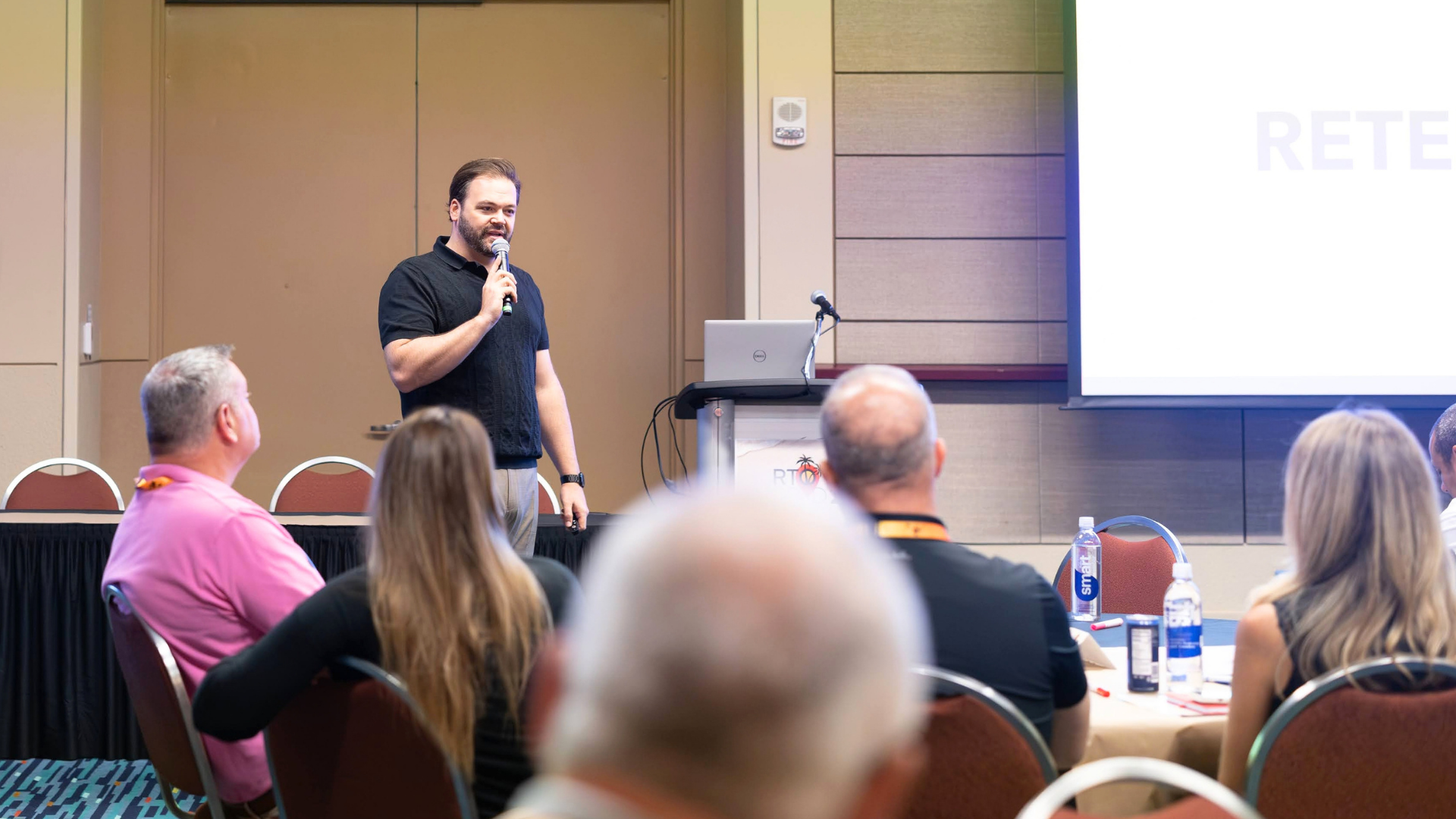
That transition was the focus of From Cleats to Clipboard, an education session at RTO World 2026 led by Will Jackson. Using the analogy of an athlete becoming a coach, Jackson challenged attendees to rethink what happens when a strong individual performer is asked to become responsible for the performance and development of an entire team.
Developing Effective Leaders Requires New Skills
High performers are often promoted because of the qualities that made them successful in their previous roles: work ethic, production, initiative, and the ability to get results. But Jackson argued that leadership requires a different skill set.
“Just because you know how to play doesn’t mean you know how to coach,” Jackson said.
The risk comes when businesses give strong performers greater responsibility without teaching them how to lead. Instead of continuing to demonstrate what they personally can accomplish, new leaders need to learn how to improve the capabilities of the people around them.
Jackson illustrated the distinction by contrasting the priorities of performers and leaders. A high performer may naturally focus on personal results and recognition. A leader, however, needs to focus more attention on relationships, team development, and helping others perform successfully.
“The job is no longer to prove what you can do, but to improve what they can do,” Jackson said.
Give Employees Clarity and Ownership
To help leaders make that transition, Jackson introduced a five-part COACH framework, with each letter representing a leadership responsibility:
C – Clarity on the Vision: Leaders define where the team is going, how it will get there, and consistently communicate that direction so employees understand what they are working toward.
O – Ownership Rights: Leaders give employees opportunities to make decisions and room to make mistakes. Successes can be celebrated, while mistakes become opportunities to discuss what happened, learn, and try again.
A – Authentic Relationship: Leaders build genuine relationships with employees by getting to know them as individuals and taking an interest in what matters to them beyond their job performance.
C – Contagious Energy: Leaders set the tone through their everyday behavior and interactions. How they greet employees, respond to challenges, and approach the workday can influence the experience of the entire team.
H – Hope for the Future: Leaders recognize potential in employees and help them see possibilities they may not yet see in themselves. That includes understanding what employees want to accomplish and helping them connect their work with those goals.
The first two components, clarity and ownership, illustrate an important shift for new leaders. Employees should understand the larger purpose behind their work, but they also need enough responsibility to make decisions and develop their own abilities.
For RTO leaders accustomed to stepping in and solving problems themselves, that can require a deliberate change in mindset. Developing others means resisting the temptation to remain the team’s primary “doer.”
Build Relationships and Set the Tone
Authentic relationships and contagious energy reinforce that shift. Jackson encouraged leaders to learn about employees as individuals, ask questions, and take a genuine interest in what matters to them.
“That’s not built through performance. That’s built through relationship,” Jackson said.
Leaders also set a tone through their everyday interactions, including how they greet employees, respond to challenges, and approach the workday. Jackson’s point was not that leaders must share the same personality or leadership style, but that their behavior helps establish expectations for how the team operates.
Help People See What They Can Become
The final component, hope for the future, extends leadership beyond managing today’s performance. Effective leaders, Jackson argued, help employees recognize capabilities and opportunities they may not yet see in themselves.
That can begin by understanding what employees want to accomplish and helping them connect their current efforts with those goals. Jackson encouraged leaders to see development as part of their responsibility rather than focusing exclusively on immediate production.
Together, the five elements of COACH provide a practical roadmap for the transition Jackson described throughout the session: provide clarity, give people ownership, develop authentic relationships, set the tone through your own energy, and help employees see a future for themselves.
For RTO businesses developing their next generation of managers, that distinction can provide a useful starting point. Promoting a high performer may put the clipboard in someone’s hands, but preparing that person to coach, empower, and develop others is what helps complete the transition.
APRO members can watch the full From Cleats to Clipboard session replay for more of Jackson’s leadership examples and practical guidance from RTO World 2026.

