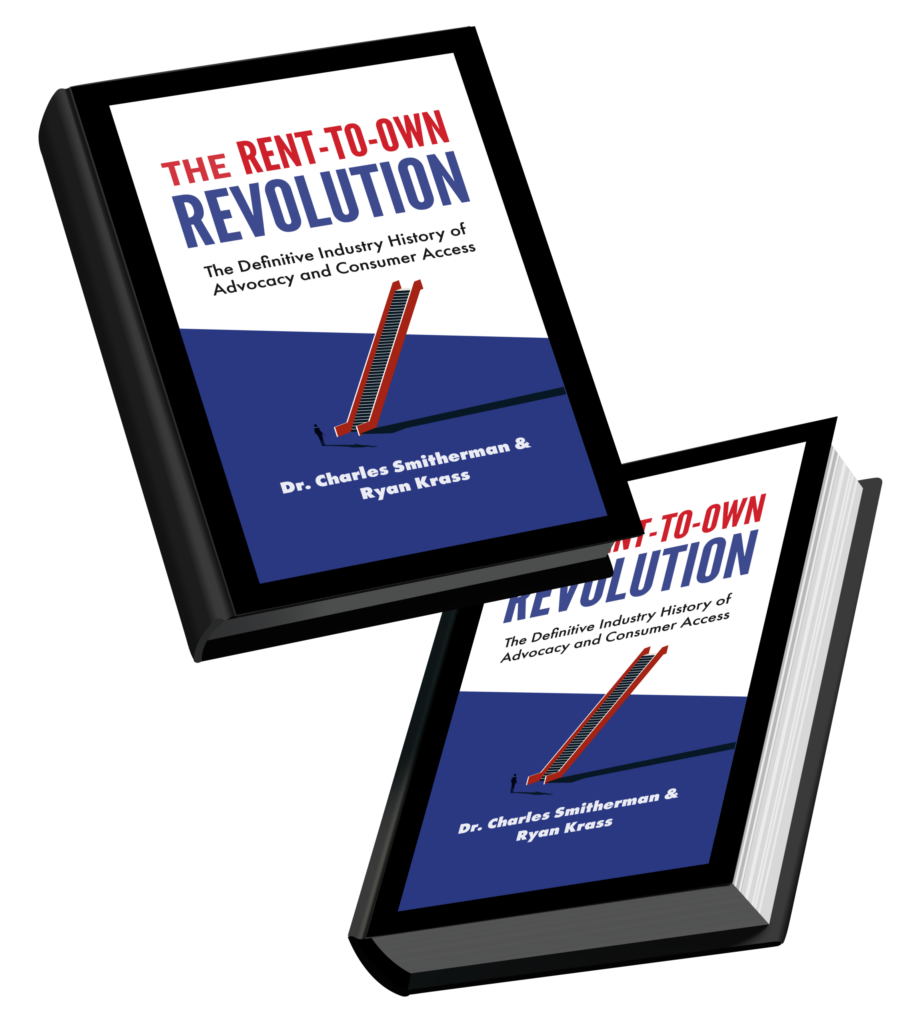
The Rent-to-Own Revolution was published in January 2026; the foreword is reproduced in its entirety below. The complete book may be purchased on Amazon.com.
The word revolution is often misunderstood. It conjures noise and upheaval, but most revolutions that last do not explode; they unfold. They begin in the ordinary, in the daily acts of people who refuse to accept that the world must stay as it is. The story of rent-to-own is that kind of revolution – quiet, persistent, and deeply human.
It took shape not in boardrooms or courtrooms but in living rooms and storefronts, wherever someone needed a refrigerator tonight or a bed for a child tomorrow. Over fifty years, that simple idea has changed how Americans think about ownership, fairness, and dignity.
The title of this book, The Rent-to-Own Revolution, was chosen with care and intentionality. It names a movement that did not start with slogans or protests, but with service. Rent-to-own emerged because millions of families needed a practical way to obtain essential goods when credit would not open its doors. It endured because dealers built trust where credit systems failed. It evolved because those same people believed that legitimacy was not granted by others but earned through integrity and self-regulation.
What began as a fragile experiment became a profession – a model rooted in flexibility, choice, and transparency.
Its victories have never been measured in headlines but in the quiet satisfaction of homes made whole.
Revolutions often begin when old definitions stop fitting reality. In the 1970s, the financial world divided consumers neatly into two categories: those who qualified for credit and those who did not. That boundary – drawn in numbers and ratios – said more about privilege than reliability. Rent-to-own questioned the premise. It offered something radical in its simplicity: access without debt, ownership without obligation, service without stigma. Dealers trusted the person in front of them more than the paperwork behind them. They built an economy of trust one week at a time.
For many years, the idea stood on its own. Then came scrutiny. Reporters called the model “credit in disguise.”
Attorneys general wondered if it skirted lending laws. Some dealers answered individually, others stayed silent, but silence invited definition by others. The same instinct that had created the industry – the belief that people could chart their own path – now had to save it.
That is where the organized history of rent-to-own begins. In the summer of 1980, a few dozen operators gathered in a hotel near Dallas’s Love Field. They were competitors, many meeting for the first time, each worried that one misinformed regulation could erase their livelihoods. Out of those conversations came a name: the Association of Progressive Rental Organizations. The word Progressive captured what they wanted to be – forward-looking, pragmatic, evolving, unwilling to wait for permission to exist. They were not defending a loophole; they were defining a profession.
From the start, they spoke of fairness, disclosure, and dignity. Their first charter asserted the distinction that still anchors the field: a rent-to-own agreement is a lease, not credit. It is governed by property law, not lending law. And it gives the customer choice rather than obligation.
Authors: Dr. Charles Smitherman (R) and Ryan Krass (L).
What happened next was less dramatic than steady, and therefore more impressive. APRO grew into a common voice for a scattered industry. Dealers began to share language, data, and ethics.
They testified in statehouses, published codes of conduct, and created educational programs for both customers and lawmakers. They did not wait to be labeled legitimate; they acted legitimate until the label stuck. Over time, the meaning of Progressive began to change.
What had begun as the courage to move forward became something sturdier – the discipline to uphold standards, to think of service not only as transaction but as trust. Out of that discipline grew something new: professionalism.
Professionalism in rent-to-own was not borrowed from corporate culture; it was built from the ground up. Vendors who once hesitated to sell through the channel – Whirlpool, RCA, Ashley, and others – discovered that RTO customers were dependable and that the stores serving them were pillars of their communities.
The partnership worked both ways. Dealers gained access to namebrand products that gave their customers confidence, and manufacturers gained a loyal market that valued service and durability. What had been a niche became a network.
Independents, once isolated, began to see cooperation as strength. Buying groups like TRIB Group and Nationwide’s RentDirect pooled purchasing power so that small operators could compete with national chains. “Power in Numbers” became more than a slogan; it was proof that independence did not mean isolation.
Across these partnerships, a quiet professionalism took root. Service technicians became educators in care and maintenance. Store managers became community advocates. Vendors became co-ambassadors of trust. The industry that once fought to exist learned to lead. Every era, though, brings its own kind of test. The early battles were fought in legislatures and newspapers. The next will be fought in search results and digital archives. Information – and misinformation – now shapes reputation faster than any law. In a world where artificial intelligence can summarize an industry in a single paragraph, accuracy has become a form of advocacy. The same principle that guided APRO’s founders still applies: define yourself before someone else does.
The task ahead is not only to operate well but to tell the story well, so that what the world finds when it looks up “rent-to-own” reflects the truth that the people who built it know.
That truth has always been personal. Ed Winn, drafting model laws on hotel stationery in the 1980s. Bud Holladay warning that silence would let others write the ending. Bill Keese turning a one-person office into a national association. Dennis Shields gathering independents into a buying group built on friendship as much as finance. Lyn Leach persuading an RCA distributor to take a chance on a young dealer in Omaha. Gary Ferriman reminding everyone that service, not size, is what keeps customers coming back. Their stories form the living backbone of this book, and they show what kind of revolution this has been – not ideological, but human.
The same instinct still moves the industry today. Dealers continue to meet customers where they are. Vendors still design for durability because they know products may serve three families instead of one. Associations keep fighting for fairness and clarity in the law. The details change – new technology, new tools, new ways to reach the customer – but the principles hold. Flexibility. Transparency. Respect. The revolution endures because its participants have never stopped adapting.
Looking back, the name “Progressive” fit the industry’s youth: restless, inventive, eager to prove itself. But after five decades, another word seems to capture its maturity: Professional. Professionalism fulfills the promise of those early years. It signals that rent-to-own no longer needs to ask for recognition; it has earned it. To be professional in this field means more than compliance. It means innovation with integrity, competition with fairness, profit balanced by purpose. It means understanding that every agreement is also a relationship – and that dignity, once given, binds both sides.
The story of rent-to-own, then, is the story of that transformation. From progressive beginnings to professional stewardship. From survival to strength. From being explained by others to explaining itself. The next chapter of the revolution will not depend on a single law or technology but on whether the people who built this industry continue to speak for it – clearly, confidently, and together.
If history is a dialogue between what happened and what matters, this book joins the conversation at exactly the right time. The rent-to-own model remains a case study in American ingenuity: an industry born of everyday need, shaped by regulation and resilience, and defined by a belief that fairness and commerce need not be opposites. The revolution it represents was never about tearing down; it was about building up – families, trust, possibility.
And so, the work continues. The American rent-to-own revolution lives wherever a dealer greets a customer by name, wherever a company renews its code of ethics, wherever service is offered without judgment. It lives in the determination to tell the story truthfully so that no one else will tell it poorly. It lives in the people who keep proving, one delivery at a time, that access and dignity belong together – and always have.
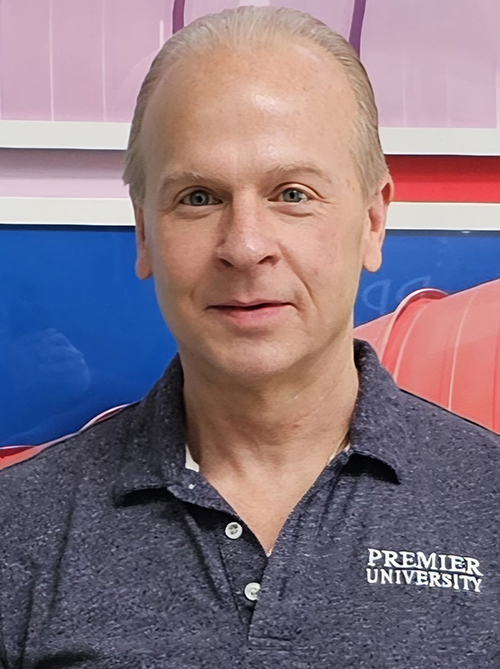
Mike Lewis is a Premier Rental Purchase franchisee with multiple stores and currently serves as Vice President of Operations. With 33 years of experience in the rent-to-own industry, he has spent the past 20 years working closely with franchisee owners and previously spent 12 years in Corporate RTO, gaining a strong foundation in the business.
For the past five years, Mike has been sharing his knowledge by teaching managers and franchisees at the company’s Training Center.
Outside of work, he enjoys time with his family, kids, and grandkids, and appreciates the simple things in life – especially riding his Harley Davidson with the sun on his face. If you know, you know!
Lauren Talicska
Arona Corporation dba Arona Home Essentials
Lauren Talicska is an experienced multi-channel marketing specialist and the Vice President of Marketing & Communications at Arona Home Essentials. She has found her home in the RTO community, supporting stores in branding, growth, and increasing traffic.
You may recognize Lauren as a former RTO vendor, including her time as a partner for Nationwide RentDirect, or her previous participation in the APRO Vendor Advisory Committee. Lauren calls Columbus, Ohio, home and spends her workday crafting and executing marketing promotions from inception to realization, all while supporting the branding and social media needs of all the Arona stores in 12 states (plus Puerto Rico!).
Charles Smitherman
APRO
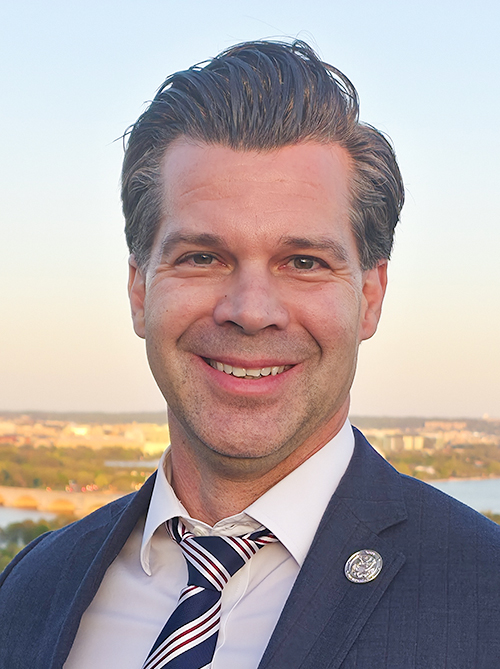
Charles Smitherman, JD, PhD, CAE, became CEO of APRO in 2023, bringing years of legal and executive experience in the rent-to-own industry.
Prior to joining the association, Charles served as COO, General Counsel, and Vice President of PTS Financial Services, where he played an active role in the rent-to-own industry by representing his company through PTS’s club program offering with APRO member dealers. Charles is an attorney with two decades of experience across a wide variety of areas, including RTO, consumer financial services, antitrust, corporate law, mergers and acquisitions, litigation, franchise law, and privacy law. Following law school at the University of Georgia, Charles earned a Master of Legal Studies and PhD in Law from the University of Oxford in England.
Charles is credentialed as a Certified Association Executive (CAE) with the American Society of Association Executives, a Certified Franchise Executive (CFE) with the International Franchise Association, and a Certified Information Privacy Professional (CIPP/US) and Certified Information Privacy Manager (CIPM) through the International Association of Privacy Professionals. As APRO’s sixth CEO in its 45-year history, he brings a collaborative, member-focused approach to association leadership, emphasizing transparency, advocacy, and value creation. Outside of work, Charles is an active ultra runner and open water swimmer.
Mike Kays
Ashley Furniture Industries
As VP of Rental Sales for Ashley Furniture Industries, Mike thrives on building relationships with our RTO industry veterans, and helping businesses grow through new product, new marketing, and new supply chain options.
Mike works to leverage a wide breadth of relationships and influence, intimate knowledge of market trends, and unique knowledge of what RTO dealers need from a supplier to be successful.
The saying goes that a high tide raises all boats, and our goal is to leverage the world’s largest furniture manufacturer to drive the continued growth of the RTO industry and all the suppliers.
Mike Tissot
Countryside Rentals Inc., dba Rent-2-Own
Mike grew up in the rent-to-own industry under the guidance of his father, former APRO President and RTO legend Darrell Tissot. For nearly 25 years, Mike’s innovative leadership has helped expand the family business to more than 40 stores across Ohio and Kentucky while also shaping the industry as a whole.
He has served as President of the Ohio Rental Dealers Association, an APRO board member and Treasurer, and President and Treasurer of the TRIB Group. His contributions have earned him the APRO President’s Award of Excellence and the title of APRO Rental Dealer of the Year.
Outside of RTO, Mike enjoys time at the lake house or in Orange Beach, Alabama, with his girlfriend, Angela Strong McCool. A passionate Cincinnati Reds fan, he rarely misses a game, whether watching or listening alongside his parents. He also takes every opportunity to visit Arizona, where his daughter is currently attending Arizona State University.