

Hiring decisions can become difficult when a strong first impression, an urgent opening, or a polished résumé substitutes for evidence that a candidate can succeed in the role.
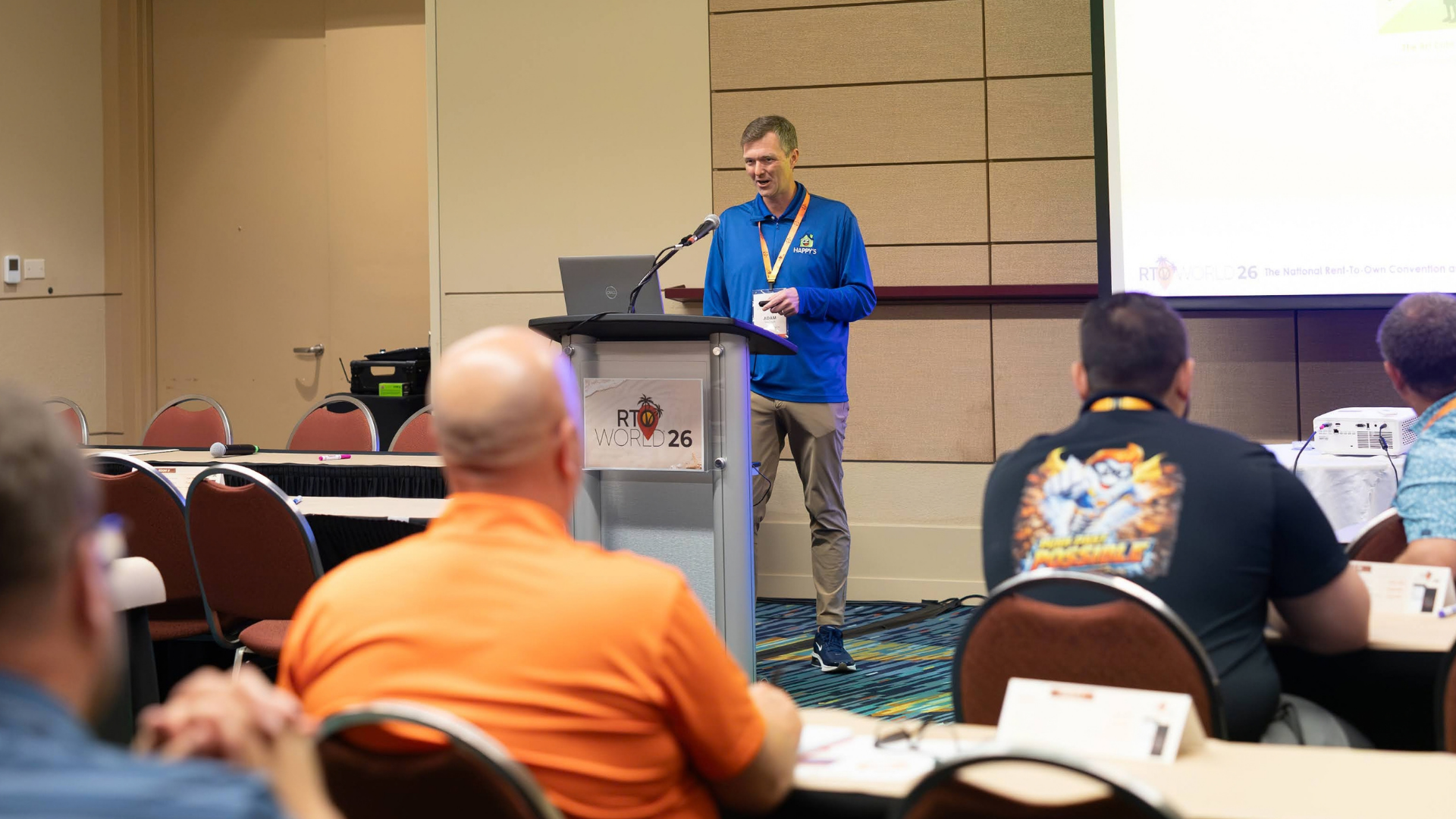
During Stop Guessing, Reduce Hiring Misses, and Hire “A” Players at RTO World 2026, Adam Stark, Director of Operations of Happy’s Home Centers Inc., shared the hiring process he uses to make more consistent decisions. Rather than relying primarily on instinct, Stark encouraged rent-to-own (RTO) leaders to define what they need before an interview begins, then gather evidence that shows whether a candidate matches those expectations.
Build the RTO Hiring Process Around a Scorecard
Stark’s process begins with a scorecard that defines success in the position.
Unlike a job description, which typically outlines what an employee will do, the scorecard focuses on what that person needs to accomplish. Stark builds his scorecards around three questions: What outcomes indicate a job well done? What characteristics fit the company’s culture? What skills does the position require?
Answering those questions before interviewing gives the hiring manager a consistent standard for evaluating candidates.
“Scorecards force us to evaluate, make choices, and be consistent with those choices,” Stark said.
The specific criteria will vary by company and position. The important step is deciding what success looks like before meeting candidates rather than changing expectations based on who walks through the door.
Replace Gut Feelings With Better Questions
Stark described several interviewing habits that had previously led him toward poor hiring decisions. Among them were judging candidates by their résumés or first impressions, involving multiple interviewers without a structured process, spending too much of the interview selling the company, focusing heavily on personality assessments, bonding over shared interests, and asking hypothetical questions that make the desired answer obvious.
His current approach asks candidates to describe what they have actually done.
An initial phone conversation explores career goals, professional strengths, and areas where the candidate struggles. Stark listens for connections between those answers and the outcomes, characteristics, and skills on the scorecard without telling the candidate what answers he wants to hear.
That changes the interviewer’s role. Instead of trying to decide quickly whether someone “feels” right, the interviewer stays curious, takes notes, and asks follow-up questions that reveal patterns in the candidate’s experience.
Look for Patterns of Past Performance
During the in-person interview, Stark works chronologically through the candidate’s employment history. For each position, he asks what the candidate was hired to do, what accomplishments they are most proud of, what low points they experienced, who they worked with, and why they left.
Those questions help him compare what candidates say they accomplished with the responsibilities they actually held. For management candidates, he may also ask them to describe the team they inherited and the team they left behind to better understand their experience developing people.
Stark then uses references, particularly previous supervisors when available, to verify the picture that emerged during the interview. He looks for consistency between the candidate’s description of their strengths, challenges, and accomplishments and what previous supervisors report.
The goal is not to find a candidate with a flawless employment history. It is to collect enough information to make a more informed decision.
Know When to Sell the Opportunity
A structured interview does not mean employers should stop explaining why someone might want to join their organization. Stark recommended changing when that conversation happens.
Early in the process, he concentrates on learning about the candidate. Once he identifies someone who appears to fit the scorecard, he can explain how the organization may align with the career goals the candidate already described.
That sequence keeps the interview focused first on evaluating fit and then on helping a promising candidate evaluate the opportunity.
For RTO leaders, Stark’s approach offers a practical alternative to hiring by instinct. Define success before interviewing, ask questions that uncover past performance, compare the answers against consistent criteria, and verify what you learn. A repeatable RTO hiring process cannot eliminate every hiring miss, but it can give leaders a clearer basis for making each decision.
APRO members can watch the full Stop Guessing, Reduce Hiring Misses, and Hire “A” Players replay for Stark’s complete interview process, scorecard examples, questions, and additional hiring guidance from RTO World 2026.
About Happy’s Home Centers Inc.
Happy’s Home Centers is a locally owned rent-to-own company serving communities throughout Florida. Founded in 2010 in South Tampa, the company offers furniture, appliances, electronics, mattresses, and other home essentials through flexible rent-to-own payment options. Happy’s Home Centers has been an APRO member since 2010.

