


Technology is changing how rent-to-own (RTO) businesses manage contracts, inventory, customer relationships, and daily operations. Artificial intelligence (AI) is creating new opportunities to simplify those processes, but what does that look like in practice?
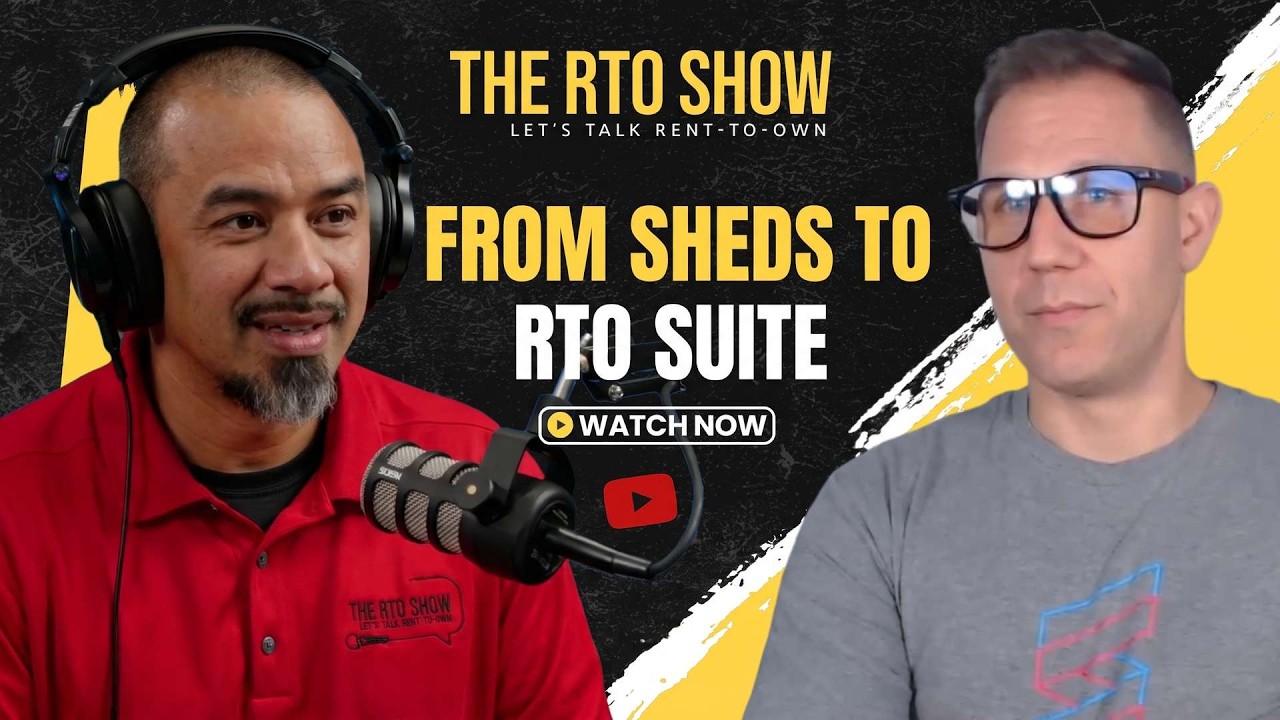
In this episode of The RTO Show Podcast, Jason Graber, founder of Shed Suite and RTO Suite, joined host Pete Shau to discuss how AI is reshaping rent-to-own business software, particularly in the portable shed industry. Drawing on nearly two decades of experience in shed manufacturing, sales, and technology, Graber shared lessons about solving operational challenges, developing user-friendly systems, and adapting to emerging technology.
Building Rent-to-Own Shed Business Software Around Real Problems
Graber began his career building sheds before moving into manufacturing management. There, he experienced firsthand the inefficiencies of handwritten orders, faxed paperwork, and disconnected systems.
Those frustrations eventually led him to develop a 3D shed configurator that allowed dealers to visually customize buildings and generate accurate production specifications. In 2017, he launched Shed Suite to connect sales, manufacturing, inventory, and delivery operations through one platform.
One important lesson from that experience was the value of designing technology around the people using it.
Rather than prioritizing complicated features, Graber focused on making software intuitive for dealers and manufacturers. He explained that understanding how employees actually work helped his team build tools that were familiar and easier to navigate.
Where AI Fits into RTO Operations
As Shed Suite expanded, Graber identified another operational challenge: managing rental merchandise after the initial delivery.
When customers return rented sheds, rental companies must coordinate pickups, restocking, resale, and related payments. Those responsibilities helped inspire RTO Suite, a separate platform designed to manage rental agreements and the merchandise lifecycle.
Graber described how AI can now support tasks that traditionally require significant administrative work, including contract processing, customer communications, payment follow-ups, and workflow configuration.
He also discussed AI-assisted software development, explaining how his team uses the technology to respond more quickly to customer feedback and feature requests. Human review remains part of that process.
Why Customer Experience Still Matters
Although much of the conversation centered on automation, Shau raised an important question: What happens to customer service when technology handles more of the work?
Both emphasized that effective technology should improve service rather than simply replace human interaction. Graber noted that responding to customer needs also means being able to act quickly when users identify problems or request improvements.
For RTO businesses considering new technology, the broader lesson is to evaluate how well a system supports employees, customers, and established workflows, not simply how many AI features it offers.
Graber also acknowledged that technology adoption takes time, even as AI capabilities advance rapidly.
His experience illustrates how industry knowledge, practical problem-solving, and a willingness to adapt can shape the next generation of rent-to-own business software.
Catch the full episode of The RTO Show Podcast, proudly sponsored by APRO, on Spotify.

