

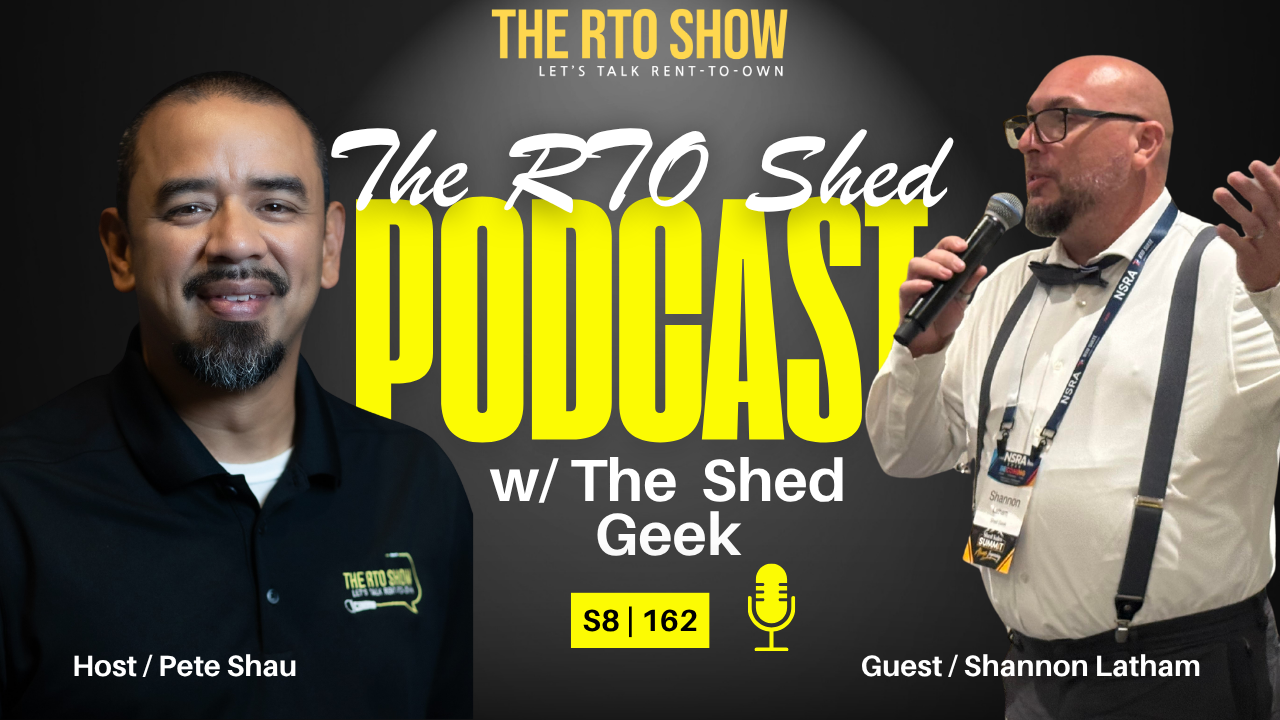
The portable shed industry has more in common with traditional rent-to-own (RTO) than many retailers may realize. From flexible payment options to customer relationships and evolving sales strategies, both sectors share opportunities and challenges.
In a recent episode of The RTO Show Podcast, Shannon Latham of The Shed Geek joined host Pete Shau to explore how RTO supports the portable shed market, the industry’s unique business models, and the trends shaping its future.
How Rent-to-Own Supports the Portable Shed Industry
Latham’s career in sheds began in purchasing before moving into retail sales, management, and RTO business development. While traveling throughout the Midwest, he discovered that many independent shed dealers lacked opportunities to connect, exchange ideas, and learn from others in the industry.
That realization inspired him to launch The Shed Geek Podcast, which has grown into a broader business offering marketing, consulting, and RTO services.
Latham explained that the portable shed industry operates through several business models. Some companies manage manufacturing, retail sales, delivery, and rental agreements themselves, while others rely on independent dealers, manufacturers, and third-party RTO providers.
These differences create operational challenges, particularly when managing inventory, customer agreements, deliveries, and returns. RTO provides customers access to portable storage buildings through rental-purchase agreements, without requiring traditional financing. Customers can continue renting, pursue ownership, or discontinue the agreement according to its terms.
Customer Education Builds Trust
One theme throughout the conversation was the importance of helping customers understand their rental agreements.
Unlike furniture or electronics, portable sheds present additional considerations, including property ownership, landlord permissions, delivery logistics, and local building requirements.
Latham emphasized that customers need to understand their responsibilities, available options, and the distinction between renting and owning a structure. Because portable sheds are designed to remain movable, customers can discontinue their rental agreements, with the buildings returned or recovered according to the agreement’s terms.
Latham also discussed the growing interest in using portable buildings as workshops, studios, and even tiny homes. He emphasized that a shed is not automatically approved for residential use and that local building requirements, property restrictions, and the intended purpose of a structure must be considered.
For RTO professionals, the message is familiar: clear communication and transparency help build customer confidence and long-term relationships.
The Future of Shed Retail
Technology is also transforming the portable shed industry.
Latham described how online searches, digital advertising, 3D configurators, and virtual consultations are changing the customer shopping experience. Rather than maintaining large inventories, some retailers are finding opportunities to showcase fewer models while allowing customers to customize their purchases.
He shared how Shed Geek uses QR codes on display structures to connect shoppers with remote sales consultants, even when a physical salesperson is unavailable.
Still, Latham believes personal interaction remains essential. Customers often want to see, touch, and experience a product before making a purchase.
The challenge for retailers is balancing digital convenience with meaningful customer engagement.
Education Creates Opportunity
When asked what advice he would give someone entering the shed RTO business, Latham’s response was straightforward: prioritize education.
He encouraged newcomers to learn about manufacturers, competitors, customers, equipment, and rental agreements before making major business decisions.
The conversation also highlighted the role of organizations such as the National Shed Rental Association (NSRA), which brings industry professionals together to share knowledge and promote better business practices.
For traditional RTO retailers, the episode offers a valuable look at another segment of the industry, demonstrating how customer education, operational knowledge, and adaptability contribute to success across different RTO markets.
Catch the full episode of The RTO Show Podcast, proudly sponsored by APRO, on Spotify.

