

Account management puts rent-to-own (RTO) employees in conversations that can be difficult, unpredictable, and highly dependent on good judgment. Clear expectations and consistent training can help employees support customers while protecting the company’s portfolio, assets, and reputation.
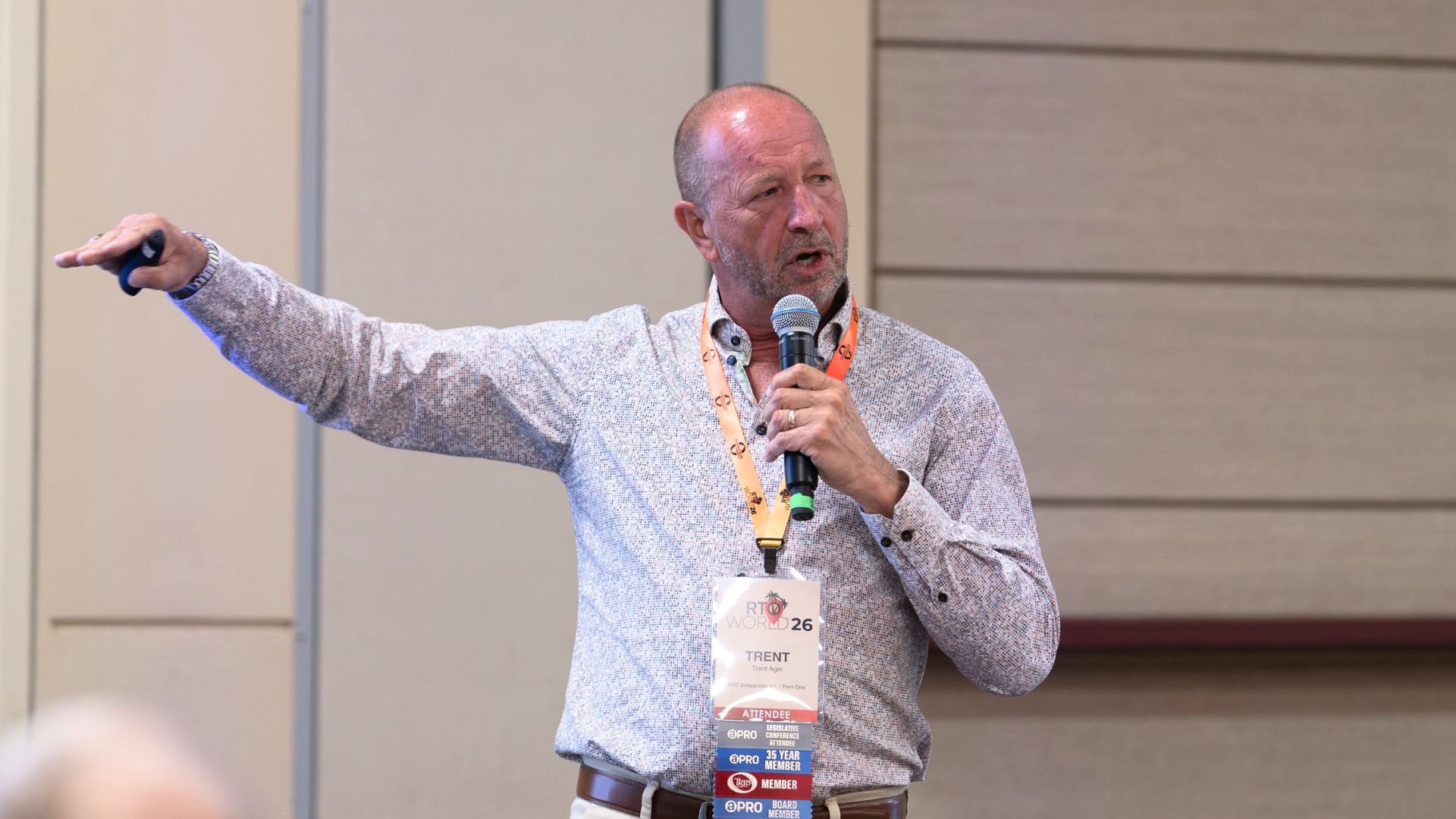
That balance was the focus of Firm, Fair & Paid: Support Customers, Protect the Portfolio, Keep Renewals on Track, an education session at RTO World 2026 led by Trent Agin, President of SKC Enterprises Inc., dba Rent One. Agin outlined practical approaches for hiring and developing account-management employees, communicating with customers experiencing payment challenges, and giving teams a repeatable framework for resolving accounts professionally.
Rent-to-Own Account Management Starts With Training
Agin encouraged rent-to-own leaders to think carefully about the skills required for account-management positions before hiring. Because the job involves direct customer conversations, including difficult ones, communication ability, listening skills, confidence, and professionalism are important qualities to evaluate.
He recommended including a phone interview in the hiring process so managers can hear how candidates communicate before putting them into a customer-facing role. Just as important, candidates should understand the actual responsibilities of the position, including phone conversations and face-to-face interactions, rather than viewing account management primarily as texting customers.
Training should continue before employees begin managing accounts independently. Agin recommended coaching conversations, practicing difficult scenarios, and establishing clear protocols so employees understand both what is expected and when a situation should be escalated.
Focus on Resolution, Not Winning
Difficult customer conversations can easily become adversarial if employees approach them as conflicts to win. Agin instead encouraged teams to focus on resolution.
“We want to bring them back – not to winning – but to resolving,” Agin said.
His framework emphasizes listening to the customer, clarifying the situation, redirecting the conversation toward available options, and reaching a clear outcome. Employees may encounter customers who are frustrated, experiencing hardship, confused, evasive, or resistant. Training for those situations can help employees remain focused on finding an appropriate path forward rather than reacting emotionally.
Agin also emphasized specificity when customers make commitments. A useful commitment should establish what will happen and when, giving both the customer and employee a clear understanding of the next step.
“If a commitment doesn’t have a date, a time, and an amount, it’s hope. It’s not a commitment,” Agin said.
Empathy and Accountability Can Work Together
Being firm does not require abandoning empathy. Agin encouraged employees to listen when customers experience hardships and then work within their company’s established options and policies to identify an appropriate resolution.
That approach also requires knowing when to seek help. Agin stressed that employees should not guess when a situation becomes difficult, unclear, or unsafe. Leaders need to establish escalation points so employees know when to involve a manager and when to end an interaction.
Professionalism remains essential throughout the process. Agin advised teams to avoid excessive contacts, threatening or intimidating language, improper disclosure of account information, and communication through personal devices that fall outside company systems. He encouraged businesses to establish clear policies and consult applicable state requirements when defining their own procedures.
Give Teams a Repeatable Process
One of the broader lessons from the session was the value of consistency. Agin introduced a repeatable account-maintenance method designed to help employees act early, move accounts through the appropriate progression, create outcomes, follow up on commitments, and work toward resolution.
He also discussed APRO’s RTO-Ready account-management training, which is being developed as an online resource to help RTO businesses train employees on the fundamentals of the transaction and account maintenance.
For RTO leaders, the session offered a practical message: employees should not have to improvise their way through the hardest customer conversations. Clear expectations, consistent training, defined boundaries, empathy, and structured follow-up can give teams a stronger foundation for supporting customers while keeping accounts on track.
APRO members can watch the full Firm, Fair & Paid: Support Customers, Protect the Portfolio, Keep Renewals on Track session replay for additional examples and account-management training strategies from RTO World 2026.
About SKC Enterprises Inc. dba Rent One
SKC Enterprises Inc. dba Rent One is a regional rent-to-own company with more than 100 locations across eight states. Founded in 1985, the company offers furniture, appliances, electronics, mattresses, and other home essentials through flexible rental-purchase options. SKC Enterprises Inc. dba Rent One has been an APRO member since 1990.

