
Texting has become a routine part of rent-to-own (RTO) customer communication, but the rules governing calls and texts are anything but routine. In APRO’s recent webinar, Understanding the TCPA and Related State Laws: From Basics to Recent Developments, APRO member Hudson Cook, LLP Partner Michael Goodman walked attendees through the federal Telephone Consumer Protection Act (TCPA), related state standards, and recent developments affecting how businesses communicate with consumers.
Goodman brings more than 20 years of experience working with federal and state consumer protection laws. Before joining Hudson Cook, he served in the Federal Trade Commission’s Bureau of Consumer Protection, where his work included amendments to the Telemarketing Sales Rule and early CAN-SPAM Act rulemaking.
TCPA Text Messaging Compliance Starts with the Details
A central theme of the webinar was that seemingly small distinctions can change which rules apply. Goodman explained that the purpose and content of a communication matter, including whether a message is operational or marketing-related, whether regulated technology is used, and what type of consent or existing relationship may be relevant.
He also stressed that federal requirements are only one part of the compliance picture. State laws may add their own registration, do-not-call, timing, frequency, or consent standards. Goodman described state requirements as an important part of the overall compliance analysis because the federal TCPA does not replace applicable state standards.
The session also examined company-specific do-not-call requests, consent revocation, prerecorded and AI-generated voice messages, reassigned phone numbers, and recordkeeping. Goodman encouraged businesses to view consumer complaints as more than isolated service issues, noting that patterns may reveal broader process or system concerns.
“Treat those as an opportunity to say, do we have a structural issue that is affecting more than one consumer?” Goodman said.
New APRO Resources Support TCPA Text Messaging Compliance
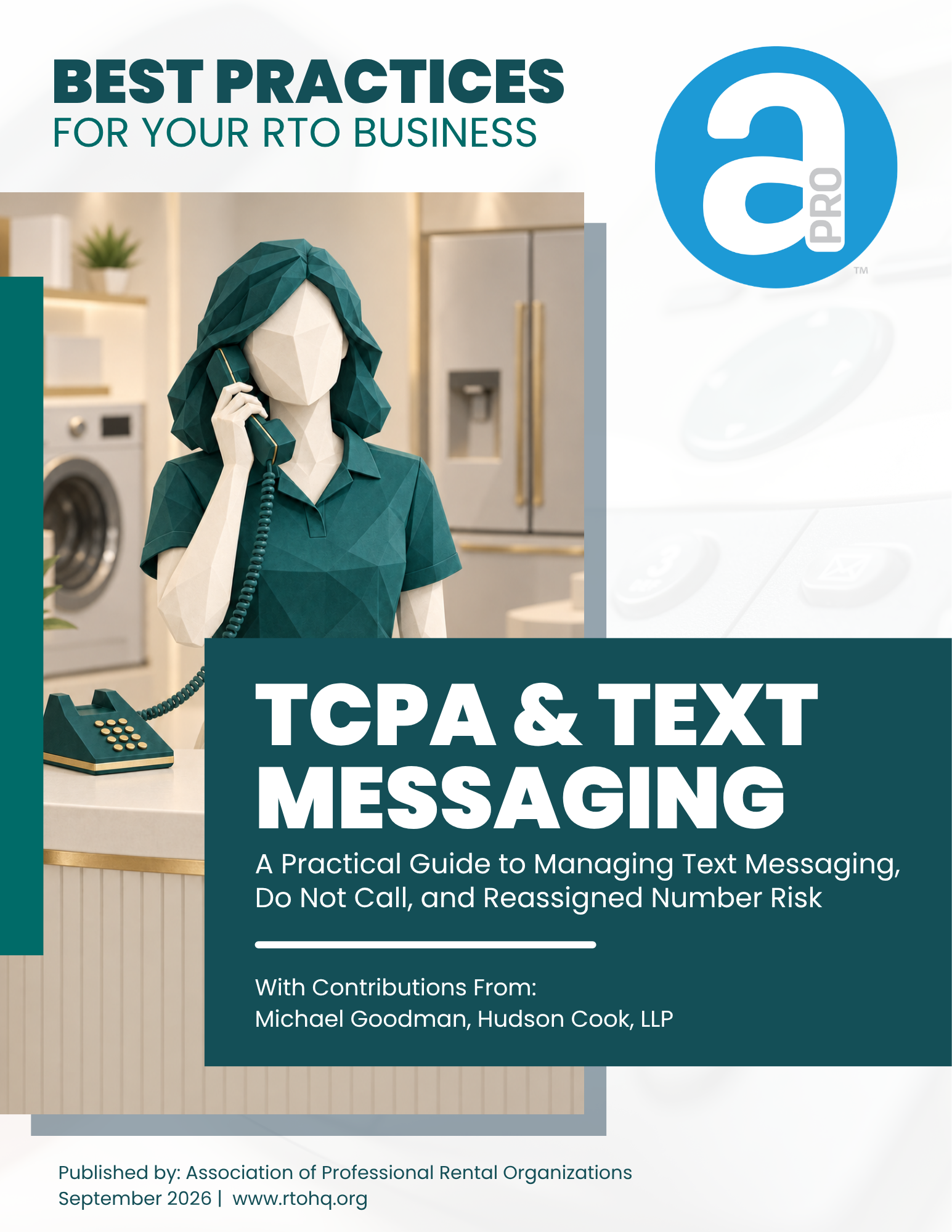
In conjunction with the webinar, APRO is releasing its new TCPA and Text Messaging Best Practices Guide, developed for the rent-to-own industry with contributions from Goodman. The guide provides a practical framework for reviewing communication practices, including consent documentation, customer-service versus marketing messages, opt-outs, wrong numbers, do-not-call processes, automated workflows, centralized communications, employee training, and complaint review.
Goodman also praised the guidance during the webinar, describing it as a condensed, effective resource for APRO members.
APRO is also releasing a companion TCPA and Text Messaging Readiness Assessment. The self-assessment helps members examine current practices across consent and documentation, message content, opt-out preferences, reassigned numbers, do-not-call compliance, CRM and automation controls, and training and oversight. Importantly, the assessment is not a legal audit and does not provide legal advice.
Together, the webinar, guide, and assessment give APRO members a structured starting point for reviewing their communication practices and identifying areas that may warrant additional attention. They also reflect a broader lesson from the webinar: TCPA text messaging compliance cannot always be reduced to a single nationwide checklist because the applicable requirements may depend on the communication, technology, jurisdiction, and specific circumstances involved.
For RTO operators, these new resources are designed to support stronger internal conversations among leadership, compliance teams, employees, technology vendors, and qualified legal counsel while helping businesses better understand the questions they should be asking.
Access the Webinar and Resources
The webinar and accompanying resources are an APRO member benefit. To access this and more member resources, simply log in to APRO’s Legal Resource Hub with your APRO member credentials. If you need assistance, please email info@rtohq.org.
Legal Disclaimer: This article, webinar, and accompanying APRO resources are provided for general informational and educational purposes only and do not constitute legal advice. Laws and regulations vary by jurisdiction and may change over time. Rent-to-own businesses should consult qualified legal counsel regarding their specific practices, systems, and obligations.