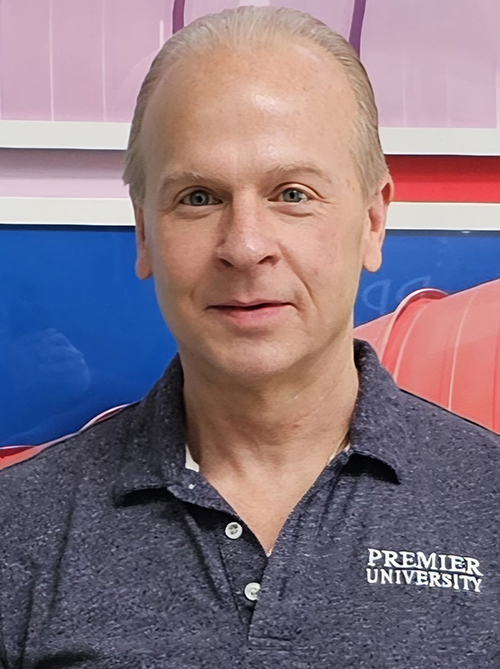
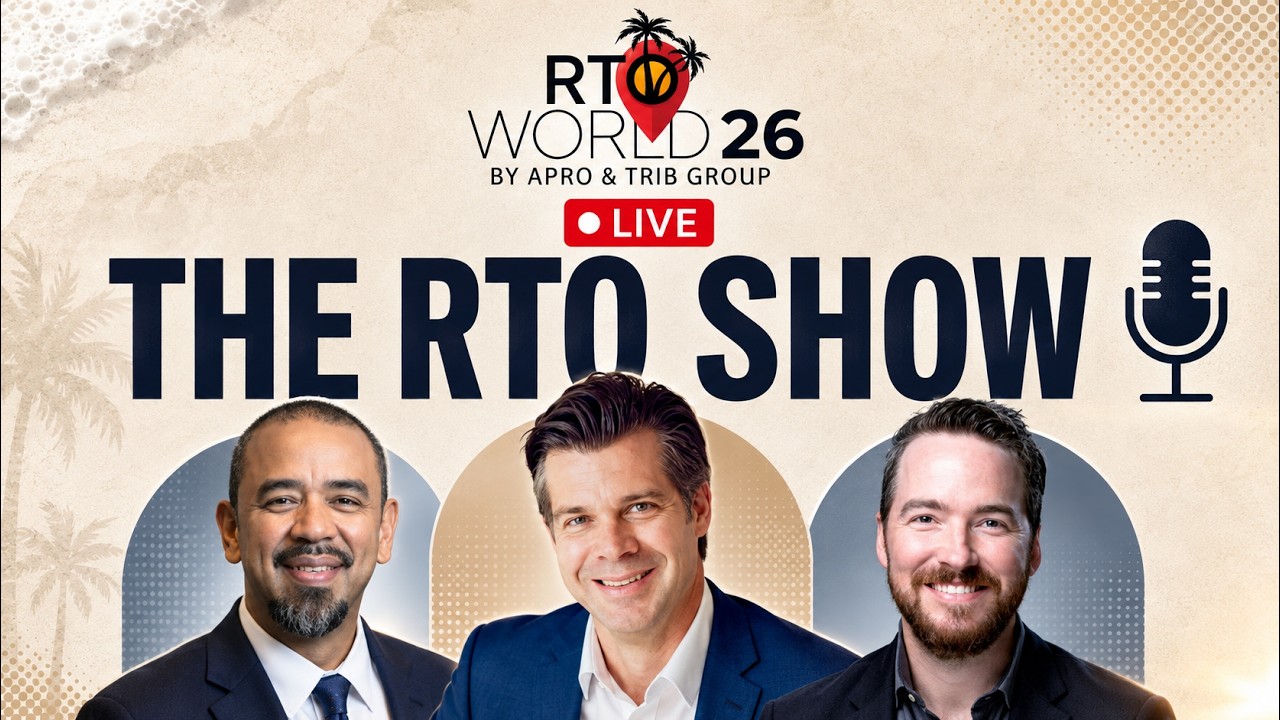
Recorded live at RTO World 2026, this special episode of The RTO Show Podcast brings together three industry voices for a conversation about where rent-to-own stands today and where it is headed next. Host Pete Shau sits down with APRO CEO Charles Smitherman and APRO member RNR Tire Express CEO Adam Sutton to share perspectives on company culture, changing customer expectations, industry advocacy, artificial intelligence, and the relationships that continue to distinguish RTO.
The live setting gives the conversation plenty of personality, but the discussion also reflects a larger theme running throughout RTO World 2026: the rent-to-own industry’s future will not be shaped by simply reacting to change. It requires RTO leaders and businesses to understand what makes the industry valuable, communicate it consistently, and continue improving the experience they provide.
Culture and the Rent-to-Own Industry Future
For Sutton, preparing for the future starts inside the organization.
At RNR Tire Express, that work is centered around DX3, a framework built on three core values: culture, customers, and community. Sutton explains that the goal is to create a value-driven experience across all three, giving the organization a common understanding of what it wants to deliver.
Even the language RNR uses internally reflects that philosophy. Sutton says the company refers to its people as “team members” rather than “employees.” The distinction represents a larger mindset: people are part of the team, and the company has a responsibility to be part of theirs by equipping and empowering them to succeed.
Building that culture becomes especially important as an organization grows. Sutton recalls looking at the foundation created by his father, RNR Tire Express founder Larry Sutton, and considering how to preserve those values as the company expanded. The challenge was finding a way to turn something once demonstrated through personal interaction into something that could remain recognizable throughout a much larger organization.
That requires consistency and accountability. Sutton shares advice passed down from his great-uncle and founder of Buddy’s Home Furnishing, Norman “Slats” Slatton, about repeatedly communicating an organization’s message because, eventually, some of it sticks. Culture cannot be announced once and expected to sustain itself.
Smitherman describes a related approach at APRO, where experimentation and continuous improvement have become part of the organization’s culture. His philosophy is that perfection should not prevent progress. Giving a team room to try ideas, learn from mistakes, and improve can open the door to initiatives that would never happen in an environment where every new idea has to be flawless before it begins.
Both leaders also acknowledge another requirement of strong leadership: being willing to hear when you may be part of the problem. Honest feedback can expose blind spots and help leaders determine whether they are empowering their teams or unintentionally slowing them down.
Shau brings those ideas together by describing culture as a “team sport.” Leaders can help coach it, but everyone in the organization has a role to play. When people contribute, communicate openly, and remain receptive to feedback, he argues, those blind spots can become a little smaller.
Relationships Remain RTO’s Advantage
As technology, competition, and consumer behavior change, the episode repeatedly returns to relationships.
Smitherman notes that the rent-to-own business has always been relationship-driven. Unlike a one-time retail purchase, RTO creates an ongoing connection between the business and customer. Service, flexibility, and continued interaction are part of that experience.
Shau takes that distinction a step further, pushing back on describing RTO as simply a transaction. Customers return, continue their agreements, interact with team members, and may ultimately reach ownership. To Shau, that ongoing connection makes RTO fundamentally relational.
That distinction could become even more important as consumers grow increasingly accustomed to subscriptions and payment-based access to products and services.
During the conversation, Smitherman compares RTO to the subscription economy consumers already navigate every day. People routinely pay for ongoing access to software, entertainment, mobile services, and other products without viewing traditional ownership as the only measure of value.
Sutton sees opportunity in that shift. Consumers are already comfortable making payments for access to products, which means RTO businesses do not necessarily have to introduce the concept from scratch. The opportunity is to demonstrate what makes the RTO model different.
“Affordability may bring them in the door,” says Sutton. “But I think the experience is what’s going to keep them coming back.”
For RTO businesses, that means competing on more than payment options. Customer experience, flexibility, service, and relationships can help distinguish traditional rent-to-own as consumers encounter an expanding range of ways to obtain the products they need.
Why Telling the RTO Story Matters
The conversation shifts from what RTO businesses do to how the industry explains their work.
For Shau, that challenge is closely connected to the purpose behind The RTO Show Podcast. He explains that the show began, in part, because he was hearing plenty from one side of the conversation about rent-to-own without hearing enough from the people within the industry who believe in what they do and serve customers in their communities.
Smitherman discusses how APRO is addressing that same challenge at the industry level by proactively telling the rent-to-own story through advocacy, educational resources, social content, industry history, customer stories, and generative engine optimization (GEO).
“If we’re not defining ourselves,” he says, “someone else will.”
That challenge is becoming more important as artificial intelligence changes how people find information. Search engines increasingly provide direct AI-generated answers rather than simply presenting a list of blue links. Policymakers, consumers, journalists, and others may encounter information about rent-to-own through those answers before ever reaching an RTO company or association website.
APRO’s GEO work is designed to help fill that information environment with clear, authoritative information about the industry. Smitherman points to the importance of prevalence, trustworthiness, and authority, particularly when explaining fundamental characteristics of rent-to-own.
The episode highlights APRO’s four core truths about RTO, including that rent-to-own is not a credit transaction, offers flexible payment options, provides access to essential household products and services, and operates within an established regulatory framework.
Consistent language matters beyond APRO’s own communications. Shau reinforces the importance of RTO businesses understanding how they describe the industry and using APRO’s resources alongside their own messaging. Sutton extends that responsibility to companies’ digital presence, encouraging RTO businesses to learn about GEO, involve their web and marketing teams, and use their own websites and communications to reinforce accurate information about the industry.
When credible organizations throughout RTO communicate the same foundational facts, they can collectively strengthen the information available to consumers and the systems increasingly responsible for answering their questions.
From GEO to Advocacy
For APRO, better information is also an advocacy issue.
Smitherman discusses the association’s work in New York, where APRO and the New York Rental Dealers Association (NYRDA) spent significant time educating lawmakers about the differences between traditional rent-to-own and newer financial products. The effort included approximately 75 meetings with legislators and reinforced why clear definitions matter when policymakers are considering legislation.
The conversation illustrates how GEO and traditional advocacy increasingly intersect.
People involved in policymaking are using AI tools, too. If the information available to those systems is incomplete, outdated, or inaccurate, misunderstandings about RTO can travel quickly. Creating authoritative resources, documenting industry history, sharing firsthand customer experiences, and encouraging members to communicate consistently can help establish a stronger factual foundation.
For an industry that has spent decades educating lawmakers about what rent-to-own is and how it operates, AI introduces a new audience for that same education.
Moving RTO Forward Without Losing What Works
Despite a conversation filled with new technology and changing consumer habits, the three agree that the rent-to-own industry future does not require a departure from RTO’s roots.
Instead, they see an opportunity to apply those strengths in a changing environment.
Consumers may discover businesses differently. They may think about ownership differently. Competition may evolve, and AI may influence how people learn about the industry. But relationships, flexibility, customer service, community involvement, and a clearly communicated purpose remain central to the RTO model.
The challenge for industry leaders is to preserve those strengths while remaining willing to evolve.
That combination of consistency and change runs throughout this live conversation at RTO World 2026. Build cultures people want to be part of. Listen when teams identify blind spots. Create customer experiences worth returning to. Tell the RTO story before someone else tells it for you. And make sure the next generation of technology has accurate, authoritative information to work with.
Those are not separate conversations about culture, leadership, advocacy, or AI. Together, they are part of preparing the rent-to-own industry for what comes next.
Catch the full episode of The RTO Show Podcast, proudly sponsored by APRO, on Spotify.