

RTO World 2025 offered RTO pros tons of top-notch training to help them keep their eye on the ball as they swing for the fences
RTO World 2025, held in Omaha, Nebraska – home of the NCAA Men’s College Baseball World Series – naturally abounded with references to America’s Favorite Pastime. From the event logo to the Omaha Experience Party at Charles Schwab Field Omaha, RTO World attendees were encouraged to root, root, root for the home team – meaning, of course, the rent-to-own industry.
So it follows that of the event’s 20 different education sessions, its most popular presentations shared a similar theme – one that is as important on the baseball diamond as it is in the RTO business: Connection. Just as you can’t hit a homerun unless you connect bat with ball, you can’t succeed in rent-to-own unless you connect with your customers, your employees, the right products, and, at events like RTO World, your colleagues.
From identifying the right sales approach through keying in on customer personalities to engaging your team through improved feedback, from following industry data to help make better buying choices to knowing your who’s, what’s, and how’s in order to rent more product, our “final four” of education this year all resonated with a similar refrain: If you want to score, you’ve got to connect.
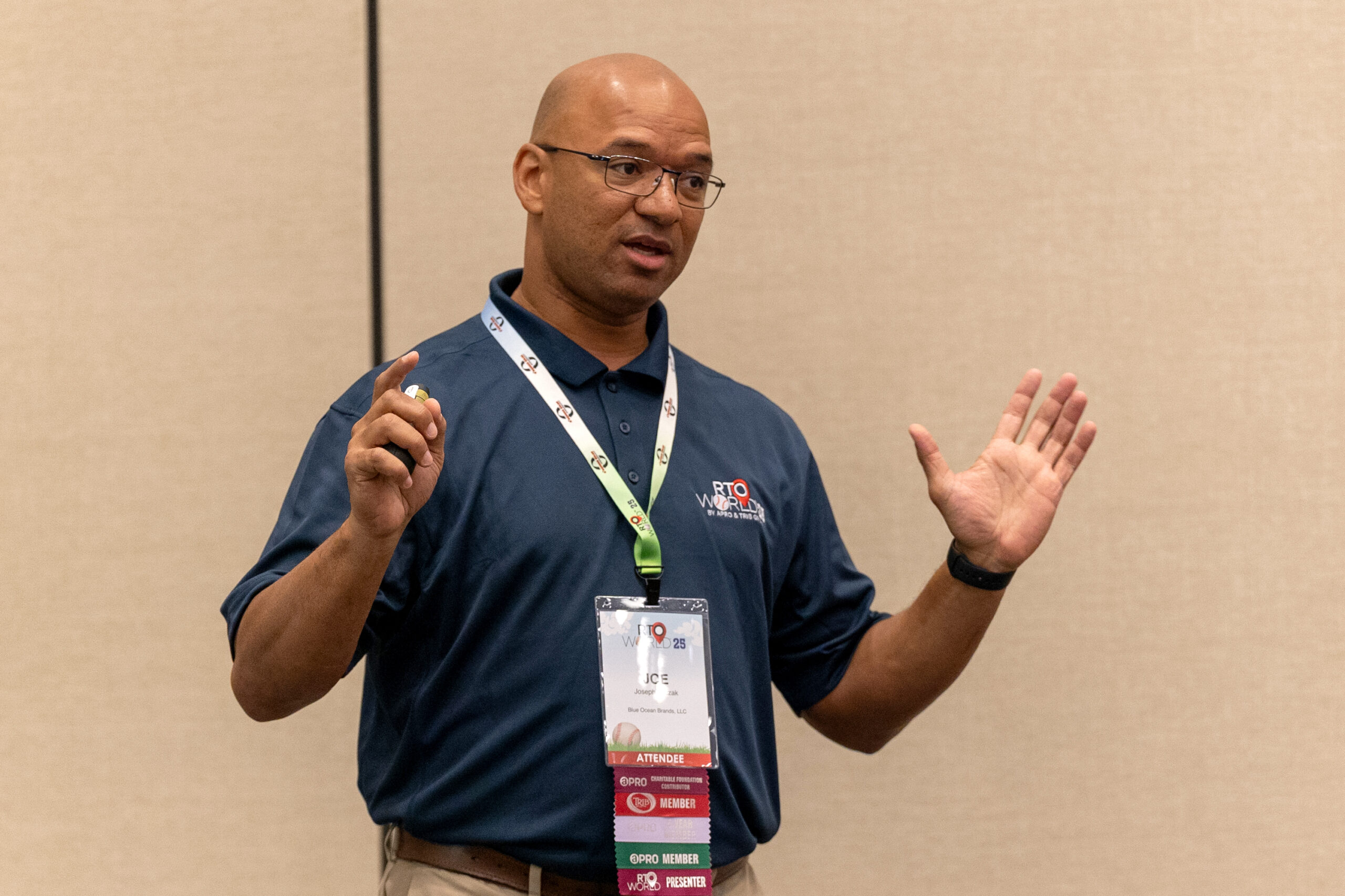
What we want to avoid is stress,” began Joe Luczak, Sales Director with Blue Ocean Brands, LLC, as he led his breakout Session, Why Didn’t They Buy? Cracking the Sales Personality Code. “Stress on your sales team and stress on your customers, because stress there kills sales. So our goal is to offer you some tools that have helped us take away stress from our salespeople and our customers, and keep them engaging with each other because they don’t feel uncomfortable in the sales conversation.”
Every rent-to-own salesperson has had a customer they just couldn’t seem to connect with – the salesperson said the “right” things, but the customer didn’t come with them on the journey, didn’t seem to get it. Luczak said adaptability at that moment is essential.
“Sales is not an A-to-B transaction,” he attested. “It just isn’t. So a one-size-fitsall approach doesn’t work. The sales discussion is more like a flowing stream, and depending on where the turns are, you’ve got to be able to adapt and go with the flow with the customer. And it’s going to be different with each individual.”
Luczak outlined for his audience a simplified version of the DISC personality assessment – a tool designed to gauge four primary behavioral traits: Dominance, Influence, Steadiness, and Conscientiousness.
“People who are primarily D’s are task-driven extroverts,” stated Luczak. “They’re driven and decisive. They want a little information, and they want to go. They want to get things done, they want results, and they want to be in control. You need to let them lead.
“Your I’s are people-driven extroverts,” he continued. “They love social interaction. They’re chatty, enthusiastic, fun. You need to build rapport, be engaged with what they’re telling you. They think out loud, so they’re talking to you because that’s how they work through a decision.
“S types are people-driven introverts,” noted Luczak. “They’re calm and patient. You’ve got to go slow with them, give them time to think. Tell them, ‘I’m going to let you explore, and I’ll check in with you in a while to make sure you don’t have questions.’ You need to build trust with them.
“Finally, C’s are task-driven introverts,” he concluded. “They’re accurate, analytical, and precise. Answer their questions about features and benefits. They’re your spreadsheet folks – give them data and logical reasons to support their decision.”
Salespeople who can assess their customers using DISC, said Luczak, have the key to interacting with anyone without making them uncomfortable. But a critical part of that key is understanding their own spot in the DISC assessment.
“What happens when your D-type salesperson, your nail driver out on the floor, decides he’s going to sell 56 widgets today no matter what, and here comes an S-type customer?” Luczak queried. “The salesperson is hammering on them, they’re not getting out of there until they rent something. What happens? The customer is turned off, they’re done, because the salesperson pushed them when what they needed was time to think and to feel like they could trust them.”
Luczak told participants that the DISC method of assessing the right customer approach requires insight, discipline, and attention to cues, as well as a lot of practice. He recommended team workshops, role-playing scenarios, and one-on-one coaching to sharpen assessment skills. He noted the best way to begin with a new customer is to simply greet them and ask, “What brings you in today?”
“The more you do it, the better you’ll be at it,” assured Luczak. “You’re going to try to assess new customers’ DISC types, and see how the conversation goes. It either goes well or it doesn’t; either way, it’s a learning opportunity. I’m passionate about this because my heart hurts for salespeople who want to win in the worst way, but get frustrated, lose confidence, and spiral downward because they don’t have the right tools.
“We’re all in RTO to make our customers’ lives better,” he concluded. “Well, let’s make our sales team’s lives better. Let’s relieve some of their stress with this valuable tool. Because when your sales team is less stressed and your customers are less stressed, then you’re going to get a win every time.”
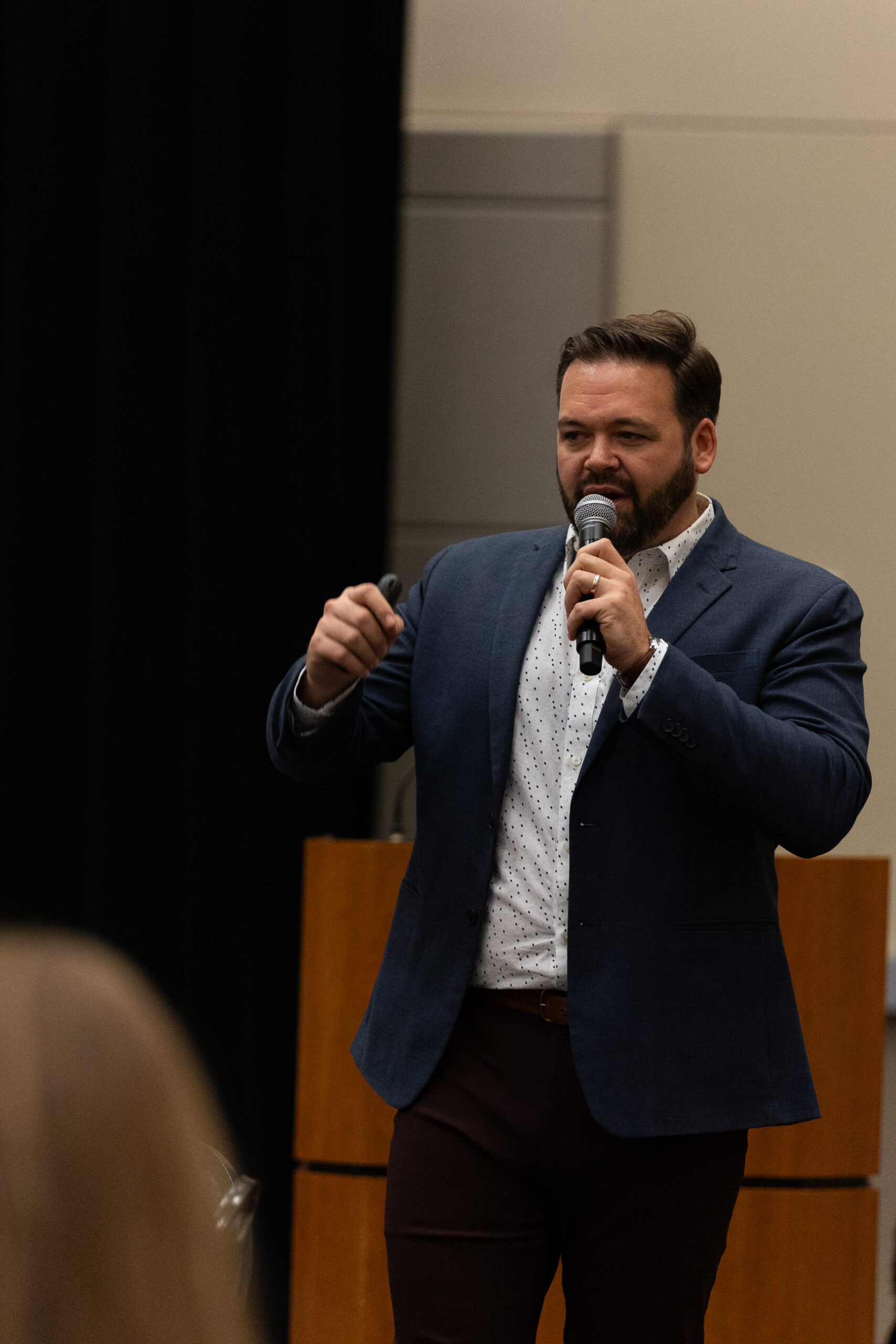
If we want to be better leaders and create organizational health, then we need teams that are so comfortable using the F-word that they use it every single day,” stated RNR Tire Express Training Development Coordinator Will Jackson, boldly kicking off his How to Use the F-Word Super Session. “Of course, we’re talking about feedback.”
Why is feedback so important? Consider this: According to a Gallup Poll, the less frequently employees receive feedback, the less engaged they are with their work. So for people who get feedback once a year or less, only 5% say they’re engaged, while for employees who get feedback weekly or more, 48% are engaged.
“That might sound crazy,” Jackson noted, “because giving and receiving feedback is not popular or fun – but it works.”
So Jackson began his instruction in how to connect through giving and receiving valuable feedback, not only to improve employee engagement, but also to advance one’s own personal growth, professional development, and relationship strength.
Your reaction to feedback directly determines how much you receive,” advised Jackson. “If people aren’t giving you feedback, chances are, you’re bad at receiving it. To properly receive feedback, we have to avoid or overcome some common fuses that tend to get lit when we feel the F-word coming.
“There are three main types of fuses, or defensive postures, people tend to take,” Jackson detailed. “The truth fuse is ignited when we find the feedback wrong or unhelpful. We insist ‘no no no no no.’ But we want to be curious rather than combative. So try ‘tell me more’ rather than ‘you’re wrong.’
“The relationship fuse is when we choose not to listen to the feedback because of who is talking,” he continued. “You don’t like them, or they’ve done something to you in the past, or they’re underperforming themselves. But don’t miss the ‘what’ because of the ‘who.’ And don’t flip the focus to redirect the critique back on them. That’s a defense mechanism, too. Don’t do it.
“The identity fuse challenges your perception of yourself,” concluded Jackson. “If your identity is closely tied into being a leader or being a performer, when someone challenges that, it can light a fuse. Try to avoid a fixed mindset. You can be a great leader and still make mistakes. Keep a growth mindset, and say, ‘I can always improve.’”
To give helpful feedback, Jackson counseled, you must do two things: Care personally and challenge directly.
“This is called radical candor,” explained Jackson. “‘I want to let you know before you go into your next meeting, you’ve got mustard on your shirt.’ I care, I’m direct. If you challenge directly but don’t care personally, that’s called obnoxious aggression – ‘You spilt mustard all over yourself, you slob.’ Well, now he knows that he’s got mustard on his shirt and that you’re a jerk.
“When you care so much that you don’t challenge, it’s called ruinous empathy – you say nothing about the mustard, hoping someone else will let him know. And if you don’t care and don’t challenge, that’s manipulative insincerity – you say nothing to him because you fear his response, but you point out the mustard to everyone else behind his back. Which is why it’s crucial that you learn to receive feedback well. You want people to feel they can offer you feedback to your face.”
There’s also a best-practices way to provide positive feedback – the kind used to compliment rather than correct – and it’s based on just three little words: Situation. Behavior. Impact.
“Situation means where and when it happened, behavior means the specific observable action, and impact means the outcome of their actions,” listed Jackson. “You need all three included in your positive feedback. And the details really matter. We’ve all gone up to someone, fist-bumped them, and said, ‘Hey, dude, good job.’ That’s not going to let them or their peers know what it is they should try to repeat or copy.
“Try something more like, ‘You did great work during your presentation today. You were engaging, informative, and persuasive. That sort of leadership helps the whole team feel involved and move forward with confidence.’ Situation, behavior, impact.”
Finally, Jackson stressed that to build a culture with healthy feedback, leadership must go first.
“When you change, the people beneath you will change, too,” he concluded. “First, actively seek feedback from your team. Sit them down and force them to tell you one thing you can improve. Receive it with a smile and a thank-you. Second, routinely give valuable feedback to your team, both corrective and complimentary. They want that, and your business needs it.”
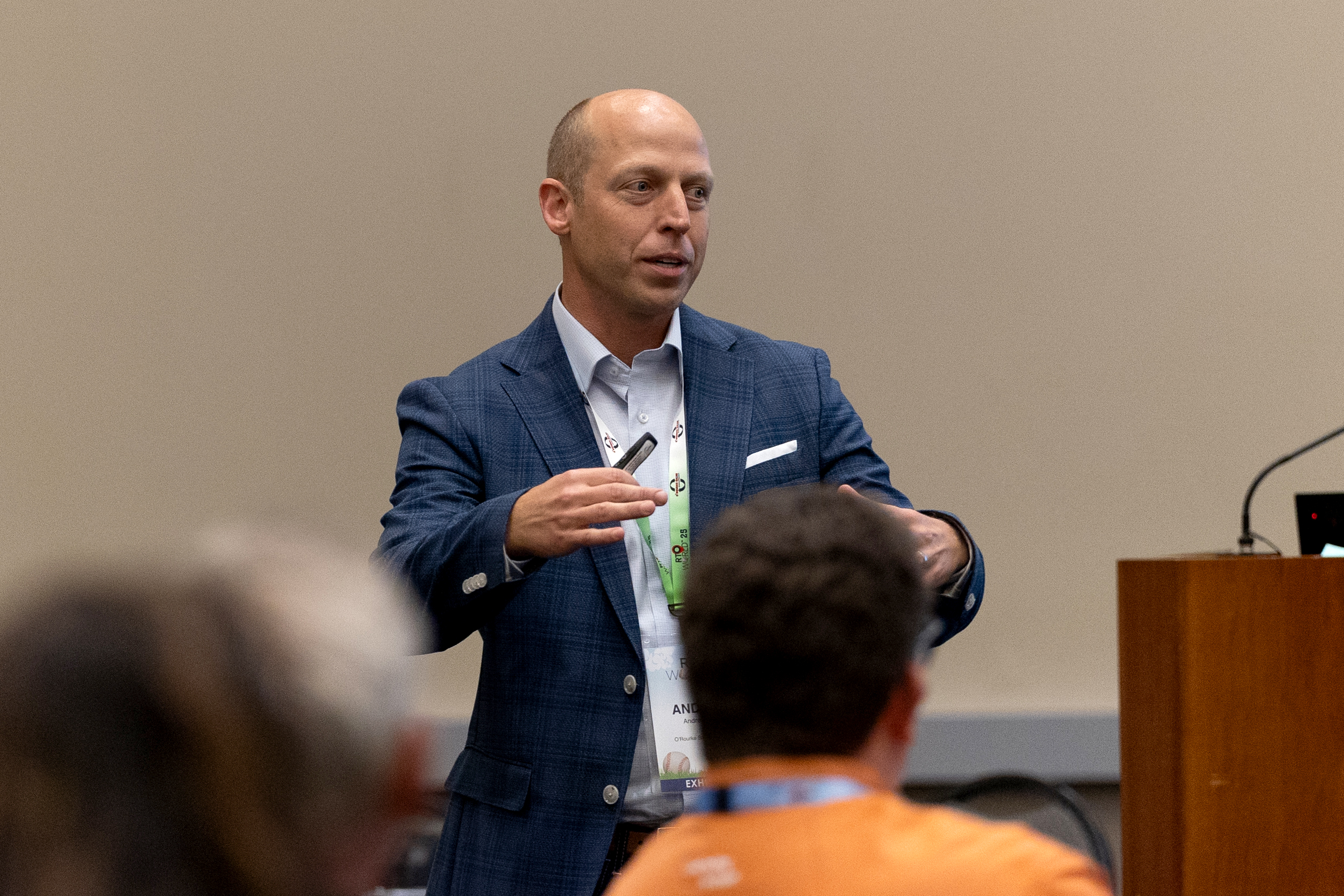
Andrew Terry, President of O’Rourke Sales Company, is a guy who naturally connects with numbers. Terry began his career in actuarial science – the use of math and stats to assess and manage financial risk – before moving into sales and management with LG Electronics, HHGregg Electronics, and as of 2017, O’Rourke. Which is all to say, the dude’s into digits.
So Terry’s breakout Session, Industry Trends & Tariffs: Data & Insights to Help Your Buying Decisions Today, was a fine fit. And terrific timing, as the day before Terry’s presentation, President Trump had signed a 90-day deferment on tariffs with China, so Terry had some good news to share right off the bat.
“Manufacturers had not been willing to give us pricing because of the uncertainty around tariffs,” he told his audience. “But I got price sheets yesterday from three different manufacturers, and they didn’t include price increases. So we can bring product and not have to raise prices. The not-great news is that public sentiment toward tariffs is turning negative. Way back in January, there was net-positive support for tariffs, but as of July, there has been a massive decline in sentiment toward tariffs.”
With tariff-insecurity kicked down the road a piece, Terry turned his attention to product trends, noting that despite public negativity surrounding tariffs, consumer spending was up.
“Let’s get into gaming,” began Terry. “It’s a gigantic industry, on-track to be a $92-billion industry by 2027. PC gaming is bigger than console, because it’s not a cash retail option for our customers. And there are some crazy color trends happening currently in gaming – unique colors like pink and teal – that should not be ignored. Don’t go another holiday season without leaning heavily into gaming, because it’s here to stay, it’s growing fast, and it’s a huge, huge opportunity.”
Next, Terry talked TVs, illustrating how consistent and relatively flat television sales have been for years (excluding 2020 and 2021, due to the pandemic).
“But what’s growing is the 98- to 100-inch TV market,” he attested. “They’re not fun to ship and handle, not a one-person job, but they’re here and they’re super-popular. From a revenue perspective, they’re up 82%, and from a unit perspective, they’re up 150%. So you gotta have ‘em. Another television trend ties back to gaming. Some manufacturers are now building gaming-specific TVs and partnering with gaming companies to integrate gaming into their products. Basic UHD is on its way out, and gaming TVs are the way to go.”
As for appliances, Terry said the industry overall is flat, with refrigeration down, but clothing care trending up.
“Laundry is the big winner among appliances,” asserted Terry. “But almost 75% of all appliances purchased in the U.S. today are because something broke and must be replaced. And we’re seeing new homes, housing starts, drop, and single-family homes drop significantly. Multifamily homes are rising slightly, but new homes dropping overall isn’t good news for the appliance industry. We’re at close to historic lows.
“I think that circles around to that uncertainty around tariffs,” he concluded. “Tariffs on steel and aluminum are impacting appliances. Even if there’s domestic production, tariff pressures aren’t necessarily alleviated because a lot of the tariffs are on the manufacturing components rather than the finished goods.”
As a final note, Terry urged rental dealers to take advantage of manufacturer investment in promotions around retail holidays, like President’s Day, Memorial Day, or Labor Day.
“They’re overly investing in these promotional windows,” stated Terry. “So we need to consolidate more of our purchasing during those windows. Rentto- own can gain a win as an industry by leveraging what manufacturers are overly investing in in the retail segment of the business.”
Last – but never, ever, ever least – on the roster of RTO World 2025 education sessions was the guy who always has something valuable to say and a room packed with rapt colleagues ready to listen: Mike Tissot – Owner of Ohio-based Countryside Rentals Inc. dba Rent-2-Own (R2O). This year, Tissot delivered the first-ever official “Tissot Talk” (as in, “Thank you for coming to my Tissot Talk”), helping bring this year’s event to a strong finish and this article full circle, from Why Didn’t They Buy? to Tissot’s theme, Why They Buy.
Tissot began by identifying who rentto- own customers really are – and he believes the vast majority fit into one of four archetypes.
“First, we have (proverbial) Patrick,” described Tissot. “He’s a 20-something who still lives at home with his parents. Second, Haley, who is also a 20-something, but she just moved out on her own and is now a household decision-maker. She needs some stuff, and she’s got no cash or credit yet. Third is Randy and Cathy, a middle-aged couple,” he continued. “Randy works at the factory, Cathy is a home healthcare worker. Together, they make good money, and they rent everything from you, they’ve got lots of RTO agreements. And fourth is Cheryl. Cheryl is retired and lives on a fixed income with a tight budget. These are our core customers, and I better make darn sure I’m buying the things they want to buy.”
Which brought Tissot to explore exactly what that looks like.
“So, do you have what your customers want?” Tissot continued. “Do you have the Red Viper Gaming Desktop or the Alpine Green front-loaders? Do you have what they need? Because we’re in an instant-gratification business, and if you don’t, then they’re going to go somewhere else.”
Tissot acknowledged the physical space limitations of many store locations, recognizing the importance of efficient, effective sourcing for both items people request and items for salespeople to upsell.
“Then there’s the stuff customers don’t want – why don’t we care about idle inventory sooner?” continued Tissot. “If there’s inventory at a customer’s house that’s not making us money, after two weeks we gotta go get it and put it back on rent. But if there’s inventory in our store that’s not making us money, we let it sit for three months or longer. If half of your square-footage is stuff nobody wants, then you’re not going to have what customers need, and you’re going to lose sales.”
Tissot attested that some of what customers want will be what they have always wanted from rent-to-own: furniture and appliances – not only because those are consistently needed items, but also because they fit the RTO price-point perfectly.
“Rent-to-own products cost between $500 and $1,200 retail,” Tissot asserted. “If it’s less than that, the customers may be able to go buy it themselves. If it’s more than that, we can’t put it on a rental rate and make money on it quickly enough. So I think one of the most important things we can do is to keep on innovating in those two categories.”
Tissot told his participant-peers that at R2O, the top three product categories are furniture, appliances, and tires (“for a FAT bottom line,” he quipped), followed by gaming. He urged his colleagues to understand what rents for them and why, and rather than trying emerging trends again and again, to invest more in what they know works.
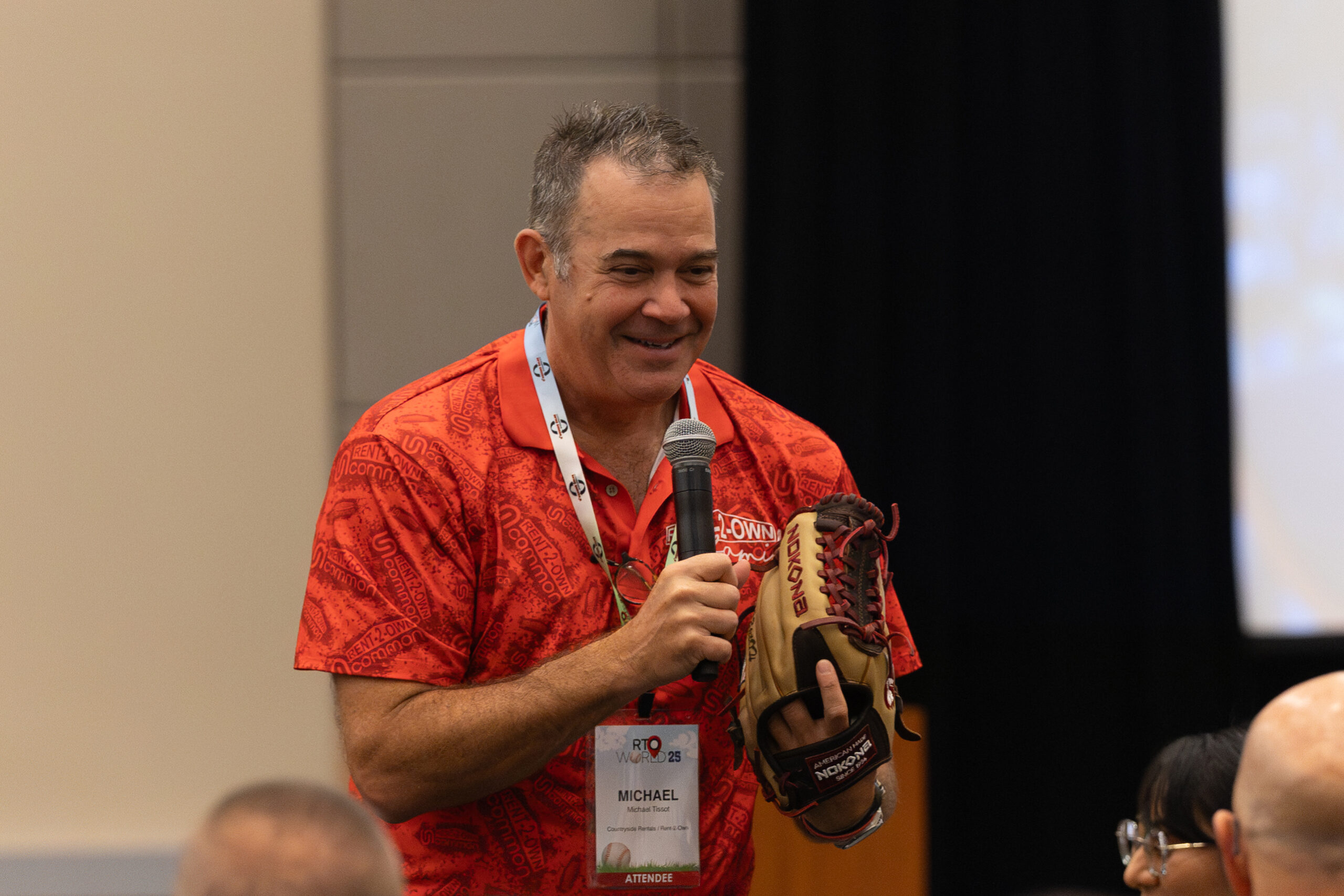
“We need to be two inches wide and a mile deep,” suggested Tissot. “We need to use our data to determine the four or five products we know will sell, retain their rental rate, and make us more money.”
Similarly, Tissot advised dealers to stock mostly products that customers will use every day – utilitarian items like tires, laundry, TVs, laptops, sectionals, recliners, and mattresses.
“If customers rent something they don’t use every day, then they’re more likely to return it,” Tissot declared. “We get enamored with some of the other stuff, but if folks aren’t using it daily, then they won’t keep it.”
Tissot, whose presentation pace is permanently set to “speedy,” went on to offer many more sales suggestions and recommendations, including these highlights:
First impressions: Today, a business’ first impression with a customer happens on Google, its second happens on Google Places, and its third impression happens on the company website. Get your online game in order.
Reduce friction: Whether it’s your website or your storefront, you must make it as easy, convenient, and fast as possible for customers to complete the transaction.
Always be sale-in’: Always have a special going, and put your best products on special. “Our customers want the coolest, nicest stuff, and they can’t afford it without us,” noted Tissot.
Draw, escape, sell: Draw in customers with your deals, then escape them to a better product and upsell.
Engage within their lifecycle: Know when your customers are the most susceptible to buying again, and leverage that data with an amazing solicitation program.
Follow up, dangit: “We know leads must be responded to promptly, and we know it takes up to nine interactions to get some customers to buy,” Tissot contended. “Lack of follow-up with customers is inexcusable.”
Finally, Tissot encouraged his colleagues to be, by definition, remarkable in how they connect with their customers.
“Deliver service people will remark about,” he concluded. “If you do it, they will come, and they’ll bring others along. Our customers have been turned away everywhere else they’ve gone, so they want to be loved on. When we do that, they’ll bring their friends, their family, the next generation, and the next generation.”
Kristen Card has been a contributing writer for RTOHQ: The Magazine for more than 20 years.
Rewatch all RTO World 2025 education sessions, using your APRO credentials to log in.