


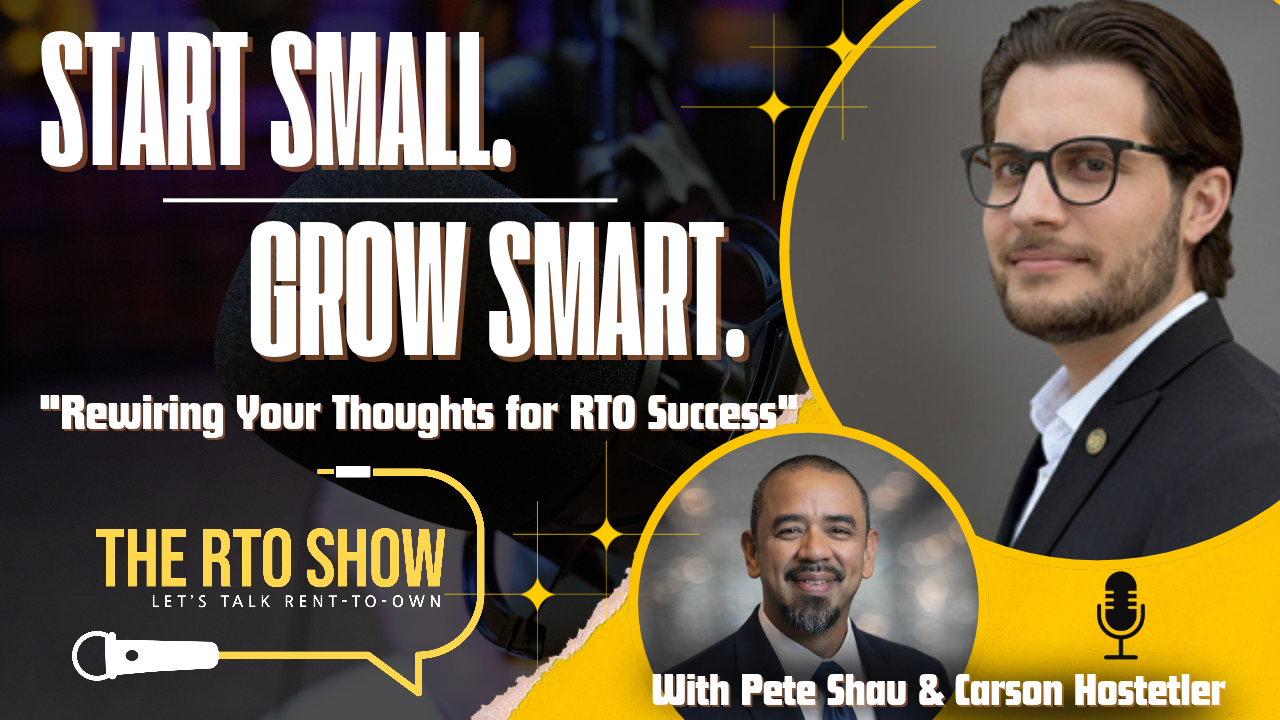
Growing a rent-to-own business requires more than ambition. It takes financial discipline, operational focus, and a willingness to learn from experience. For Carson Hostetler, owner of Advantage RTO and a board member of the National Shed Rental Association (NSRA), those lessons came from nearly a decade in the portable shed industry.
In a recent episode of The RTO Show Podcast, Hostetler joined host Pete Shau to discuss his journey from selling sheds to leading a manufacturing company and eventually operating his own rent-to-own business. Hostetler shared what worked, what didn’t, and how those decisions shaped the way he runs his business today.
Rent-to-Own Business Growth Starts with Focus
Hostetler entered the shed industry in 2018 as a salesperson before joining a young manufacturing company that eventually became Eagle Ridge Barn Builders. He rose to president and later earned an ownership stake through a five-year, performance-based agreement tied primarily to sales goals.
The company expanded gradually, adding facilities, equipment, and employees as revenue supported the investments.
Rather than pursuing every opportunity, the team eventually learned to concentrate on what it did best. Early operations included highly customized buildings, but the company later narrowed its offerings to focus on products it could manufacture efficiently and profitably.
That same approach shaped decisions about transportation. After experimenting with an in-house shed-hauling operation, the company largely returned to third-party delivery providers when the numbers and operational demands no longer supported the original strategy.
The takeaway for RTO operators is straightforward: Growth does not always mean adding more services. Sometimes it means identifying which activities produce the strongest results and directing resources toward them.
Understanding the Shed Rent-to-Own Business Model
Hostetler eventually shifted his attention from manufacturing to Advantage RTO, which partners with shed manufacturers and purchases rental-purchase agreements.
Unlike traditional storefront RTO operations, some shed RTO businesses separate manufacturing, retail sales, agreement administration, and customer service responsibilities among different companies.
Hostetler explained that his business focuses on administering agreements, managing customer accounts, and coordinating returns, while manufacturers generally handle building-related warranty issues.
The distinction allows each company to concentrate on its area of expertise.
His experience also demonstrates why RTO operators must understand their financial capacity, agreement requirements, and operational responsibilities before expanding. Entering new markets requires evaluating applicable state laws, while adding manufacturer partnerships requires sufficient capital to support additional agreements.
Learn From the People Who Have Already Been There
One of Hostetler’s strongest messages was the importance of building relationships with experienced industry professionals.
As an NSRA board member, he has gained access to operators with decades of experience who offer perspective on financing, portfolio performance, operational challenges, and regulatory considerations.
NSRA, an APRO member association serving the shed rent-to-own industry, also provides educational events, networking opportunities, and industry advocacy.
Hostetler encouraged aspiring business owners to look beyond immediate opportunities and consider what their professional lives might look like 20 years into the future. Learning how established operators manage their responsibilities can help newer owners make better-informed decisions.
For operators across the RTO industry, his experiences reinforce a valuable principle: Sustainable rent-to-own business growth depends on knowing when to expand, when to simplify, and when to seek guidance.
Catch the full episode of The RTO Show Podcast, proudly sponsored by APRO, on Spotify.

