Training someone to complete a task is one thing. Training them to understand why they are doing it, adapt when the situation changes, and confidently work with customers takes something more: time.
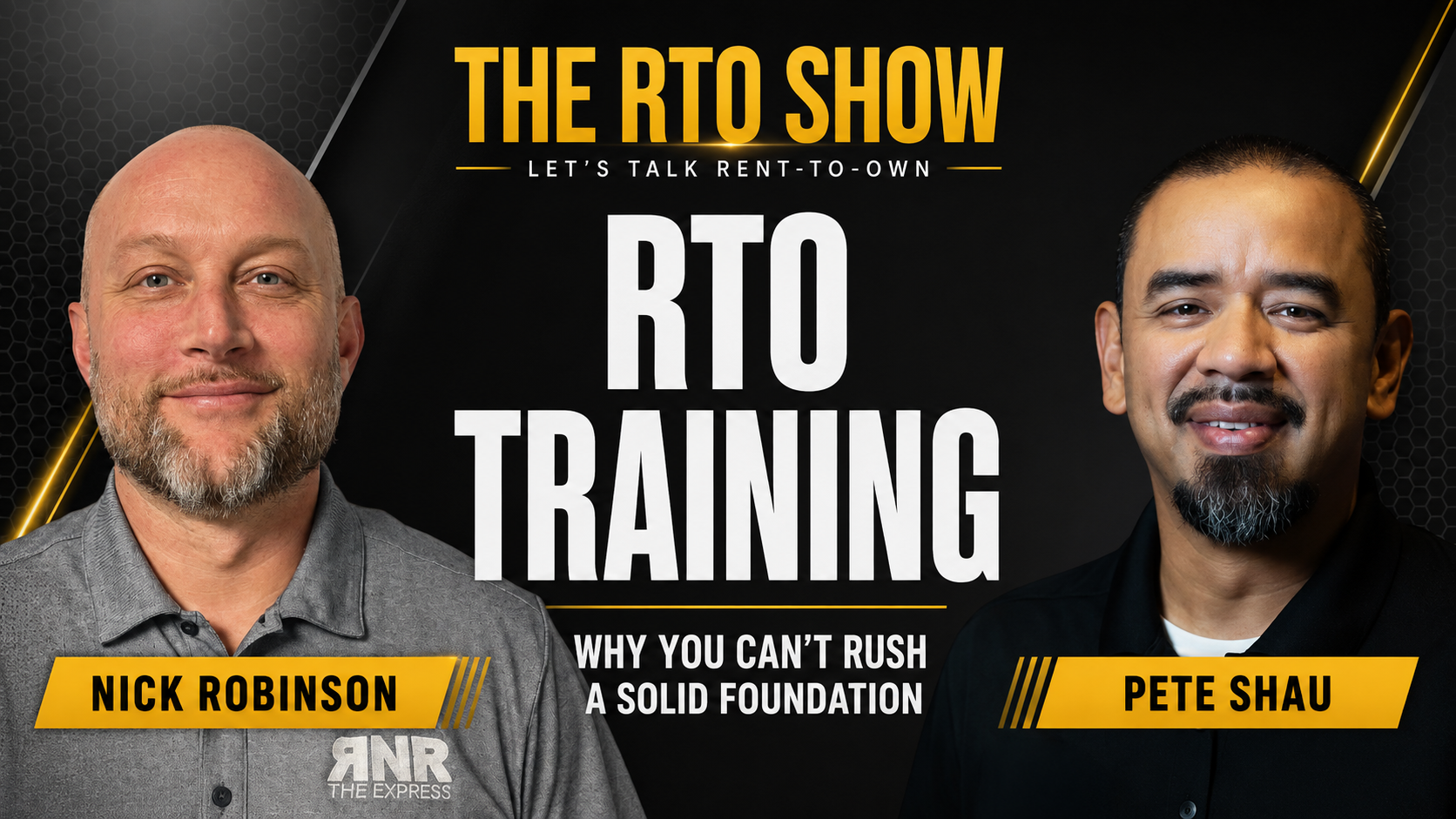
In this episode of The RTO Show Podcast, Pete Shau talks with APRO member RNR Tire Express Franchise Training Specialist Nick Robinson about rent-to-own (RTO) employee training and what happens when businesses try to move new team members through the process too quickly.
Robinson works directly with teams in the field, helping employees develop the operational knowledge they need while reinforcing something he considers even more fundamental: taking care of people. His own approach was shaped by mentors who invested in him early in his career, and today he sees training as an opportunity to pass that investment forward.
Why RTO Employee Training Takes Time
RTO comes with terminology, processes, customer interactions, and situations that can become second nature to experienced employees. That familiarity can also make it easy to forget how much a new employee is being asked to absorb.
Robinson and Shau discuss the danger of assuming someone understands a concept simply because it has been explained. Classroom instruction, videos, and step-by-step processes have a place, but employees also need opportunities to apply what they have learned.
Role-playing is one way to bridge that gap. Instead of simply explaining how to answer a phone call or manage an account, trainers can give employees a chance to work through realistic situations before they are handling them alone.
That practice matters because RTO rarely follows a perfect script. Customer circumstances differ, conversations change direction, and employees need enough understanding to respond appropriately rather than simply check boxes.
Shau points to another common challenge: an open position can create pressure to get someone trained and working immediately. But speeding through employee training because a store needs help can create bigger problems. When too much information arrives too quickly, employees can become overwhelmed, and important lessons stop sticking.
Robinson argues that leaders have to be willing to fill the gap until an employee is ready. That also means recognizing that people learn differently and giving employees permission to ask questions, make reasonable mistakes, and continue learning.
The episode ultimately makes a case for training that goes beyond teaching processes. Strong trainers invest in people, explain the reasons behind the work, look for genuine understanding, and develop employees who can eventually pass that knowledge to someone else.
Listen to the full episode of The RTO Show Podcast, proudly sponsored by APRO, on Spotify or watch it on YouTube.
Listen Now
Watch Now
RNR Tire Express has been an APRO member since 2001.