


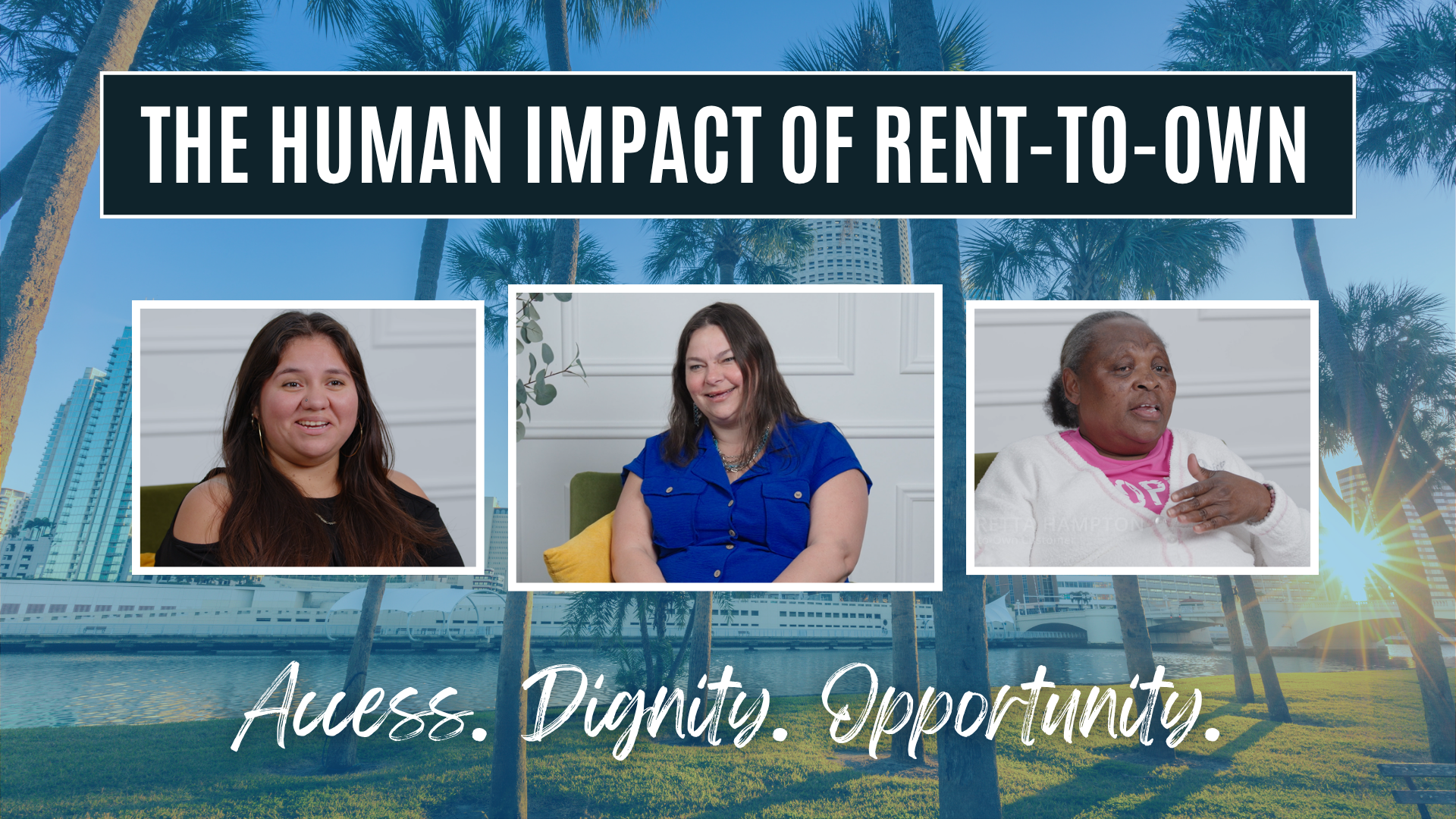
A customer explaining why rent-to-own (RTO) worked for her family can answer questions a policy brief never reaches. An employee describing a career built around helping customers gives a lawmaker someone to picture when considering legislation. A dealer recalling years of advocacy explains why the industry continues to show up in Washington.
Throughout 2026, APRO has worked to bring more of those voices into public view. Customer and employee videos, interviews recorded at the Legislative Conference, member profiles, community giving stories, and conversations with industry pioneers all contribute to that effort. Together, they give people outside rent-to-own a fuller understanding of the people within it.
That understanding matters to advocacy. Before officials make decisions affecting RTO, they need to know how the transaction works, why customers choose it, and what those decisions could mean for the communities they represent. APRO’s storytelling gives those conversations specific people, experiences, and examples to draw upon.
RTO Stories Strengthen Industry Advocacy Through Experience
The Human Impact of RTO video project begins with the people closest to the transaction: customers and the employees who serve them. Filming in Florida and New York captured experiences that reflect different reasons for choosing rent-to-own, from convenience and flexibility to the need for household essentials during a difficult transition.
In his testimonial, Andrew Clark describes losing the home his family had lived in for 47 years to a fire. He recalls how his CPL Group Inc. dba Rent King store offered to hold payments and work with his family after receiving the fire report. Speaking to what he wants lawmakers to understand, Clark points to that response: people facing an unexpected crisis need businesses willing to work with their circumstances.
Marla Dudgeon of Buddy’s Home Furnishings offers a different perspective: she was an RTO customer before joining the industry herself. Over approximately 15 years, she progressed through sales, credit, and general management roles. In her video, she describes customer relationships that have lasted across generations, including an invitation to the baby shower of a longtime customer’s granddaughter. Her account shows how a job opportunity developed into both a career supporting her family and a lasting place in other families’ lives.
That variety is essential. There is no single customer story that explains everyone who uses rent-to-own. Listening to several experiences helps an audience understand why access, timing, service, and flexibility may matter differently from one household to another.
For advocacy, those details give meaning to language that can otherwise sound abstract. “Consumer access” becomes easier to understand when a customer describes what access made possible.
Bringing Industry Voices Beyond Capitol Hill
APRO’s advocacy videos recorded at Legislative Conference 2026 extend the conversations members began in Washington. Participants speak about the customers they serve, explain the RTO model, and describe why they take time away from their businesses to meet with legislators. The recordings preserve those perspectives for audiences beyond the offices members visited.
An advocacy montage video created specifically for legislators brings industry voices together in a format designed to introduce policymakers to rent-to-own. APRO is also cutting shorter videos for social media, sharing both direct advocacy messages and accounts of how members help their customers.
The formats serve different purposes. The legislative montage gives officials an introduction to the industry through its people. Shorter clips allow individual experiences and explanations to reach the public, one topic at a time, and give members material they can share through their own networks.
Debbie Brake of National TV Rental & Sales makes that connection especially clear. She recalled an elderly customer living alone who discovered her refrigerator had stopped working just after completing her monthly grocery shopping. The customer called 15 minutes before closing, and employees volunteered to stay late and deliver a replacement so she could save her food. Brake’s account gives policymakers a practical example of what access and responsive local service can mean to a household.
The interviews also show how closely customer service and advocacy are connected. Members can explain why a payment option matters because they have helped someone use it. They can describe the value of flexibility because they have worked with customers whose circumstances changed. Recording those explanations makes that experience available long after LegCon ends.
Showing Who Works in Rent-to-Own
APRO’s Faces of RTO coverage gives readers a closer look at the people behind the businesses. APRO-fessional member profiles, Meet Your Board, Meet the VAC, Fellows in Focus, Scholarship Stars, and other features explore how people entered the industry, what they have learned, and what motivates them to keep serving customers.
Those details can be revealing. In this year’s APRO-fessional profile of Devin Zenteno, the Rent King store manager describes a career that began with an opportunity at age 20 and grew into decades of service in his community. He also explains why some customers choose RTO for temporary needs, including a seasonal resident who rents a lift chair during her time in Florida.
A profile like that helps readers understand both the person and the business. Career progression, local involvement, repeat customers, and individual choices become part of the account of how RTO operates.
Fellows in Focus adds another perspective by following members as they learn to represent the industry in legislative conversations. Those experiences help colleagues see how their own knowledge of customers and store operations can contribute to advocacy.
Documenting Service in Our Communities
The stories APRO publishes on its website and in its APRO Today email newsletter also document what members contribute outside their daily business operations. Charitable giving, volunteer work, nonprofit partnerships, and local projects show where members put their time and resources.
This year’s coverage included Aaron’s, LLC employees furnishing the Albany Boys & Girls Club teen center with $20,000 in furniture and electronics, along with a $10,000 contribution for programming. After RTO World, APRO also reported on 12 exhibitors donating more than $81,000 in furniture, appliances, and other goods to organizations serving young people in Palm Beach County.
Reporting the particulars makes these stories useful: who participated, what they provided, and whom the work helped. It gives readers something more substantial than a general statement that the industry cares about its communities.
For an elected official getting to know a local RTO business, that record provides context. The company is also an employer, a community partner, and a place where people invest in the neighborhoods they serve.
Recognizing Veterans and Preserving Industry History
November’s veterans coverage brought another part of the industry’s experience forward. Through The Habit of Service and six individual profiles, APRO recognized veterans whose military service helped shape their approaches to work, responsibility, and leadership. Their accounts also described how they continue supporting veterans through hiring, community involvement, and other efforts.
The RTO Legends series looks further back, preserving firsthand accounts from people who helped build the industry. Produced by APRO and wowbrands in partnership with Pete Shau of The RTO Show Podcast, the series documents business beginnings, difficult decisions, and the collective work behind the industry’s development.
Those memories have direct relevance to advocacy. In his interview, Chris Korst recalls efforts to explain the rental model to lawmakers and protect it through legislative challenges. His account connects today’s advocacy work to the people who helped establish the industry’s regulatory foundation.
Preserving those experiences gives newer professionals a way to understand why that work mattered and why it continues. It also gives outside audiences access to the people who participated in the history they are researching.
Making These Stories Available When They Matter
Publishing and sharing this material is part of the advocacy work itself. A legislative staff member researching RTO, a reporter preparing a story, or a consumer asking questions online needs access to accounts that accurately describe the industry. APRO’s growing collection gives those audiences more firsthand material to consider.
It also supports APRO’s broader effort to improve the information available through search and AI tools. APRO has addressed that connection and the importance of preserving industry history and publishing factual material. Stories add people and context to that record; they are most useful alongside clear explanations, reliable data, and documented sources.
Members can help by sharing APRO’s published videos and articles, suggesting employees and colleagues for profiles, and bringing forward customer experiences and community projects worth documenting. A story familiar to everyone in a store is entirely new to someone writing policy about that business.
The work members do every day gives APRO something concrete to explain. Telling those stories makes it possible for more people – including those making decisions about RTO’s future – to hear directly from the people those decisions affect.

