


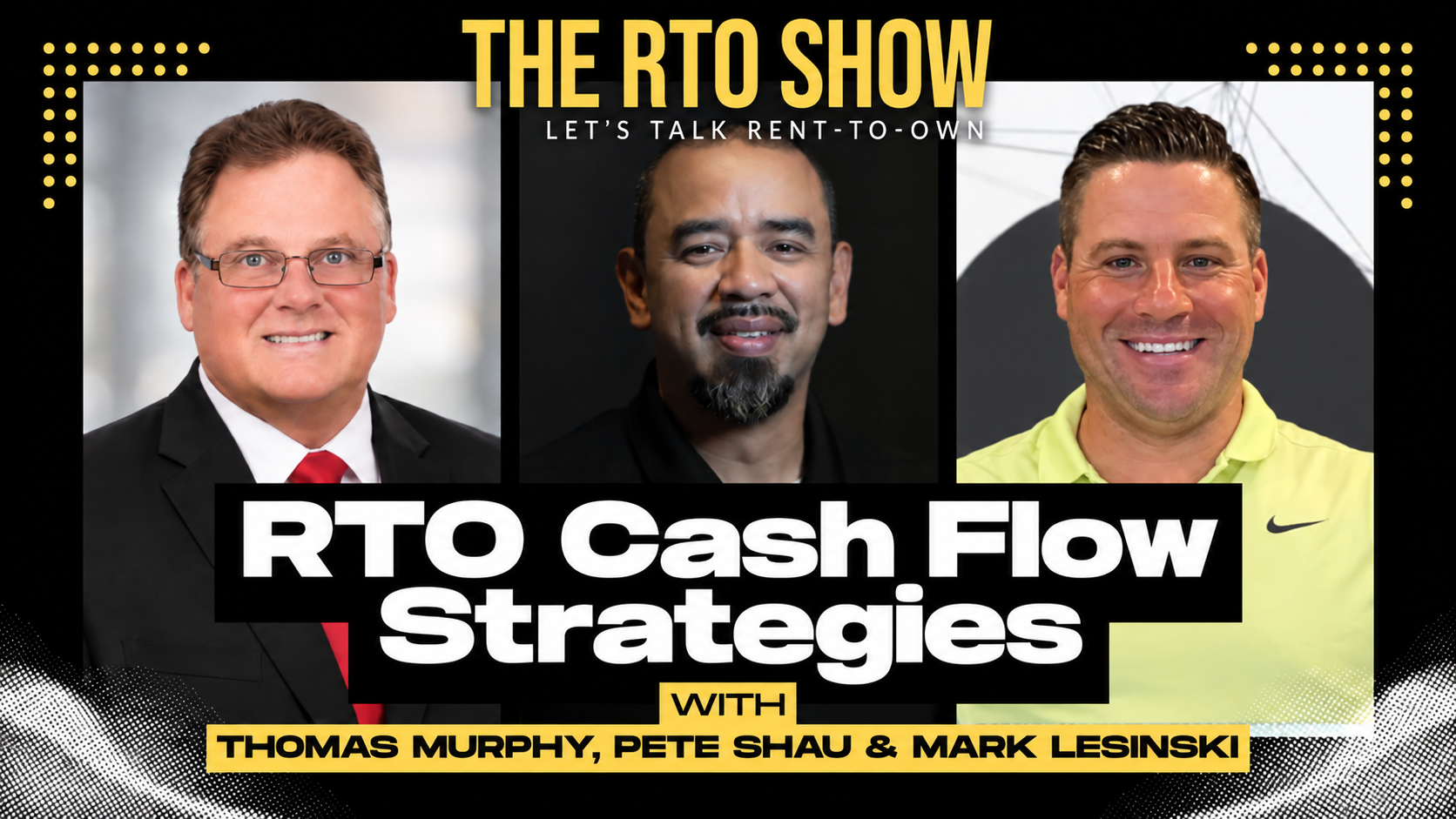
For rent-to-own (RTO) businesses, improving cash flow often means increasing sales, strengthening collections, or securing additional financing. Beyond traditional financing, sound account management and a clear understanding of available financial options can help dealers strengthen their overall financial position.
In a recent episode of The RTO Show Podcast, Tom Murphy from APRO member Capital Concierges LLC and Landmark Strategy Group’s Mark Lesinski joined host Pete Shau to discuss RTO cash flow strategies, including how dealers can assess financial resources, explore alternatives to traditional borrowing, and maintain responsible account management practices.
RTO Cash Flow Strategies Beyond Traditional Financing
Murphy, who began his RTO career in 1985, explained why securing business financing can be challenging for rental-purchase operators. Because customers can return merchandise and end future rental payment obligations, traditional lenders may not fully understand the industry’s financial structure.
Murphy emphasized the importance of helping lenders understand an RTO business’s financial performance, including profitability, cash flow, and existing debt. Financing options may include Small Business Administration (SBA) loans, lines of credit, and working capital for inventory, equipment, acquisitions, or expansion.
However, borrowing is not the only option. Dealers may also be able to evaluate the potential financial benefits of transferring eligible account portfolios through a structured transaction with a qualified third party.
Understanding the Value of Account Portfolio Management
Lesinski explained that account portfolio management can play a role in a dealer’s broader financial strategy.
When evaluating account portfolios, dealers should consider documentation quality, account history, applicable legal requirements, and the financial implications of any proposed transaction. Understanding these factors can help determine whether a portfolio transaction aligns with their business objectives.
The discussion highlighted several considerations for dealers evaluating this approach:
- Review outstanding accounts. Regular account reviews can support accurate reporting, informed financial decisions, and effective portfolio management.
- Maintain accurate documentation. Rental agreements, payment histories, and digital records help establish account validity and may influence portfolio evaluations.
- Understand the financial trade-offs. Dealers should evaluate proposed transaction terms, potential financial outcomes, and the impact on their overall business strategy.
- Consider state-specific requirements. Applicable laws and contractual obligations must be considered when evaluating account management options and third-party relationships.
Dealers should evaluate potential proceeds against the costs, risks, and operational implications before deciding whether a portfolio transaction is appropriate for their business.
Protecting Customer Relationships
One of the episode’s most important discussions centered on the importance of understanding rental-purchase agreements and maintaining professional, respectful customer interactions.
Unlike conventional installment loans, rental-purchase agreements allow customers to return merchandise and discontinue future payment obligations. Anyone handling these accounts must understand those contractual rights and applicable legal requirements.
Lesinski emphasized the importance of working with knowledgeable service providers who understand RTO agreements, follow appropriate procedures, and prioritize compliance and respectful customer communication.
The guests also discussed how responsible account resolution practices can support positive long-term customer relationships. For dealers, maintaining respectful communication can help preserve community relationships and potentially create opportunities for future business.
Evaluating the Right Approach
Whether considering financing or other financial management options, dealers should begin by understanding their financial position, operational needs, and long-term goals.
The conversation reinforces an important principle: Effective RTO cash flow strategies require more than finding immediate funding. Dealers must also evaluate costs, understand contractual obligations, select responsible service providers, and protect the customer relationships that support their businesses.
Catch the full episode of The RTO Show Podcast, proudly sponsored by APRO, on Spotify.

