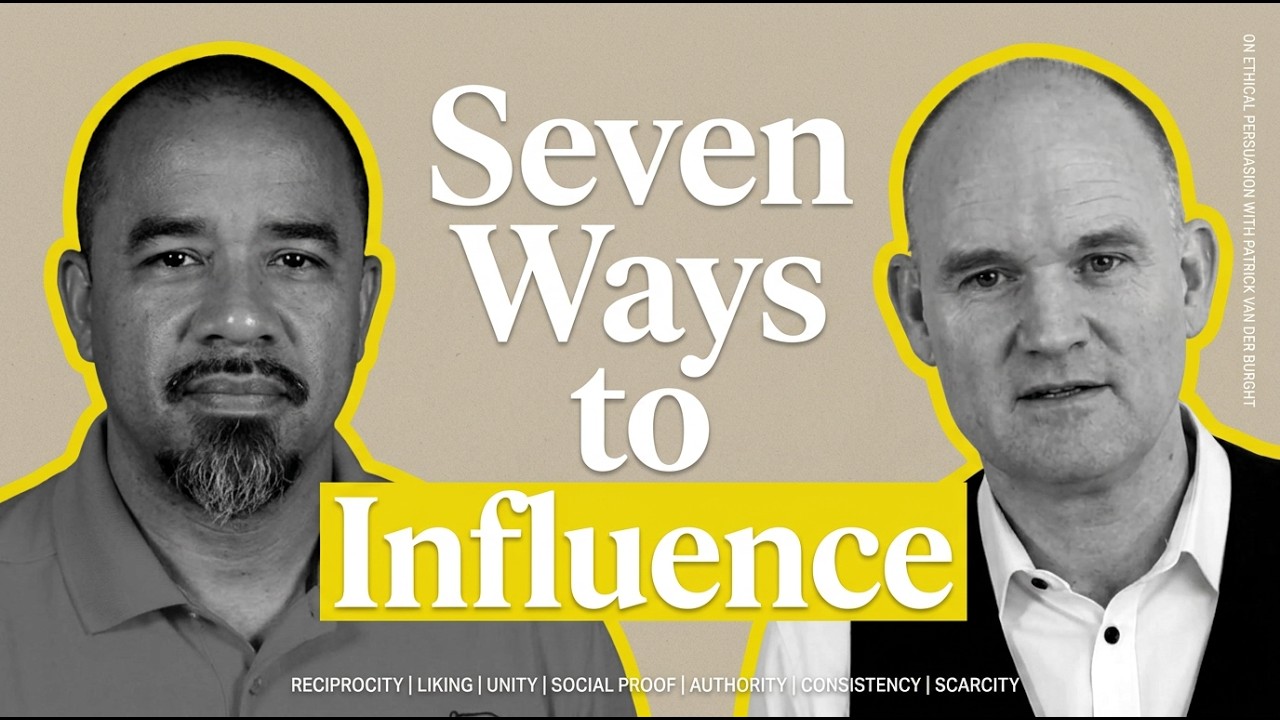
What separates a great salesperson from an average one? According to ethical persuasion expert Patrick van der Burght, it is not necessarily product knowledge, effort, or even experience. It is understanding how people actually make decisions. In this episode of The RTO Show Podcast, Pete Shau sits down with Patrick to explore the science behind ethical persuasion and how businesses can use it to create better outcomes for customers and teams alike.
Patrick’s journey into the field began while working as a sales representative in Australia. Frustrated that hard work alone was not producing the results he expected, he discovered the research of Dr. Robert Cialdini and became fascinated by the psychology of decision-making. Applying those principles helped him overcome significant sales challenges and ultimately transform business results.
Why Ethical Persuasion Matters
One of the most eye-opening discussions centered on how people make decisions. Patrick explained that most decisions are not driven by careful logic and analysis. Instead, they are made through fast, intuitive mental shortcuts. He shared research from Nobel Prize-winning psychologist Daniel Kahneman showing that the vast majority of decisions happen automatically, making it essential for businesses to communicate in ways that reduce uncertainty and simplify choices.
For rent-to-own (RTO) operators, that insight has direct applications. Customers often delay decisions not because they are saying “no,” but because they are overwhelmed or uncertain. Patrick argues that businesses leave significant opportunities on the table when they fail to understand the science behind persuasion.
The conversation also explored Cialdini’s seven principles of persuasion: reciprocity, liking, unity, social proof, authority, consistency, and scarcity. Patrick shared practical examples of each, from using authentic customer reviews more effectively to building trust through credibility and expertise. One particularly relevant takeaway for sales teams was the power of social proof, demonstrating how customers often look to the actions of others when making decisions.
Another memorable lesson focused on credibility. Patrick explained that even small details matter, such as using exact numbers instead of rounded estimates. Precise information often feels more trustworthy and can strengthen a customer’s confidence in a business.
For anyone involved in sales, collections, leadership, or customer service, this episode offers valuable insights into how ethical persuasion can improve communication, strengthen relationships, and help customers make confident decisions.
Listen to the full episode of The RTO Show Podcast, proudly sponsored by APRO, on Spotify or watch it on YouTube.