At APRO’s 2026 Legislative Conference, the rent-to-own (RTO) industry arrived in Washington, D.C. with clarity, confidence, and a unified voice. With 100 registered attendees and a growing wave of first-time participants, APRO’s annual LegCon continues to solidify its role as the centerpiece of RTO legislative advocacy.
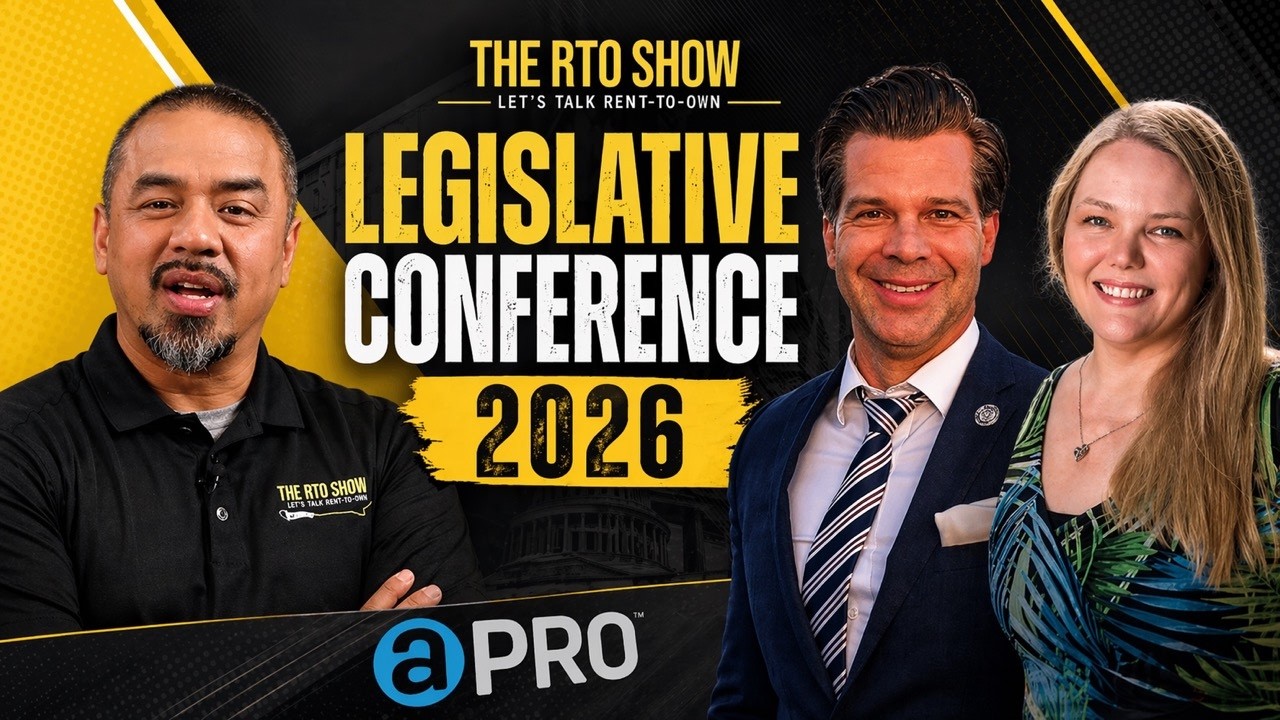
APRO CEO Charles Smitherman and Director of Marketing and Communications Amberlee Maya join Pete Shau from The RTO Show Podcast to share a behind-the-scenes look at LegCon 2026. Together, they unpack what made this year’s event stand out and why it plays such a critical role in shaping the future of the rent-to-own industry.
RTO Legislative Advocacy in Action
LegCon is not just a conference – it’s a coordinated advocacy effort. Attendees spend the day on Capitol Hill meeting with legislators and their legislative aides to define the RTO transaction in their own words.
As Smitherman explains, “If we’re not out there defining ourselves, someone else will.” That principle drives every conversation in D.C., especially as misconceptions about rent-to-own persist.
The day begins with a keynote session, which this year featured Consumer Financial Protection Bureau (CFPB) Deputy Director Geof Gradler, followed by a full schedule of 111 scheduled meetings across congressional offices. APRO Director of Events Lisa Krabbenhoft expertly organizes these meetings in advance, allowing attendees to focus on the message rather than logistics.
Walking into those meetings, the experience is often eye-opening. As Maya puts it, “Almost everybody you talk to…they don’t really know the industry.”
That creates an opportunity for attendees to educate lawmakers on what RTO truly is. As Smitherman reinforces, the goal is to clearly define the transaction before others attempt to do it incorrectly, emphasizing that rent-to-own is not a credit product but the ultimate flexible, consumer-friendly solution.
Inside the Meetings: What Advocacy Looks Like
For first-time attendees, the idea of meeting with lawmakers can feel intimidating. In reality, the conversations are far more approachable and impactful.
Participants typically meet in small groups with legislative staffers or, when schedules allow, the elected officials themselves. These discussions focus on explaining the RTO model, sharing real customer stories, and highlighting the economic impact within their districts.
Maya emphasizes the power of storytelling and sharing the human impact of RTO: “We tell the stories of real people and how rent-to-own impacts the customers, the employees, and the communities that we serve.” That human element is what resonates most.
She also recalled the insight shared by industry veteran and APRO Board Member Shannon Strunk, demonstrating the long-term impact of those conversations: “You make a connection with these people so that if something comes across their desk that deals with rent-to-own, they remember your face – they know who to call.”
Smitherman adds that these conversations are about more than a single visit to Capitol Hill. They are part of a long-term strategy to build credibility and trust with lawmakers and their teams, ensuring the industry has a reliable voice in future policy discussions.
He also emphasizes that staffers are just as important to meet with as the elected officials themselves. They serve as primary advisors, conduct research, and remain consistent even as elected offices change. Building those relationships ensures the industry’s message carries forward long after LegCon ends.
Veterans, New Voices, and a Unified Industry
One of the defining moments of LegCon comes during the debrief dinner, where attendees reflect on their experiences. It’s here that the full picture of the industry comes into focus.
Veterans who have spent decades advocating for RTO share their perspectives alongside newcomers attending for the first time. That dynamic – experienced leaders walking alongside the next generation – is central to the event’s impact.
Smitherman describes it as a shared sense of purpose: “We’re an industry of stories. That is our strength.” That strength is amplified when competitors set aside differences and speak with one voice.
LegCon 2026 also highlighted the expanding reach of the industry, with participation from traditional dealers, virtual RTO providers, tire and wheel businesses, shed rental companies, and RTO vendors. This broader representation strengthens RTO legislative advocacy by demonstrating the scale and diversity of the industry.
Why Proactive Advocacy Matters
While the tone in Washington, D.C. is proactive, the episode also highlights the risks of inaction. Ongoing legislative challenges in states like New York serve as a reminder of what happens when the industry’s story is told by others – people who don’t understand the transaction and the access we provide to communities across the country.
Smitherman frames it clearly: proactive advocacy is about preventing problems before they start. “The best time to repair a roof is when the sun’s shining,” he says, reinforcing why LegCon is so critical.
This proactive approach is the difference between shaping the conversation and reacting to it. LegCon exists to ensure the industry is always in a position of strength, not scrambling to respond after the fact.
The Lasting Impact of LegCon
For many attendees, LegCon is more than an event – it’s a turning point. What begins as uncertainty quickly transforms into confidence as participants realize that their voice matters.
Maya encourages broader participation across the industry, emphasizing that advocacy isn’t limited to leadership roles. “It’s important for everybody to be there,” she says. “Everybody has a good story to tell.” Every perspective adds depth, and every story strengthens the industry’s collective voice.
LegCon 2026 proved that when the RTO industry comes together with intention, it doesn’t just protect its future – it actively defines it.
Listen to the full episode of The RTO Show Podcast, proudly sponsored by APRO, on Spotify or watch it on YouTube.