
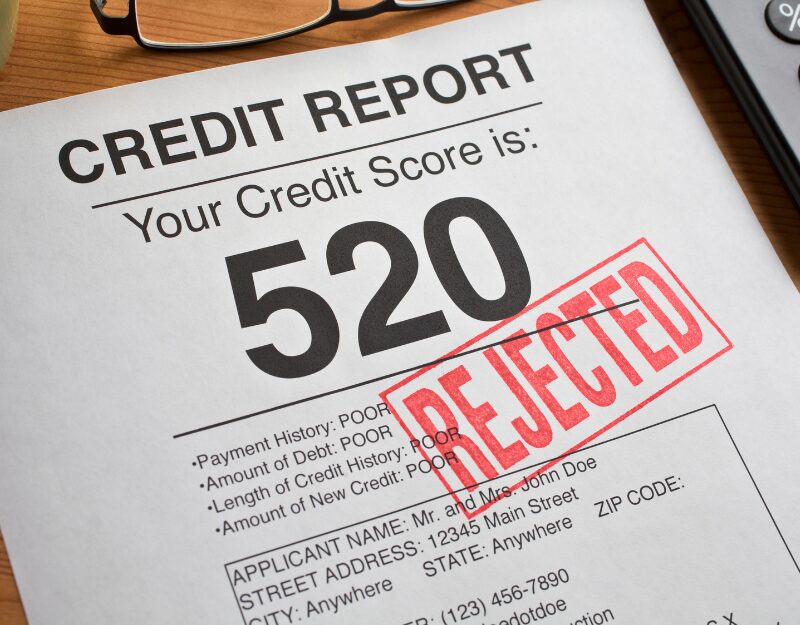
A recent national credit gap survey released by APRO member Snap Finance highlights a trend that many in the consumer finance and retail sectors have felt for years but struggled to quantify: the financial divide in America is not only real, it is widening – with 91% of consumers with credit scores below 670 report living paycheck to paycheck, compared with just 53% of those with stronger credit profiles.
At its core, the study finds that consumers with higher credit scores are gaining increased access to favorable financing options, while those with lower or limited credit histories are facing tighter constraints, fewer choices, and higher barriers to entry. That divergence is not new. What is new is the degree to which it is accelerating.
For policymakers, retailers, and service providers alike, the implications are significant. This is no longer simply a question of creditworthiness. It is a question of access.
In that context, for decades, the rent-to-own (RTO) industry has operated within this access gap, providing a structured path for consumers who fall outside traditional credit frameworks.
A System Working Exactly as Designed
The modern credit system is highly efficient at what it was built to do: reward predictability.
Consumers with stable income, long credit histories, and strong repayment records are offered lower rates, higher limits, and seamless digital experiences. In many cases, access to financing is nearly invisible, embedded into transactions and approved in seconds.
But that same system becomes increasingly rigid outside those parameters. Consumers with thin credit files, past delinquencies, or variable income streams often encounter friction at every step. Applications are declined. Limits are reduced. Terms become less favorable. In some cases, access disappears altogether.
For many households, that lack of access exists alongside minimal financial cushion, with 65% of credit-challenged consumers reporting $500 or less in savings, including 22% with no savings at all.
This is not a failure of the system. It is the system functioning as designed.
The challenge is that the design assumes a level of financial stability that no longer reflects the lived reality of a large portion of American households.
Credit Scores and the Illusion of Stability
One of the more revealing aspects of the Snap study is not simply the gap between high- and low-credit consumers, but what that gap represents.
Credit scores are often treated as a proxy for financial health. In practice, they are a measure of past borrowing behavior within a specific system. They do not fully capture income volatility, unexpected expenses, or the financial trade-offs that define everyday life for many households.
A consumer may have a lower credit score not because of irresponsibility, but because of medical debt, a temporary job disruption, or the absence of traditional credit usage altogether. Another may have a high score while still operating with little margin for financial shock.
The result is a growing disconnect between how consumers are evaluated and how they actually live.
The Rise of Parallel Access Models
As this divide expands, alternative models are not emerging by accident. They are emerging in response.
Across the broader economy, there has been a clear shift toward models that prioritize flexibility, immediacy, and optionality. Subscription services, short-term leasing, and rent-to-own models all reflect a common principle: access without long-term obligation. In particular, rent-to-own provides a regulated, transparent structure that allows consumers to obtain essential goods while maintaining flexibility as their financial situation evolves.
These models are not designed to replace traditional credit. They serve a different purpose.
For consumers navigating uncertainty, the ability to obtain essential goods or services without taking on fixed, long-term debt can be more valuable than securing the lowest possible financing rate. The trade-off is not simply cost. It is control.
From Margins to Mainstream
What is often overlooked in discussions of financial access is how widespread this dynamic has become.
The divide identified in the Snap study does not exist at the margins. It cuts across demographics, income levels, and geographies. Middle-income households facing rising costs, gig workers with fluctuating income, and younger consumers with limited credit histories all encounter variations of the same constraint.
Rent-to-own has long served many of these same households – including middle-income families managing rising costs, workers with variable income, and consumers rebuilding after financial disruption. It represents a consistent, structured pathway to access for consumers who have historically been underserved by traditional credit models.
In this environment, access models that were once viewed as niche are increasingly operating in the mainstream.
They provide a bridge between immediate need and long-term financial decision-making. They allow consumers to adapt as circumstances change. And importantly, they shift the risk profile away from long-term obligation toward short-term flexibility.
Reframing the Conversation
For years, debates around consumer finance have focused heavily on cost comparisons, often reducing complex transactions to simplified price metrics.
While cost matters, it is not the only variable consumers consider. Timing, flexibility, service, and the ability to adjust or exit an agreement all carry weight, particularly for households operating under uncertainty, 58% of whom describe their financial situation as unstable or very unstable.
Rent-to-own transactions illustrate this dynamic clearly. Consumers are not simply comparing total price – they are evaluating flexibility, service, and the ability to adapt payments or return products if circumstances change.
The Snap study reinforces a broader point: when access to traditional credit narrows, consumers do not stop needing essential goods. They look for alternatives that align more closely with their circumstances.
Understanding those choices requires moving beyond assumptions and engaging with the realities of how people manage risk in their daily lives.
A Forward-Looking Perspective
If current trends continue, the divide in credit access is likely to widen further. Advances in underwriting, data analytics, and risk modeling will continue to refine how traditional credit is allocated, often becoming more precise, but not necessarily more inclusive.
At the same time, consumer expectations are evolving. Flexibility is no longer viewed as a compromise. For many, it is a preference.
This creates both a challenge and an opportunity.
The challenge is ensuring that conversations about consumer protection and financial access reflect the full range of models operating in the market today. The opportunity is to recognize that innovation in access is not a deviation from the system, but a response to it.
Models like rent-to-own will continue to play a critical role in that landscape, not as substitutes for traditional credit, but as complementary pathways that expand access where conventional systems fall short.
The question moving forward is not whether alternative models will continue to grow. The data suggests they will.
The more important question is whether policymakers, industry leaders, and observers will take the time to understand why.