By Justin B. Hosie and K. Dailey Wilson
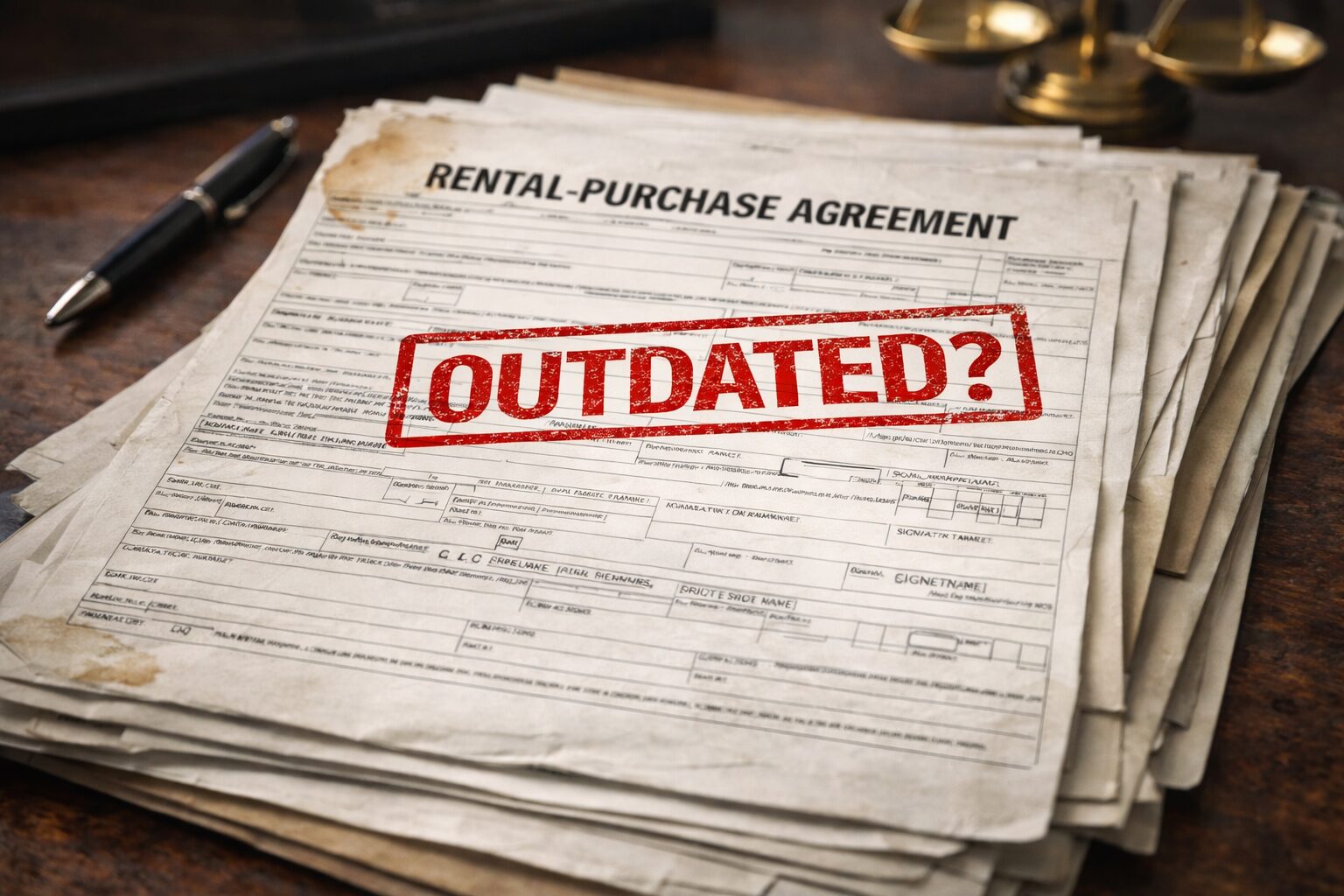
When was the last time you updated your rental-purchase agreement? A year ago? Two years ago? Five years ago? Unfortunately, consumer-facing documentation should be reviewed and updated on at least an annual basis. Even if the state rent-to-own law hasn’t changed, there could be changes to the way that law is interpreted or changes to other laws that impact the document, such as arbitration laws.
You do have a couple of options in terms of having your agreements updated. First, you could engage an attorney to review your existing agreement and suggest any changes to that agreement. As stated above, these revisions could be based on changes to the way the rent-to-own law or other applicable laws are interpreted or based on actual statutory changes to laws that impact the agreement. This could be an attractive option if you have a good template agreement that you worked with an attorney to develop, and it likely just needs a few changes here and there.
Alternatively, you could choose to take advantage of APRO’s new RTO/LTO Model Lease Agreement Library. APRO engaged the authors of this article to develop a library of lease agreements, designed to comply with the applicable state RTO/LTO law and that include an arbitration clause. Members can obtain these templates by entering into a limited attorney-client engagement with the authors of this article, allowing the authors to counsel members about the model lease in light of the member’s operations and jurisdiction. Additionally, you’ll have the opportunity to discuss the merits of developing and providing ancillary disclosures to address additional compliance considerations.
Either way is a good way to go about updating your lease agreement – the right approach will vary from member to member. Points to consider when deciding on the best updating method include:
- Whether your existing lease agreement has been updated/drafted within the last couple of years.
- Whether your existing lease agreement includes ancillary disclosures, like a payment authorization, communication consent, E-Sign agreement, etc.
- Whether your existing lease agreement was drafted by an attorney.
- Whether your business operations are unique, requiring more customized disclosures, such as convenience fees, calling/text authorizations, electronic signatures, and special products like tires or mobile phones.
Whether you decide to use the APRO library or you choose to have an attorney review your existing agreement, the important thing is that you have your agreement reviewed on an annual basis – the law is not static, and your agreement shouldn’t be either.
Justin B. Hosie and K. Dailey Wilson are partners in the Tennessee office of Hudson Cook, LLP. Justin can be reached at 423.490.7563 or by email at jhosie@hudco.com. Dailey can be reached at 423.490.7567 or by email at dwilson@hudco.com.