
“Ty, what did you shoot today?”
“Oh, Judge, I don’t keep score.”
“Then how do you measure yourself with other golfers?”
“By height.”

That iconic exchange between Judge Smails and Ty Webb from Caddyshack is more than just dry comedy – it’s a surprisingly apt philosophy for life, particularly when it comes to health and wellness. Measuring yourself by someone else’s scorecard – whether it’s on the golf course or in the gym – is a trap. It distracts from the only measurement that truly matters: are you better today than you were yesterday?
I’ve seen this play out across my own endurance journey. Even when I was racing Ironman triathlons, I could finish at the front of the swim portion, only to get overtaken by elite and weekend warrior cyclists for the next several hours. It didn’t matter how strong or fit I felt – and showing up for an Ironman typically means being at your best for both – I always felt like everyone else was faster, leaner, or more genetically gifted. And if you’re not careful, that comparison fog can settle over your accomplishments like a damp blanket – and take the times of celebration, when you should feel the best about yourself, into a disheartening, unwinnable situation.
Social media makes this even worse. TikTok gym influencers and glossy Instagram reels showcase perfect lighting, perfect angles, and sometimes not-so-perfect authenticity. It’s easy to ask yourself: What’s the point? I’ll never look like that. I’ll never be the best. But being “the best” was never the point. Being your best is what this is about, and for that, your only measurement is you.
That’s where Stoic wisdom enters the conversation. In Letters to Lucilius, Seneca writes:
“I will keep constant watch over myself and – most usefully – will put each day up for review… Yet our plans for the future descend from the past.”
This practice of daily self-review isn’t just a philosophical nicety – it’s a performance tool. By reflecting on your day with honesty and clarity, you begin to notice patterns: when you made aligned choices, when you drifted, when you grew. You stop measuring yourself by someone else’s reel and start becoming your own reel of progress.
There’s no faster way to demotivate yourself than comparing your early reps to someone else’s highlight reel. But there’s also no more powerful engine than showing up with consistency and checking in with your past self. You don’t have to be proud of every workout or every meal – but you do have to be honest about them. You can’t adjust what you don’t examine, just as the management adage goes: what gets measured gets done.
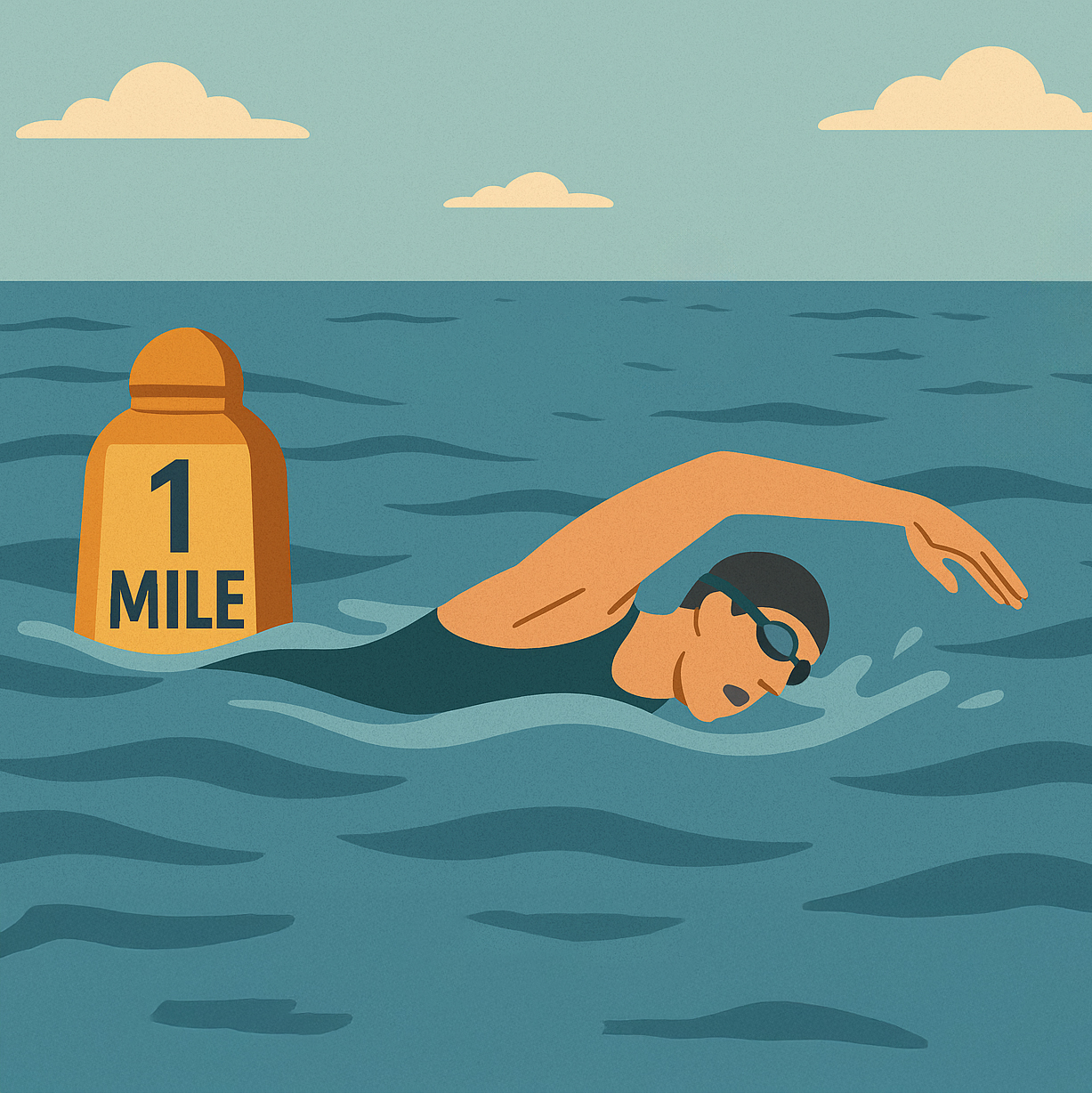
A month from now, I’ll be swimming Swim the Suck, a ten-mile open water race on the Tennessee River near Chattanooga. Just yesterday I trained nine miles. Last year? My longest swim was one mile. And twenty years ago, I couldn’t have imagined this distance. That’s the power of measuring against yourself and over time. Without reflection, I might still be looking sideways, blind to the quiet milestones I’ve already surpassed.
This mindset fits squarely into the Kaizen philosophy – continuous, incremental improvement. It’s not about perfection, it’s about persistence. Improvement doesn’t always look glamorous. Sometimes it looks like lacing up for a short walk on a day you’d rather stay in bed. Sometimes it looks like reviewing your day and resolving to do one thing better tomorrow. But oftentimes it looks like swimming one mile further every month – and going from one mile in the beginning to ten miles months later.
Challenge for the Month
Write your baseline. Pick 3–5 physical or mental benchmarks relevant to your current wellness journey – maybe it’s number of steps, how many pushups you can do, how far you can comfortably run or swim, how consistently you sleep, or simply how often you reflect. Write them down. Then, set a reminder to check back in 30 days and see where you stand. No comparisons. No filters. Just you vs. you.