
Rental dealers occasionally grouse over the time and money spent chasing favorable federal RTO legislation, to date, to no avail. However, those dealers fail to understand the depth and true relationship of the RTO industry to the federal government. If they did, they would see that the industry’s successes in Washington far surpass its alleged failures. This article offers some perspective on the industry and its Government.
The very first attempt to regulate RTO transactions at the federal level occurred before there was a trade association or much of an industry for that matter. In 1979 Rep. Annunzio (D. IL) introduced a bill to amend the definition of “credit sale” in the Truth in Lending Act (TILA) to include RTO transactions. It was a simple bill adding “[the term credit sale] includes any terminable bailment or lease that obligates the lessor to transfer ownership upon full compliance by the bailee or lessee with his obligations under the contract….” The bill went on to explain that the annual percentage rate was to be calculated by assuming that the consumer would make all of the payments necessary for ownership. Happily for the industry this bill died in committee without ever being brought to a vote.
One of the association’s first projects was to go the Washington and lobby for changes to the federal Consumer Credit Protection Act so that RTO transactions would be recognized as leases under federal law.
The trade association did not come into existence until the next year, 1980. Although that initial group of dealers was unaware of the Annunzio bill, they organized to insure, among other goals, a safe legal environment for the growth and development of this relatively new and increasingly popular business model. One of the association’s first projects was to go the Washington and lobby for changes to the federal Consumer Credit Protection Act so that RTO transactions would be recognized as leases under federal law.
No sooner was the trade association formed than it was contacted by the Federal Reserve Board (FRB) which had been tasked with recommending changes to the Truth in Lending Act as part of the Truth in Lending Simplification project. Part of that project also concerned simplifying the Consumer Leasing Act. The FRB drafted an RTO bill and had it introduced by Sen. Hawkins (R. FL) as S. 1151 in 1982. While the bill was not perfect, the industry got fore square behind this initial effort to regulate RTO at the federal level. The industry’s support, financed on a shoestring, resulted in the RTO language being passed by the Senate in 1983 as part of the Garn-St. Germain Omnibus Financial Institutions Deregulation bill. That bill finally died in the House when the 98th Congress adjourned in late 1983.
Since then there has been RTO legislation proposed in nearly every Congress, sometimes pro, sometimes con, sometimes bills from both sides, until the current Congress that has no RTO bills pending. Since 1982 the industry has lobbied for favorable RTO legislation and against anti-RTO bills. The closest the industry has come to a favorable result was in 2002 when stand-alone RTO legislation narrowly passed in the House only to die in the Senate before that body took up the bill.
Over the years, the industry has had to defend against anti-RTO legislation that critics were pushing, bills that would have simply legislated RTO out of existence. In the 80’s Rep. Morrison (D. CT) reintroduced the Annunzio language twice. In the 90’s, Rep. Gonzalez (D. TX) and Sen. Metzenbaum (D. NJ) introduced companion bills to recharacterize RTO as a credit sale. In the 2000’s, there was language offered when the bankruptcy code was being amended to deem RTO transactions secured credit transactions for bankruptcy purposes. Later in that decade. Sen. Shumer (D. NY) introduced anti-RTO bills. In each case, the industry was able to defend against these attacks with the help of their friends in Congress and keep any of these bills from moving.
Over the years, rental dealers have made good friends with many members of Congress. That effort continues as members come and go in every election cycle, every two years for House members; every six years for Senate races. In the meantime, federal agencies time and again have looked at RTO and with the industry’s assistance have come to understand how the transaction really works and have regulated aspects of it accordingly. Here is a brief summary of how RTO transactions stand among the various federal agencies that have considered the issue.
HERE IS A BRIEF SUMMARY OF HOW RTO TRANSACTIONS STAND AMONG THE VARIOUS FEDERAL AGENCIES THAT HAVE CONSIDERED THE ISSUE.
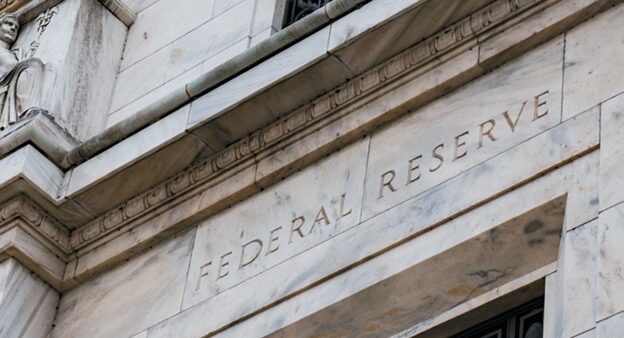
THE FEDERAL RESERVE BOARD
Until recently, the FRB has had jurisdiction over the rules and regulations interpreting the federal Consumer Credit Act, which includes TILA and the Consumer Leasing Act (CLA). The FRB has promulgated Regulation Z to interpret TILA and Regulation M to interpret the CLA. Early on when the FRB was working on regulations to simplify TILA and the CLA in the early 80’s, the RTO issue arose, due in part to several lawsuits against RTO companies in federal court challenging the transactions as disguised credit sales. The FRB actually took the time to study the industry and worked closely with the newly-formed trade association to collect information about the RTO business model. The association organized store visits for FRB staff in the D.C. area, and those visits, coupled with the scant statistical data that the association was able to compile, led to the FRB’s conclusion that RTO transactions were, in fact, leases and not sales.
That conclusion became an amendment to Regulation Z in 1982 as part of the simplification project. That ten-word amendment to the definition of “credit sale” in TILA ended, for the most part, critics’ argument that RTO transactions were really just disguised credit sales under federal law. Some leases are credit sales under TILA “…unless terminable without penalty at any time by the consumer.” While Regulation Z has gone through numerous revisions since 1982, that language in the definition of credit sale has remained unchanged. Had the association not existed and not worked closely with the FRB, it is not likely that the regulation would read the way that it does.
The FRB lost its regulatory jurisdiction over the Consumer Credit Protection Act to the Consumer Financial Protection Bureau (CFPB) when the Dodd Frank Wall Street Reform and Consumer Protection Act was enacted in 2010.
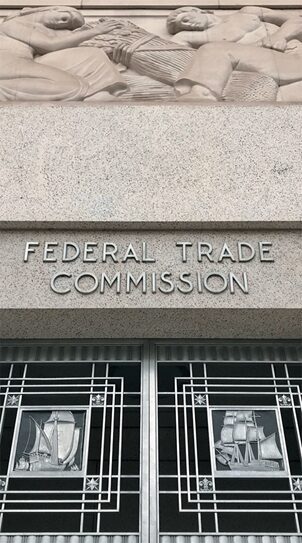
THE FEDERAL TRADE COMMISSION
When the FTC was created in 1914, its purpose was to prevent unfair methods of competition in commerce as part of the battle to “bust the trusts.” In 1938 Congress gave the agency broad authority against “unfair and deceptive acts or practices.”
Historically, the FTC has shown little interest in the RTO industry. The FTC’s consistent testimony when called upon to give it during Congressional hearings on RTO bills has been that the FTC has no strong opinion about how to regulate RTO since it receives so few complaints from consumers about the industry. For example, in House hearings on RTO legislation in 2011 the deputy director of the FTC testified that the Commission had received 1.1 million consumer complaints the year before, and that only several hundred concerned RTO transactions.
In 2000 the FTC’s Bureau of Economics Staff did publish its “Survey of Rent-to-Own Customers.” The published study was the result of a telephone survey of RTO customers. The study found that RTO customers were generally satisfied with their RTO experiences, more satisfied than are consumers generally with their retail buying experiences.
The FTC acknowledged the state network of RTO legislation and the only concrete recommendation concerning additional regulation was that consumers would be better able to “shop around” if they had the important financial terms of the transaction available to them before they were presented with a rental agreement to sign, including the total cost, amount of rental payments, number of payments necessary for ownership, and whether the property is new or used. (The RTO statutes in eighteen states and the District of Columbia have price tag requirements so that dealers must disclose this information before customers see a rental agreement.)
The FTC did jump into the spyware fray in 2011 launching investigations against a dozen RTO companies for their alleged use of computer software that allowed the companies secretly to take pictures of computer users through their webcams, track keystrokes by users and to track the computer’s location. The FTC exacted consent decrees from all of these companies requiring them to quit using the spyware in question and to notify computer rental customers in advance if the company intended to track the computer’s physical location, except in cases where the computer had been stolen.
Until the spyware issue arose, the industry had cordial relations with the FTC, and assisted the agency with statistical and other information when it was preparing the results of its 2000 survey.
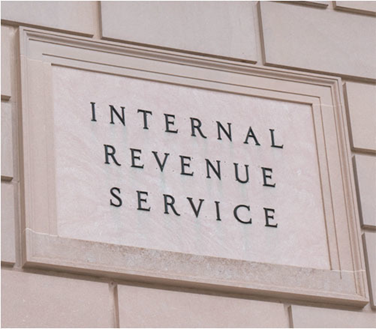
THE INTERNAL REVENUE SERVICE
In the early 90’s, suddenly and without warning, the RTO industry was subjected to numerous IRS audits. At one time there were as many as 90 RTO companies being audited. In most of these audits, the IRS took the position that RTO transactions were not leases for tax purposes and were instead non-recourse conditional sales. The IRS’s position was that rental dealers had to declare as income the Total RTO Cost as of the day the agreement was signed. Had the IRS’s position prevailed, the industry estimated that it would owe an additional $1 billion in taxes.
The IRS did not prevail, of course, because the industry pushed back hard with lawsuits and an intense lobbying effort led by former chief justice of the tax court, Judge Samuel Sterrett. The association created the tax and accounting committee that met, sometimes several times a week to monitor audits and draft a strategy for combatting the IRS. It cost the industry a lot of money, over $1 million by the time the negotiations concluded and the lawsuits were settled. The first positive result was the issuance by the IRS of a Revenue Procedure in 1995 that allowed RTO dealers to book revenues for tax purposes as they were received. The IRS effectively conceded the lease versus sale issue. The IRS continued its negotiations with the industry as there remained the issue of how to depreciate RTO property for tax purposes. Those negotiations ultimately resulted in the issuance of a Revenue Ruling later in 1995 that allowed dealers to depreciate rental property in a manner consistent with that property’s useful life in the company. These concessions from the IRS were cemented into law when the Congress amended the Internal Revenue Code in 1997 with language that specifically recognized a new category of taxpayer and product category: rent to own dealers and rent to own property. The Code now defines RTO transactions as leases and spells out the depreciation method dealers are to use.
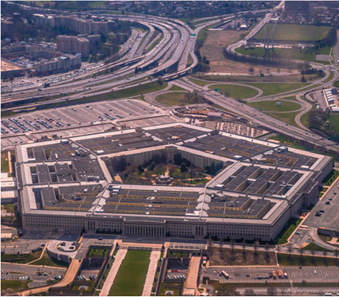
THE DEPARTMENT OF DEFENSE
In 2006, the Department of Defense (DoD) issued its “Report on Predatory Lending Practices Directed at Members of the Armed Forces and Their Dependents,” listing RTO along with other alternate financial services, e.g., payday loans and car title loans, as predatory and potentially threatening to the financial and emotional well-being of service members and therefore to national security.
The premise of the Department’s Report is that certain businesses, located around military bases, threaten the effectiveness of the military by subjecting unwary Service Members to various abuses, which finally trap them “in a cycle of debt.”
The industry reacted strongly to the inclusion of RTO in its report with a letter to the Secretary of Defense that read in part, “APRO has no particular knowledge of or interest in the other industries that are discussed in the Report. However, the glaring inaccuracies, sloppy research, the lack of simple intellectual integrity, and the faulty conclusions that permeate the section on RTO make APRO’s member dealers wonder at the fairness and objectivity of the Report overall.” The public companies likewise made their feelings known and the result was that the final regulations issued by the DoD concerning predatory lending omitted all reference to the RTO industry.
In 2014 the DoD revisited the issue of predatory lending to service members alleging that some companies had restructured their transactions after issuance of the regulation in 2006 to evade that regulation. Once again the issue of whether to include RTO transactions as part of the DoD lending regulations was in play. Once again the industry responded forcefully, urging the DoD to leave RTO out of any revised regulation. The DoD agreed and the new lending regulations made no mention of RTO.
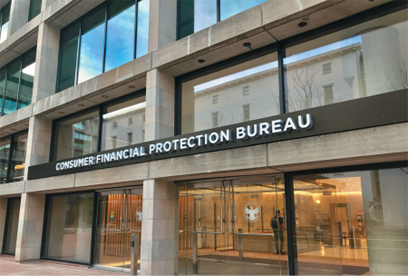
THE CONSUMER FINANCIAL PROTECTION BUREAU
The CFPB was created by the Dodd-Frank Act in 2010. Generally, the CFPB has authority to regulate the offerings and provisions of “consumer financial products or services” under Federal consumer financial laws. The law lists out eleven categories of consumer financial products and services. When the industry learned of the move to establish this new Bureau, the association and individual RTO companies contacted their friends in the Congress to help craft the pending legislation in a fashion that would not expose the industry to unnecessary and potentially stifling federal regulation. The industry’s efforts paid off, because RTO transactions are excluded from the Bureau’s jurisdiction.
Among the consumer financial products and services listed in the statute are “consumer leases.” They are defined as those leases with consumers that have an initial term longer than 90 days and are on a non-operating basis. The intent of this language is to capture finance leases, the type of lease used for motor vehicles. Most RTO transactions have an initial term of one week or one month and are also operating leases, which means that the rental dealer chooses his rental inventory, maintains it, repairs it as necessary and re-rents it, or tries to, when the customer returns it. In a non-operating lease, the lessor is a passive recipient of rental payments and is not involved with the rental property. Had the industry not involved itself in the politics of the Dodd-Frank Act, RTO transactions would almost certainly have been incorporated into coverage under the Act. Critics of the industry thought and do still think that the Bureau should have jurisdiction over RTO. These critics are the same people who make no distinction between being in debt and not being in debt. Happily for the industry, logic prevailed and the CFPB’s jurisdiction extends to true lending transactions of all kinds, and goes no further.
The bureaucratic labyrinth that is Washington, D.C. is mind-boggling in its complexity. There are more agencies and bureaucrats running them than can be numbered, although, presumably, there is an accurate count somewhere. The RTO industry must be ever alert to attempted incursion by federal agencies to negatively influence how the industry conducts its business. As the industry evolves in new directions, the challenge may increase. The national association remains committed to its original goals and will continue to seek fair and friendly treatment at the hands of the federal government. So far so good.
Ed Winn III serves as APRO General Counsel. For legal advice, members in good standing can email legal@rtohq.org.