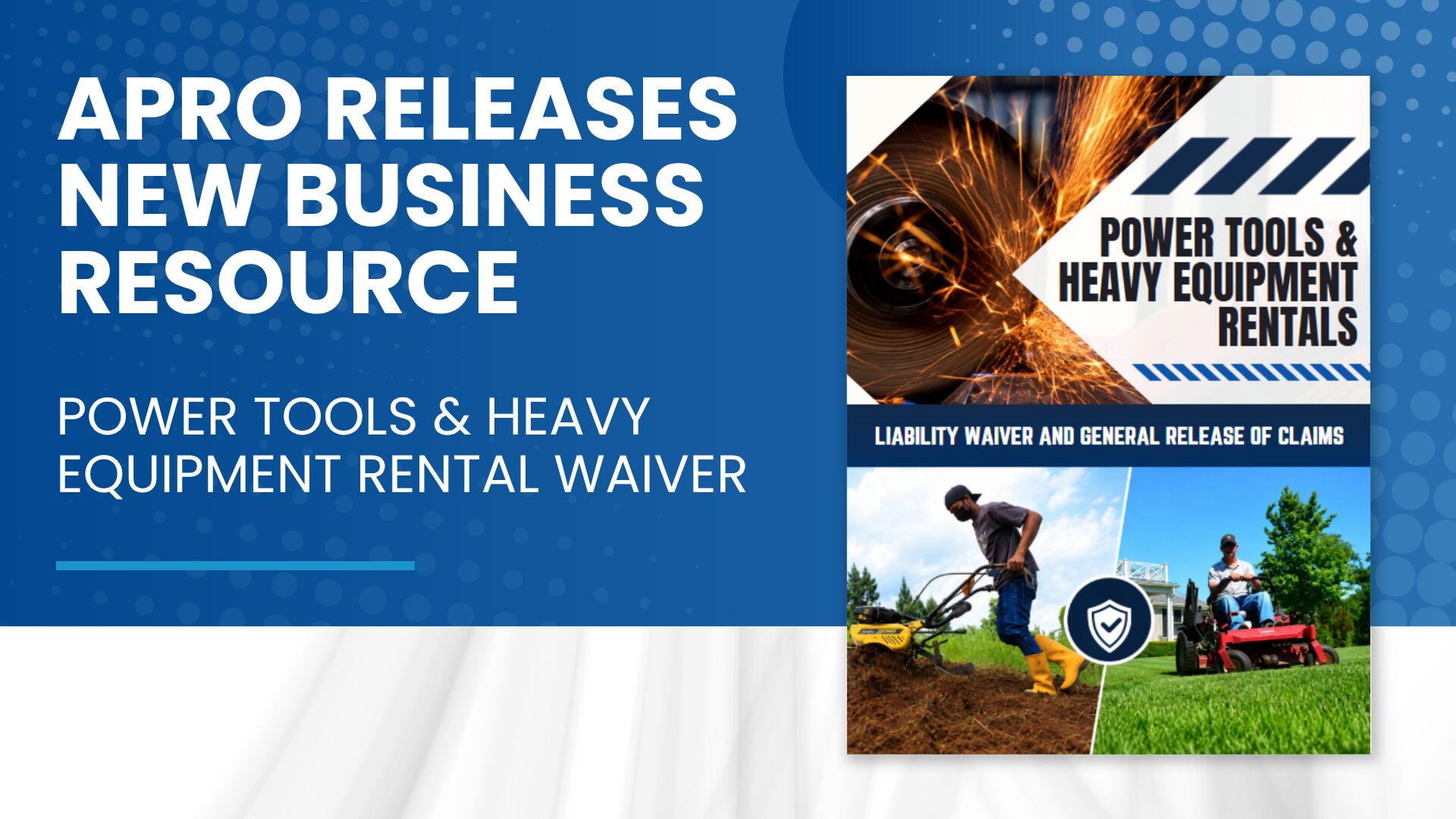
Renting power tools and heavy equipment can be a great way for rent-to-own dealers to grow revenue and serve customers — but it also comes with real risk. Saws, tillers, pressure washers, generators, and riding mowers are useful, but they can also cause serious injury when misused. That’s why APRO, in collaboration with Hudson Cook, LLP, developed the Power Tools and Heavy Equipment Liability Waiver and General Release of Claims as a member resource for dealers who rent this type of equipment.
“Safety starts before the equipment leaves our store,” notes Heath Peters from S&P Rentals Inc dba Premier Rental Purchase. “Our rental waiver ensures the importance of every customer understanding proper use, and accepting responsibility, and helps create a safer rental experience for everyone,”
Why It’s Important
A waiver like this one isn’t just a formality — it’s a foundation for a safer, more professional rental relationship. Mike Shuler from M&H Enterprises dba Premier Rental Purchase says, “It is an absolute must that we safeguard our organization by providing the necessary documents and safety requirements for all power tools and outdoor heavy equipment. The waiver is intended to ensure the consumer receives and follows all safety and operation instructions. We are working on adding this addendum to all rental items that fall into this category.”
Waivers provide protection in many ways:
- Sets clear expectations. The waiver spells out exactly what counts as “Power Tools” and “Heavy Equipment,” so both dealer and renter know what’s covered — from riding lawn mowers and pressure washers to tillers, generators, and equipment trailers.
- Documents assumption of risk. Renters formally acknowledge that operating this equipment carries inherent risks — cuts, burns, electrical shock, kickbacks, mechanical failure, and more — and that they’re accepting those risks.
- Establishes release and indemnification. The renter agrees to release the dealer (and its officers, employees, and affiliates) from liability and to indemnify the dealer against claims arising from use of the equipment.
- Reinforces safe operating practices. The document requires renters to inspect equipment before use, use proper protective gear, avoid operating equipment while impaired, and stop immediately if something seems unsafe.
- Signals professionalism. A clear, well-drafted waiver shows customers that a dealer takes safety seriously — which builds trust and reflects well on the business.
In short, the waiver helps protect the dealer from costly claims while making sure renters go in with eyes open about the risks they’re taking on.
How to Use It
This waiver is meant to be a starting point, not a plug-and-play legal document. To put it to good use:
- Adapt it to your business. Fill in your company name, add any additional equipment types you rent, and adjust language as needed to reflect your actual operations.
- Review it with your attorney. Laws vary significantly by state — and in some states (Louisiana and Virginia are called out specifically), courts may be less willing to enforce liability waivers. Some circumstances, like injuries involving minors, gross negligence, or intentional misconduct, can also make a waiver unenforceable. Legal review before use is strongly recommended.
- Check your insurance coverage. Before offering power tool rentals, confirm with your insurance provider that your policy covers power tool and heavy equipment rentals, customer use, and related claims.
- Collect signatures and keep records. Have every renter sign the waiver, provide them a copy, and retain a signed copy for your files.
- Train your staff. Make sure employees understand the waiver well enough to explain it to customers and reinforce safe usage practices at the point of rental.
Where to Find It
This waiver is available as a member resource at the Business Resource HUB. Members who want additional guidance — or help tailoring the waiver to their state and business — can reach out to the APRO Legal Hotline or consult their own legal advisor.
This article summarizes a member resource and is intended for general informational purposes. It is not legal advice. Dealers should consult their own attorney and insurance provider before adopting or modifying this waiver for use in their business.