
As an international student from India, gaining a deeper understanding of the professional landscape in the United States was extremely important to me. While I have adapted well to academic life here, working in a professional setting outside the university comes with its own set of expectations and cultural nuances. I was eager to learn how to navigate those dynamics more confidently – whether building and maintaining a professional network, understanding workplace communication norms, or aligning my skills with the expectations of different industries. While my academic journey strengthened my critical thinking, creativity, communication, and problem-solving skills, I realized that success outside academia demands adaptability, collaboration across disciplines, and a clear understanding of how to apply one’s training in practical, often fast-paced environments. I had some exposure to this already through roles like journalist and editor, but now I wanted to build on those experiences in a more intentional and guided way.
The PhD Pathways program at UT Austin offered exactly that: a structured space to explore professional opportunities beyond the academic track. As part of this nine-month fellowship, doctoral students in the arts, social sciences, and humanities at UT Austin explore careers in public art and humanities, community outreach, writing, editing, and more. The program aims to build a community with fellow graduate students from different departments who are exploring similar career experiences; learn how to translate their skills into a variety of professional contexts, and explore career options outside of academia. As part of the program, I had the opportunity to work with APRO (Association of Professional Rental Organizations) with significant career support through the Office of Career and Life Design, especially Colleen Gleeson, with monthly professional development seminars held by Anastazja Harris and a dedicated career coach, Dr. Cressler, for the duration of the fellowship.
Through my work with APRO, I was introduced to the rent-to-own (RTO) industry, something I had little prior exposure to. Initially, I understood it in fairly narrow, transactional terms. However, as I engaged more deeply with the organization’s work, especially through its archives and consumer-facing content, my perspective shifted. I began to see the industry as one shaped by relationships and community impact. Hearing directly from consumers was particularly eye-opening; many described their experiences with the industry as a source of stability during uncertain times. Working closely with the archives also introduced me to the nuances of the field, which was my first project at APRO.
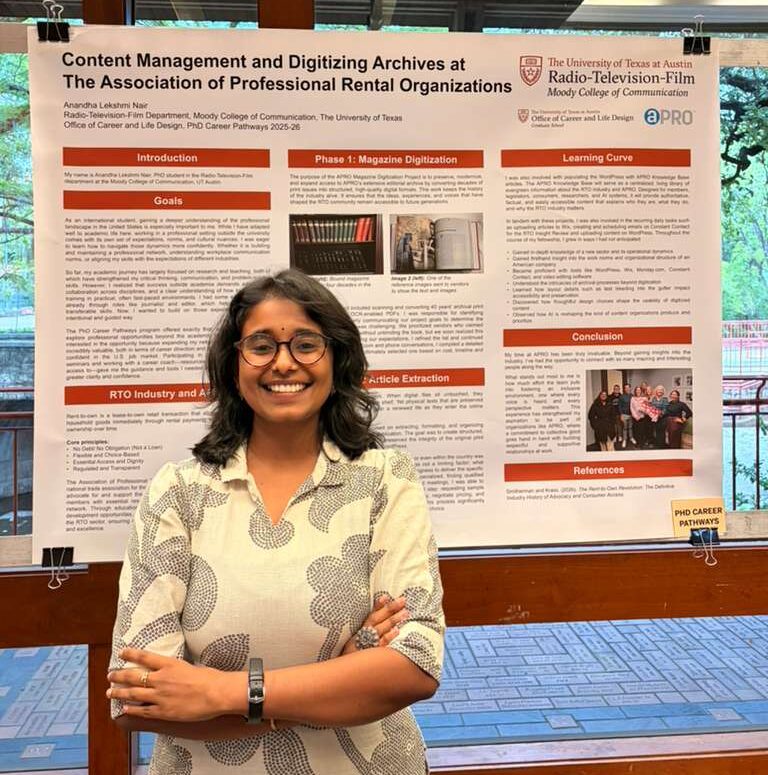
The purpose of the APRO Magazine Digitization Project was to preserve, modernize, and expand access to APRO’s extensive editorial archive by converting decades of print issues into structured, high-quality digital formats. The aim of this work was to keep the history of the industry alive, ensuring that the ideas and experiences that have shaped the RTO community remain accessible to future generations. Phase one of this project included scanning and converting 40 years’ archival print issues into searchable, OCR-enabled PDFs. I was responsible for identifying potential vendors and clearly communicating our project goals to determine the best fit. The process was not as straightforward as I initially expected. We prioritized vendors who claimed they could scan the material without unbinding the book, but we soon realized this was not feasible. After adjusting our expectations, I refined our criteria, continued outreach, and spent a lot of time on calls and Zoom meetings learning how different vendors approached the work. Eventually, I built a strong shortlist, and our team selected a partner based on cost, timeline and overall fit. This project challenged my assumptions about the process of archiving altogether: how to balance quality with feasibility, how to evaluate external partners effectively, how to negotiate while still keeping the bigger goal in focus. When printed materials are bound together in a book, sometimes the words bleed into the gutter. To truly recover it, you have to take the book apart. In the same way, my assumptions about what it means to make information accessible had to be taken apart and rebuilt as the project unfolded.
The next phase of the project focused on extracting and formatting individual magazine articles for web publication. The goal was to create structured, SEO-optimized content packages that preserved the integrity of the original print design while being ready for upload to WordPress. In Phase 1, narrowing down vendors within the state or even within the country was relatively straightforward. In Phase 2, geography was not a limiting factor; what mattered was each vendor’s experience and their willingness to deliver the specific format we required. But because the work was so specialized, finding qualified companies was initially difficult. After multiple calls and meetings, I was able to assemble a strong list. This time, I added an additional step: requesting sample scans. These samples allowed us to evaluate accuracy, negotiate pricing, and assess each vendor’s ability to meet our standards. This process significantly narrowed our options and helped us make a confident final choice. Throughout the project, I had a front-row seat to how archives can be reshaped with the end user in mind. I started to think more deeply about how people interact with content, how design impacts readability, and how structure affects whether something can actually be found.
In tandem with these projects, I was also involved in recurring daily tasks such as uploading articles to Wix, creating and scheduling emails on Constant Contact for the RTO Insight Review, and uploading content on WordPress. Working on the video editing team was an especially rewarding experience. I had the unique opportunity to hear directly from consumers about the impact the industry has had on their lives. Many described it as their “second home,” a place where they found comfort and support during times of need. Throughout the course of my internship, I grew in ways I had not anticipated.
I developed an in-depth understanding of a new sector and its operational dynamics, while also gaining firsthand insight into the work norms and organizational structure of an American company. I became proficient in a range of tools, including WordPress, Wix, Monday.com, Constant Contact, and video editing software, which strengthened my technical skill set. Additionally, I deepened my understanding of archival processes beyond simple digitization, learning how factors like text bleeding into the gutter can affect both accessibility and long-term preservation. This experience also highlighted how thoughtful design choices directly influence the usability of digitized content. Finally, I observed the growing impact of AI on the industry, particularly in shaping the types of content organizations choose to produce and prioritize.
I have been part of non-profits since I started college. It has always provided me with a sense of purpose outside of academia, and it grounds my perspective on the world outside. Working for APRO was rewarding because it also introduced me to a team that is really persistent towards building an environment where every team member is heard. Before this experience, I expected professional environments to feel hierarchical and somewhat impersonal, especially as an intern. Instead, I found a space where ideas were welcomed and where I felt genuinely heard. Balancing my responsibilities as a Teaching Assistant alongside my coursework was challenging, but the team’s supportive environment, especially Amberlee Maya’s encouragement, made the experience much more manageable. This experience has strengthened my aspiration to be part of organizations like APRO, where a commitment to collective good goes hand in hand with building respectful and supportive relationships at work. I wholeheartedly thank the entire team for their support throughout the internship!