
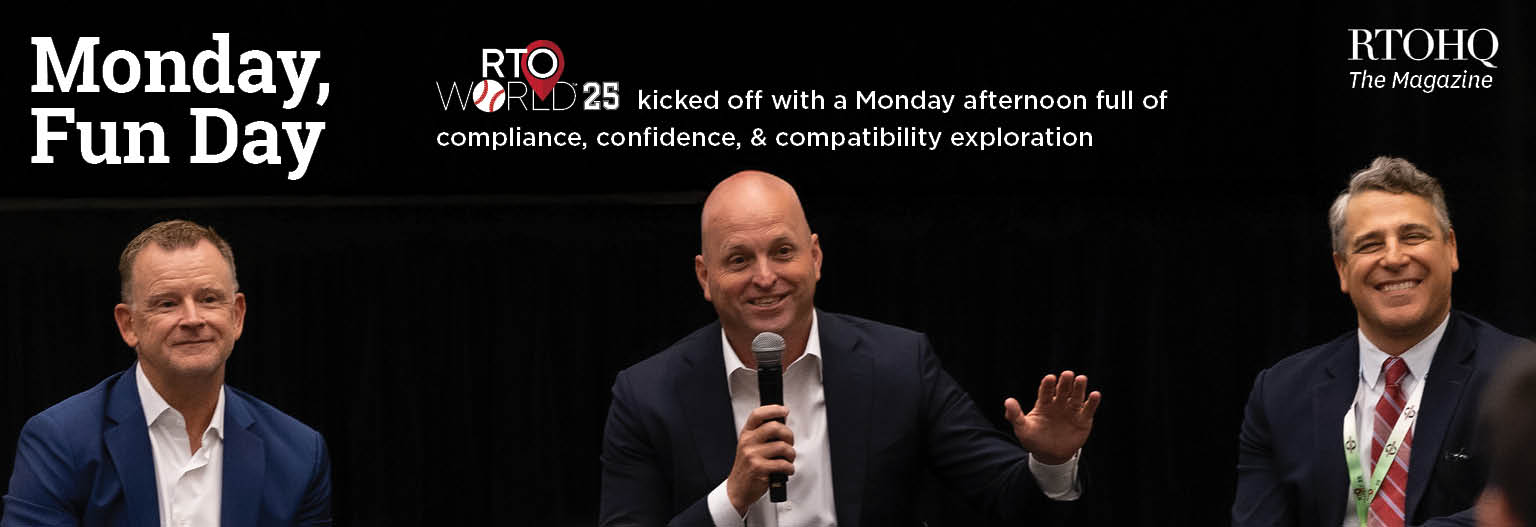
A Case of The Mondays was nowhere to be seen last August in Omaha, Nebraska – at least not at RTO World, where dozens of attendees arrived on day one of the event eager to listen and learn at the return of the Protecting Your Business Summit and the APRO Women’s Forum. And to add a little fresh spice for the early birds, APRO also debuted its Vendor Extravaganza, a speed-dating-like experience for dealers and vendors to get acquainted.
Hosted by APRO CEO Charles Smitherman, the second annual Protecting Your Business Summit focused squarely on helping rental dealers safeguard their operations in a fast-changing legal and regulatory landscape. The second annual APRO Women’s Forum, led by Lauren Talicska of Arona Corporation dba Arona Home Essentials, did a deep-dive into helping women leaders in rent-to-own communicate with confidence, regardless of the difficulty of the conversation at-hand. And the Vendor Extravaganza featured nine vendor teams trying to pique interest in and impress 14 dealer teams in five-minute increments – a challenge, for sure, but as the event demonstrated, definitely doable.
So, in this case at least, a Case of The Mondays? Yes, please.
Protecting Your Business Summit
APRO CEO Charles Smitherman launched the Protecting Your Business Summit by emphasizing that this year’s program was purposefully designed to go beyond the theoretical and into the practical, tackling the daily legal challenges RTO dealers face, from employment and safety compliance to consumer communications and collections.
Following Smitherman’s introduction, Zachary Miller, a Partner with Burr & Forman LLP, took over as moderator for a dynamic discussion among three leading attorneys representing the top RTO and consumer-finance firms nationwide: Justin Hosie, a Partner with Hudson Cook LLP; and Bryance Metheny and Joshua Threadcraft, both Partners with Burr & Forman LLP.
Employment Law
Metheny began the session with Employment Law, an ever-shifting minefield for rental dealers, from wage-and-hour claims to evolving rules on independent contractors and restrictive covenants. First, Metheny addressed the common belief that rent-to-own managers are exempt from overtime pay under the Fair Labor Standards Act (FLSA) because they’re salaried employees. But such is not the case – salaried staff must also fulfill specific job duties requirements to be exempt from overtime benefits.
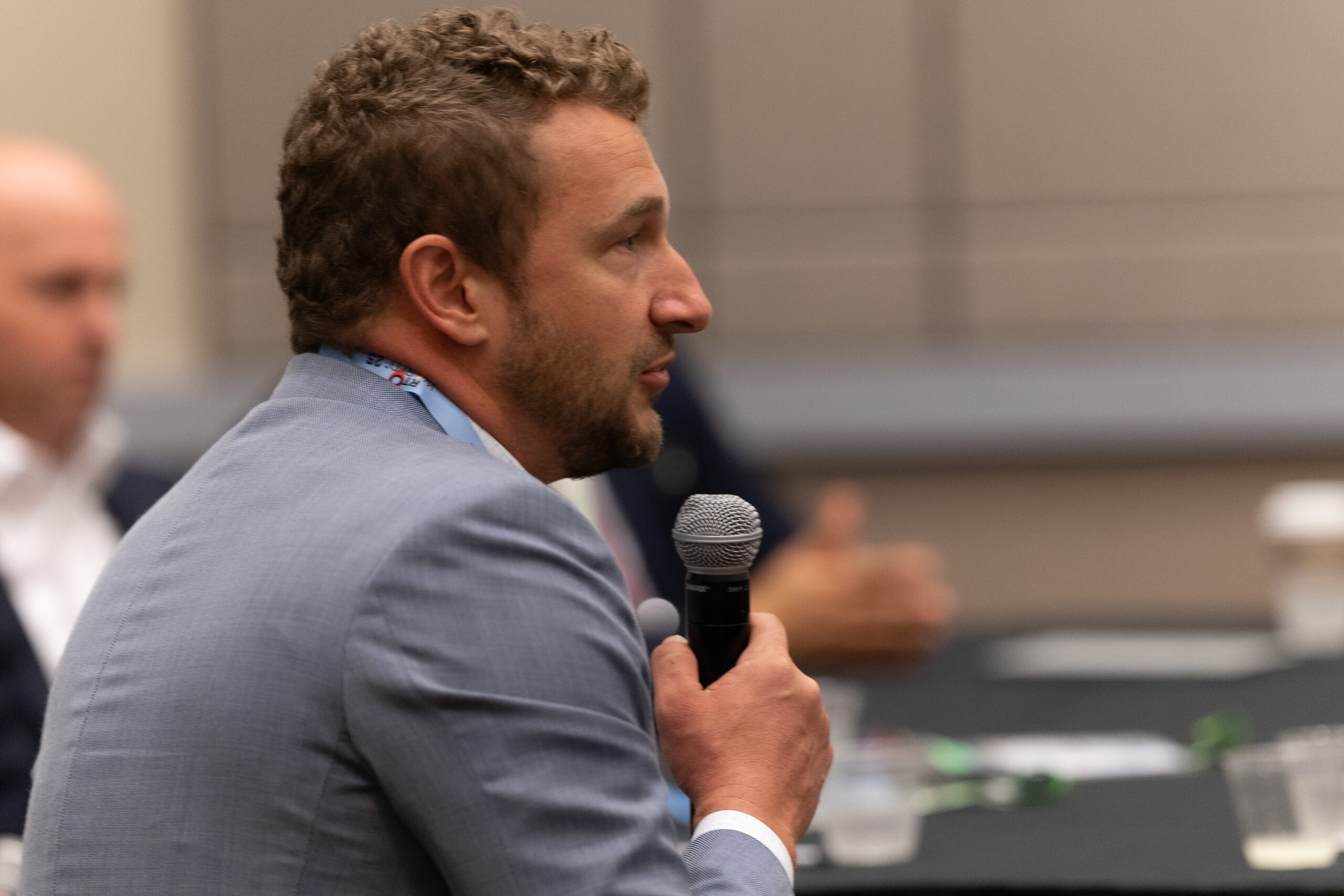
Metheny discussed a couple of different Americans with Disabilities Act (ADA)-related areas where RTO businesses are seeing growing litigation: “Drive-by” claims, where plaintiffs never even enter the store; and website accessibility suits.
Typical “drive-by” claims target disabled parking spaces that are sloping or incorrectly sized, lack of “Van Accessible” parking spot signage, or other physical barriers to storefront access. Metheny stated a theme that was repeated again and again throughout the summit: Compliance is the best protection.
ADA lawsuits aren’t just about the physical store anymore; company websites must also be ADA-compliant, fulfilling the Web Content Accessibility Guidelines (WCAG) 2.1 standards. Accessible web content must follow four main principles – it must be perceivable, operable, understandable, and robust for people with visual, auditory, physical, and cognitive disabilities.
Unsurprisingly, warehouse and delivery risks dominate RTO Occupational Safety & Health Administration (OSHA) claims. Metheny introduced another set of supremely effective solutions that resurfaced throughout the afternoon: continual training, written protocols, and immediate documentation.
Regarding sexual and racial harassment lawsuits, Metheny echoed the same solutions, noting that a written policy on its own won’t shield your business; consistent training and rapid, well-documented responses will.
Marketing & Consumer Litigation
Next, Threadcraft took on consumer outreach, where one wrong message can land rental dealers in a class-action lawsuit or on the wrong end of the Telephone Consumer Protection Act (TCPA), and marketing and collections in particular have become legal flashpoints over the past few years.
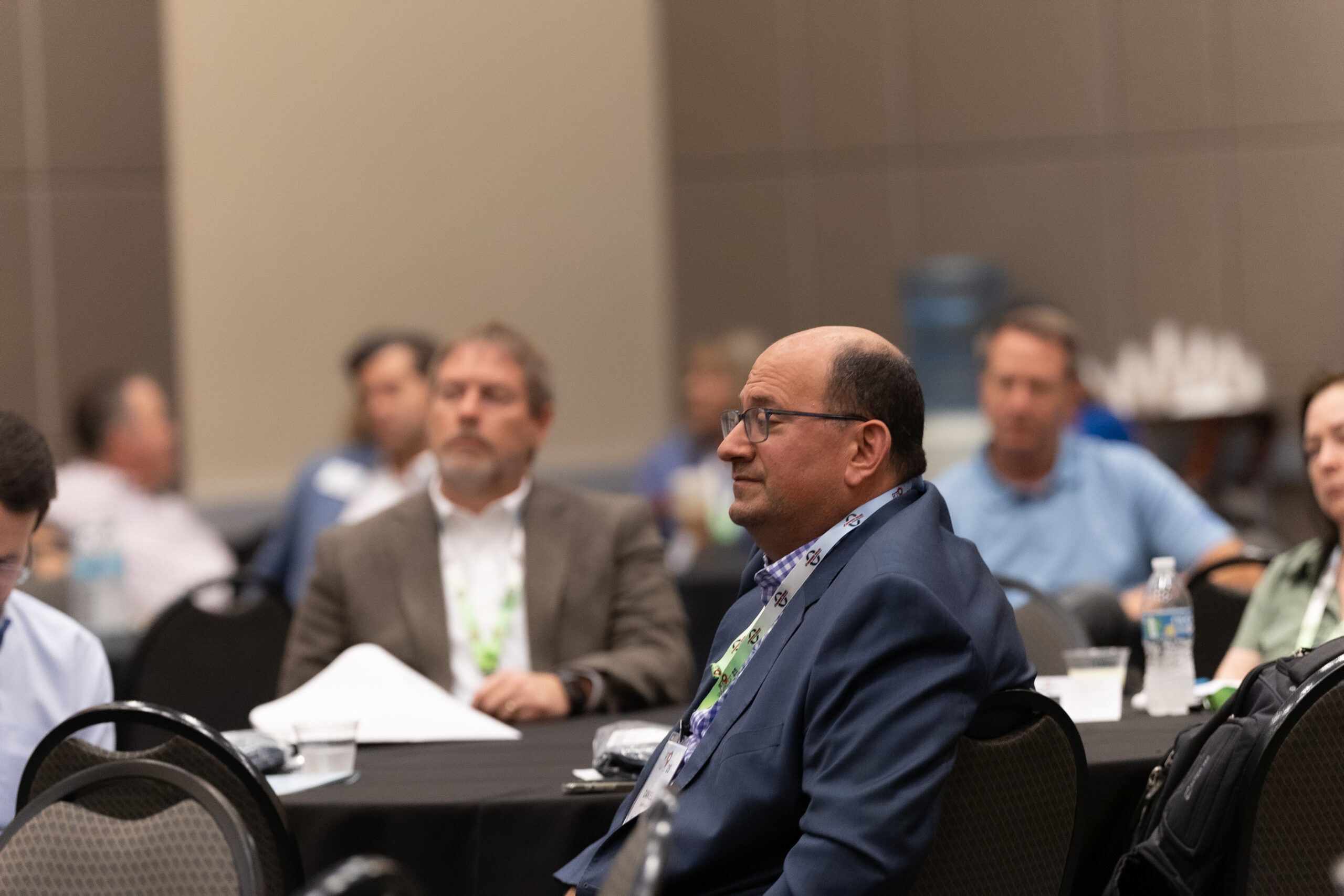
Threadcraft began with marketing and pre-contract outreach to customers, noting that explicit, trackable consent is required for marketing, and that rental dealers are held responsible when their third-party vendors make mistakes. Again, he said, ensuring compliance is the cheapest insurance against targeted claims.
Threadcraft then addressed repossession and replevin, reiterating that employees must have collections training and clear scripts, because recurring or aggressive contact can precipitate harassment or “breach of peace” lawsuits. He urged summit attendees to avoid confrontation with customers who are holding onto unpaid-for product, and recommended escalating to formal replevin – a civil legal action used to recover withheld property – when voluntary recovery fails.
Consumer Compliance
Hosie covered consumer compliance, a space currently being closely watched by regulators, addressing how rental dealers can build compliance into their products before the Consumer Financial Protection Bureau (CFPB) builds a case against them.
Hosie began by talking about recent State Attorney General actions against rent-to-own businesses in New York, California, and Colorado, all aggressively attempting to reframe RTO as “disguised credit” or “disguised loans.” APRO and its state associations are monitoring this trend, and working vigilantly to educate public officials at the state and federal levels about the true nature of the rentto- own transaction.
Hosie next discussed recent challenges of promotions such as “$1 to own” and “no credit needed”; these sorts of phrases are red flags to regulators, he said, so rental dealers must make sure they include the proper disclosures along with these types of promos. He also noted that RTO companies’ internal servicing practices and procedures must match lease-agreement language exactly in order to avoid claims under the Unfair, Deceptive, or Abusive Acts or Practices (UDAP) consumer protection regulations.
Finally, Hosie cautioned participants to always include “no purchase necessary” language in giveaway or sweepstakes promotions; otherwise, gambling laws may apply.
Audience inquiries to the legal panelists revealed concerns among rental dealers about 2025 federal overtime rule changes, website accessibility costs and solutions, collections boundaries with customers refusing contact, and regulatory distinctions between virtual rentto- own and buy-now-pay-later models.
Overall, summit leaders left their audience with two gems of wisdom regarding legal risk in the rent-to-own industry: 1) Compliance is your first line of preventive defense and the cheapest way to protect your business; and 2) Your second line is a solid culture of continual training, detailed documentation, and rapid response.
“Legal vigilance is operational leadership,” Smitherman concluded. “Our members’ success depends not only on sales or service, but also on staying ahead of and fully avoiding the risks inherent in running a business.”
APRO WOMEN’S FORUM

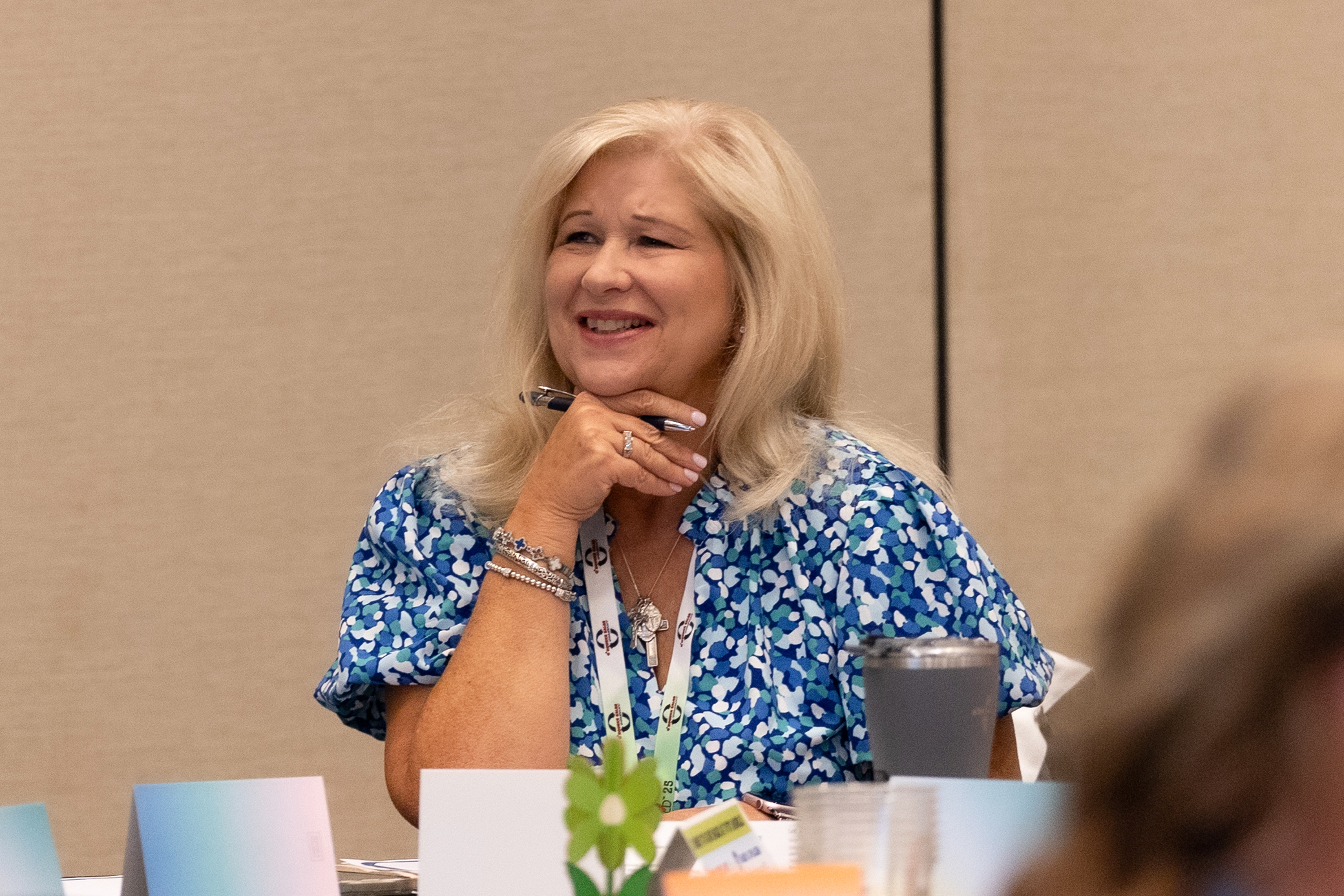
The APRO Women’s Forum at RTO World 2025 was themed “Communicating with Confidence,” and included an introduction from author and speaker Christa Haberstock, a panel discussion, and real-life scenario roundtables.
Haberstock got the session going by outlining the basics of good communication: confidence, curiosity, and caring.
“Say what you need to say with confidence, but don’t make the rest of the conversation about the content you’re pushing,” she advised. “Be curious. Ask questions, then listen. Be caring. Lean into what the other person is saying, rather than thinking of the next thing you’re going to say.”
Haberstock also gave attendees three little words that can make a big difference in a potentially contentious interaction: Help me understand.
“For example, if you’ve got a team member who is defensive or really dug in about a correction, rather than just overriding them, try, ‘Help me understand what the biggest obstacle is to you doing XYZ,’” counseled Haberstock. “It turns the push-and-pull into a problem-solving exercise you’re tackling together.”
Panelist Erica StCharles, Regional Manager at Arona Home Essentials, took the opportunity to offer an example of how this sort of collaborative approach to communication turned a situation around.
“I had a manager with some performance issues,” Erica StCharles recalled. “I had to do a written warning with her, because verbal corrections weren’t getting her there. But she had never been written up in her entire career, and she took it super hard, she was really upset. So I said, ‘OK, let’s talk about this.
“My job is to give you what you need to get to the level of performance we want you to be at. So I also feel like I’m not doing my job well. I want to know what we can do together so you have the right tools to get where you need to go.’ Letting her know I wasn’t just scolding her and leaving her to deal with the problem on her own shifted the whole tone of the conversation. Suddenly, she was listening to me because she felt I was listening to her.”
Communication Anchor Points
Moderator Lauren Talicska, Vice President of Marketing & Communications at Arona Home Essentials, took over next, initiating a panel discussion among a trio of RTO pros: Rachel King, Vice President Divisional Director at Countryside Rentals Inc. dba Rent-2- Own; Kelly Martin, Chief Operating Officer at SKC Enterprises Inc. dba Rent One; and StCharles.
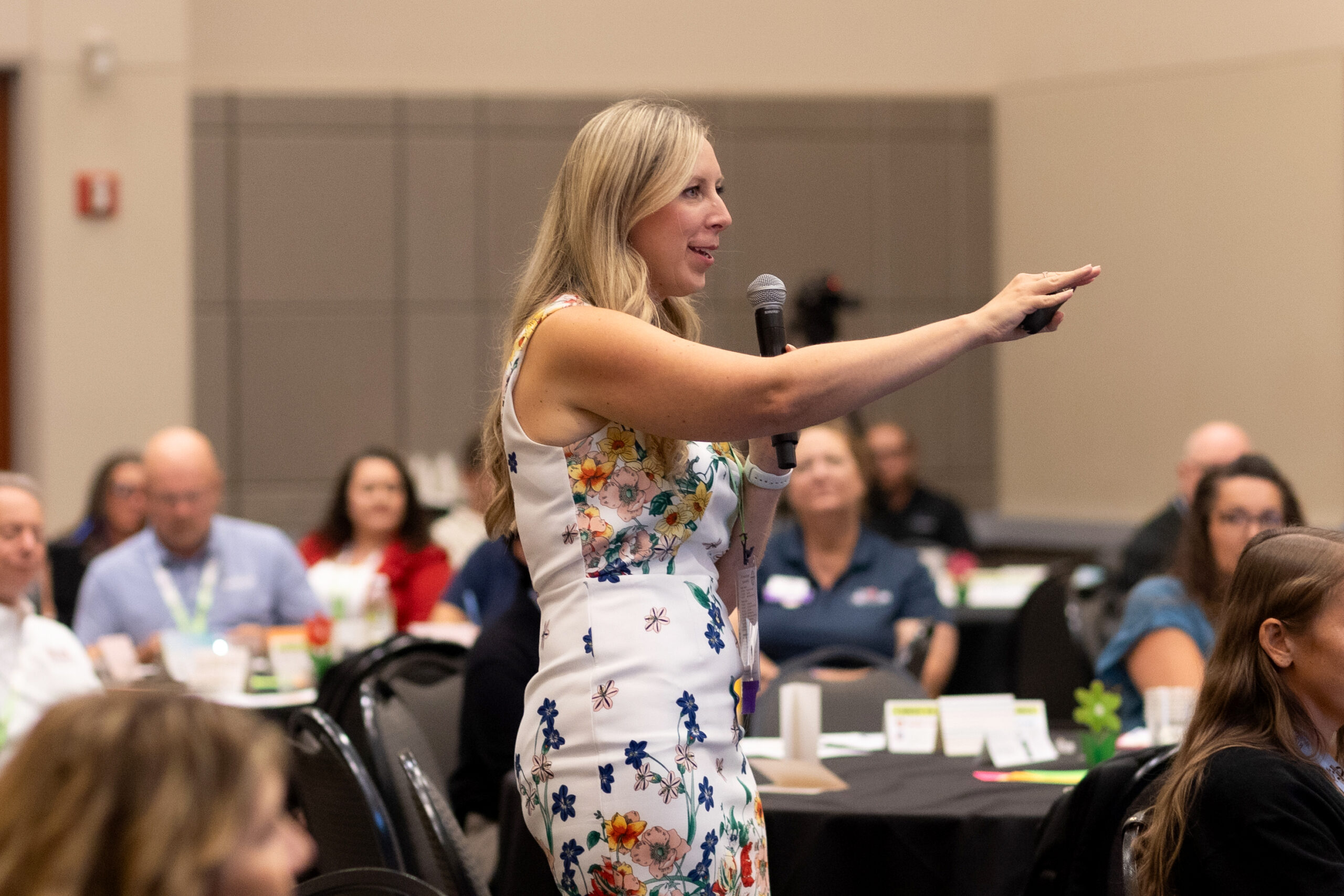
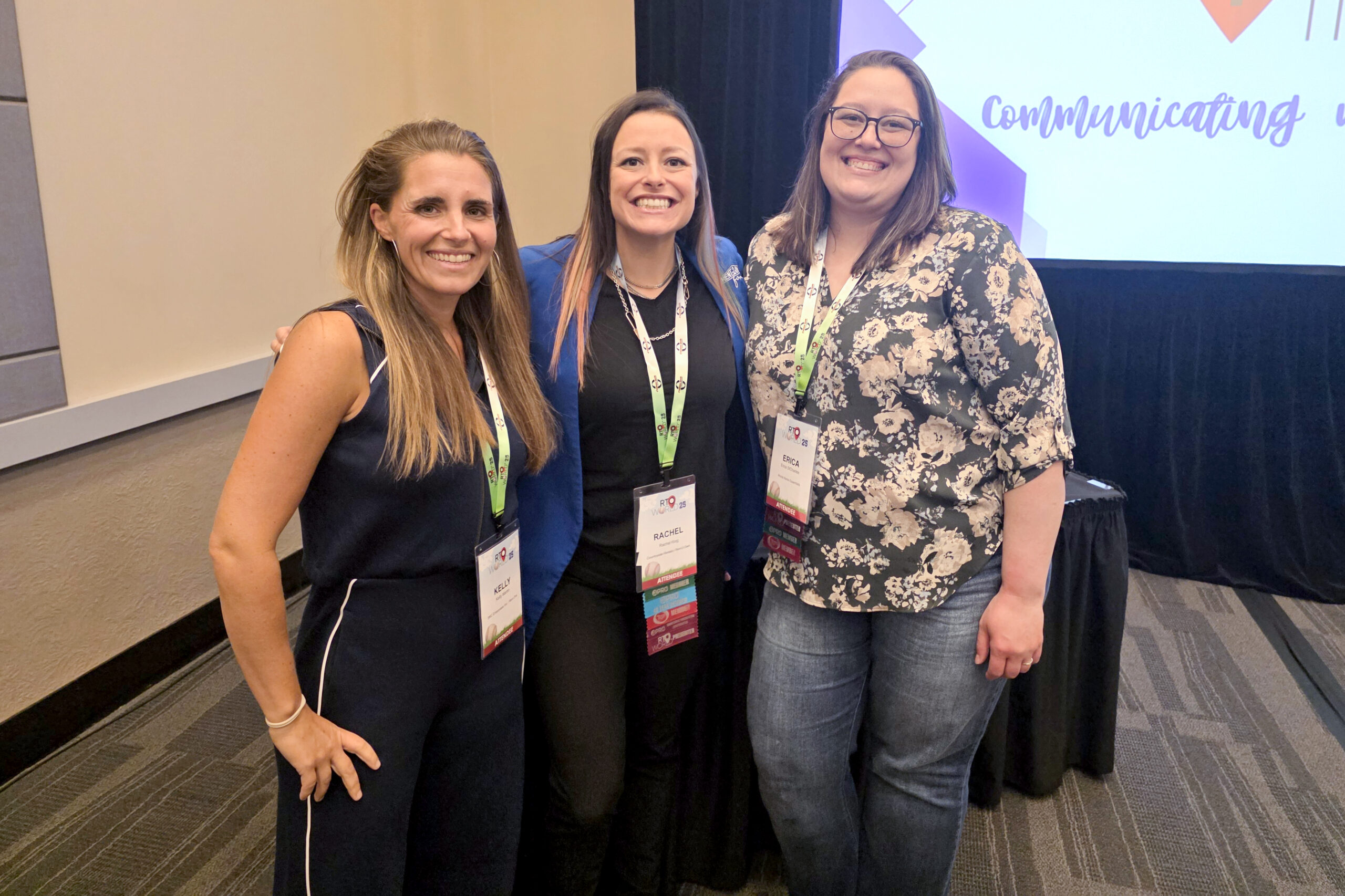
Talicska then turned to three anchor points of communication – preparing properly, setting expectations and holding accountability, and providing feedback.
I definitely pre-plan for challenging conversations,” attested Martin. “I get my facts together, maybe have notecards or a presentation to follow, so I don’t end up in a rabbit hole. And I think about not so much what I want to say as what the other person needs to hear. I really try to examine it from an emotional intelligence perspective – who am I relating to, how am I going to speak their language? And how do I maximize the facts and minimize the emotion in this conversation?”
When it comes to expectations and accountability, StCharles told forum participants that having something written is critical.
“When you’re having a difficult conversation, they need something to refer back to and you do, too,” affirmed StCharles. “Schedule a follow-up date with them on the calendar, so they’ve got a timeframe to work with. And you can’t tell them once and expect them to just magically begin doing whatever it is. Every day for a week afterward, follow up, check in with them, make sure they know you care, give them consistent feedback, and ensure they’re prioritizing the right things every day.”
Martin added that feedback and accountability go hand-in-hand, and the company’s overarching culture – and its take on vulnerability – can make a huge difference in how easily and effectively feedback works.
“You have to build an environment that involves vulnerability,” Martin asserted. “If you don’t create a culture where people can feel vulnerable, when you bring up accountability, they instantly kind of recoil. If you create an atmosphere where vulnerability is OK, then you can give feedback freely. We do it by giving feedback as frequently as possible – not just on the things that need improvement, but on the things that are positive and consistent. The more frequently you can give truthful, specific, positive feedback, the more likely you are to create that environment of vulnerability.”
King said she considers herself a confident communicator overall, but naturally has moments of self-doubt.
“I will always present as a confident communicator,” confessed King, “even when I’m like, ‘Oh, I’m not sure about this conversation at all.’ But I think there’s a little bit of ‘fake it til you make it’ we all have to put to use now and then!”
Sticky Conversation Solutions
The remainder of the Women’s Forum split attendees into five moderated roundtable groups, each discussing real- life sticky communications situations proposed by Talicska – such as a rogue team member who doesn’t follow an action plan because they feel their plan is better, an employee who says, ‘Cleaning sofas isn’t my job; I wasn’t hired to do that,’ or a salesperson who doesn’t like to talk to people and waits for customers to approach them. Once the roundtables talked amongst themselves, approaches and solutions were shared in a high-spirited whole-group discussion.
Haberstock – who stayed for the whole forum, studiously scribbling notes – offered participants one last go-to trick to smoothing communications when the temperature begins to rise: hijack your amygdala.
“The amygdala is a tiny part of your brain that, when you’re in conflict, gets triggered,” she explained. “It floods with cortisol, which is what immobilizes your rational brain; it puts you into fight-orflight status, so you can’t think properly. It then takes 20 minutes for the cortisol to leave your amygdala. So you do an amygdala hijack – you take a 20-minute break, whether it’s from a triggering email or text, a conversation that has turned contentious, or your frustrating kids. Walk away and focus in on something else for 20 minutes, then come back. Just try it – it really works.”
THE VENDOR EXTRAVAGANZA
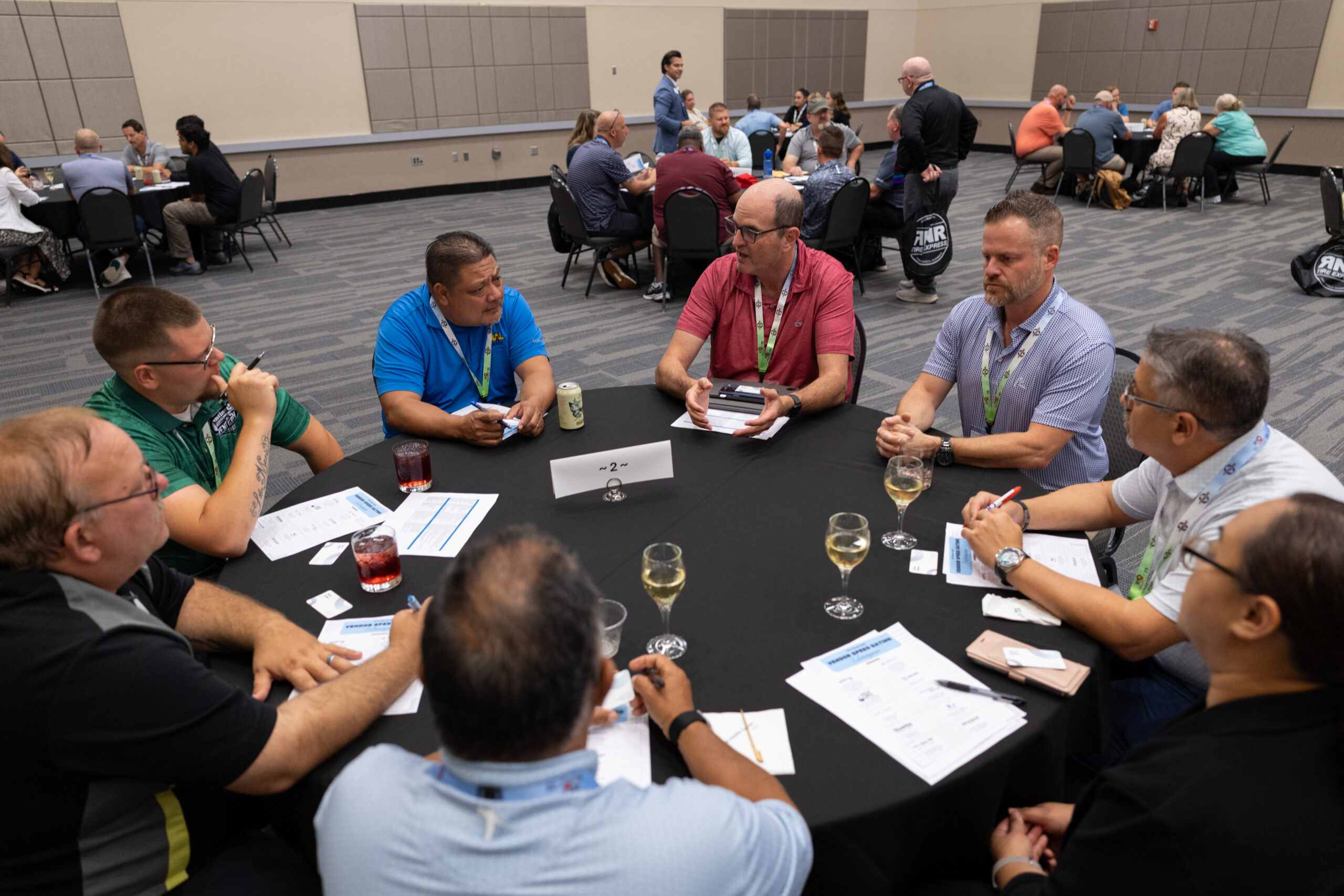
Finally, APRO introduced the Vendor Extravaganza at RTO World 2025, a speed-dating like event designed to get vendors face-to-face interaction with as many potential rental-dealer customers as possible in a single hour.
Fourteen teams of rental-dealer representatives sat at separate tables. Nine vendor companies, each with a one- or two-person team representing them, visited each dealer table for five minutes each, pitching their solutions and answering dealers’ questions.
“Vendors were directed to come prepared with fast pitches and marketing materials,” detailed Smitherman, “while dealers came ready to ask questions and take notes, so they could follow up with vendors afterward at their tradeshow booths.
“APRO received excellent feedback on the Extravaganza from both vendor and dealer participants,” he concluded, “So we’ll likely be bringing it back next year at RTO World 2026 in West Palm Beach, Florida!”
Kristen Card has been a contributing writer for RTOHQ: The Magazine for more than 20 years.