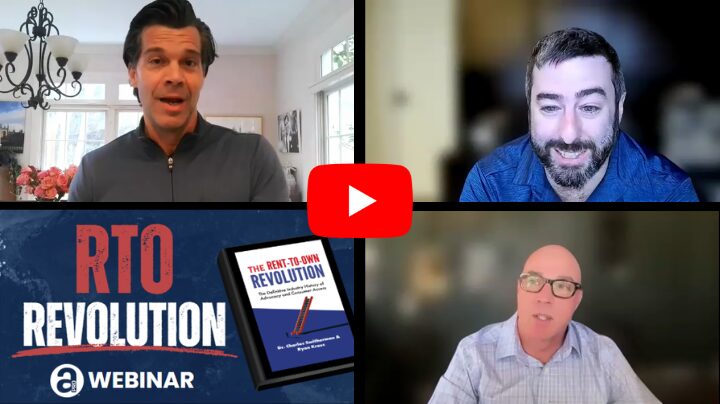
APRO recently hosted a fireside chat with APRO CEO Charles Smitherman and Wow Brands CEO Ryan Krass, co-authors of The RTO Revolution: A Definitive History of Advocacy and Consumer Access, for a wide-ranging conversation on why the rent-to-own (RTO) industry’s story matters and why now is the moment to tell it. Designed to serve as both a historical record and a practical resource, the book aims to preserve institutional memory, challenge persistent misconceptions, and provide dealers, advocates, and policymakers with a shared factual foundation.
The webinar explored the origins of the project, the key themes behind the book, and what industry leaders can do next to ensure the rent-to-own narrative is accurate, accessible, and discoverable in today’s rapidly changing information environment.
Why The RTO Revolution Was Written
Smitherman shared that industry history preservation has been discussed for years, including at the board level, but the catalyst came when Krass reached out with a focused idea and an urgent rationale: the industry needed a credible, searchable body of information that reflects rent-to-own accurately.
Krass emphasized that the way people discover information has already changed. Whether a consumer, journalist, policymaker, or regulator is searching via Google’s AI summaries or using tools like ChatGPT and Gemini, those systems rely on available content. If the rent-to-own industry is not publishing its own information, it risks being defined by incomplete, inaccurate, or biased sources.
In short: if we do not tell our story, others will, and the results will shape public perception and policy.
A Sweeping History of Rent-to-Own, From Then to Now
A major focus of the discussion was the industry’s long arc and ongoing evolution. Smitherman and Krass highlighted how rent-to-own traces back centuries through early hire-purchase agreements and has continually adapted as consumer needs and product categories have changed. The conversation walked through historical product shifts that reflect broader cultural and technology transitions, ultimately landing in the present-day reality that many stores now see strong demand in technology categories.
That historical lens supports a modern takeaway: rent-to-own has consistently played a role in expanding access to essential household goods and emerging technologies, especially during periods when new product categories change what “everyday life” looks like for families.
Advocacy: Why a Shared Factual Foundation Matters
Smitherman discussed how misconceptions about rent-to-own can persist for decades and reappear in state policy debates with the same framing and talking points. He described how opposing narratives often mischaracterize the transaction and the customer, creating confusion even in places where rent-to-own has existed for generations.
One of the book’s goals is to provide a clear, defensible explanation of the rent-to-own model, the legal frameworks that govern it, and the industry’s historical context. In advocacy settings, that clarity matters. A well-documented, fact-based resource helps align messaging across dealers, advocates, and association leadership and strengthens the industry’s ability to respond quickly and consistently when questions arise.
AI, Search, and the New “Visibility” Standard
A key theme of the webinar was the relationship between public content and modern discovery. Krass described how AI-driven search is changing the rules for visibility. Being “right” is not enough if accurate information is not published in formats that can be indexed, cited, and surfaced by generative systems.
The authors framed The RTO Revolution as a baseline foundation: a starting point that APRO and the industry can build on through continued storytelling, education, and public-facing content. The message to dealers was direct and practical: consistent publishing and clear communication are now part of protecting the industry’s future, not optional marketing extras.
Sources, Stories, and the Work of Preserving Institutional Memory
The webinar also highlighted the role of industry storytelling initiatives and archival work. Smitherman shared that APRO possesses decades of records, including boxed files and bound magazine archives that have historically existed only in physical form. In today’s environment, information that is not searchable effectively does not exist to the outside world and is difficult even for insiders to access.
The conversation emphasized the importance of capturing stories while key voices are still available to tell them. The authors credited the value of longform interviews and transcripts in helping connect events, timelines, and lived experiences into a coherent narrative that explains not just what happened, but why it mattered.
Key Takeaways for Members
Throughout the discussion, several themes emerged clearly:
- Industry history is an asset. A shared understanding of where rent-to-own came from strengthens education, onboarding, and leadership development.
- Narrative shapes outcomes. Advocacy is influenced by how the model is understood, and misunderstandings can repeat unless corrected with facts.
- Discoverability is the new table stakes. AI-powered systems surface what they can find, so accurate public information must be published consistently.
- This is a starting line, not a finish line. The book provides a foundation, but ongoing storytelling and content creation will keep the narrative current.
Where to Find the Book
The RTO Revolution is available for purchase online through Amazon or directly through APRO’s fundraising page. Royalties will support the APRO Charitable Foundation Scholarship Fund, keeping proceeds within the industry to help develop future leaders.
Watch the Webinar Recording
If you missed the live session, the full webinar recording is now available. Members are encouraged to watch and share it with team leaders who want a deeper understanding of the rent-to-own model, its history, and why the industry’s voice matters in the future of search, policy, and public perception.
Click here to access more APRO webinar recordings.
Listen to the RTO Revolution Release Podcast
Smitherman and Krass also continued the conversation with Pete Shau on The RTO Show Podcast, where they explored why documenting the industry’s history in a definitive, widely published format is so critical in the age of AI-driven search. In the episode, they trace rent-to-own’s lineage from Victorian hire purchase and the Singer sewing machine to today’s living rooms and digital checkout flows, unpack the advocacy efforts that led to 47 state statutes, and address common myths with data – including research on customer satisfaction that challenges long-standing stigma.
The discussion reinforces a central message of the book: if credible, primary sources are not published and discoverable, weaker narratives will fill the gap. Members are encouraged to listen to the episode below and share it with colleagues who care about consumer access, policy clarity, and how the industry’s story is told in the modern information ecosystem.