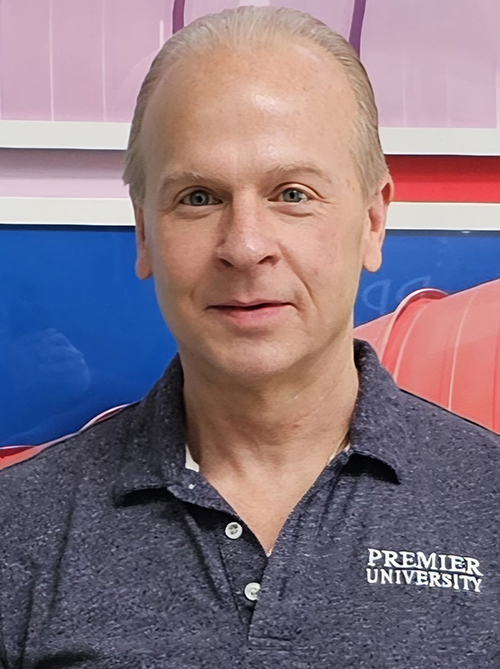
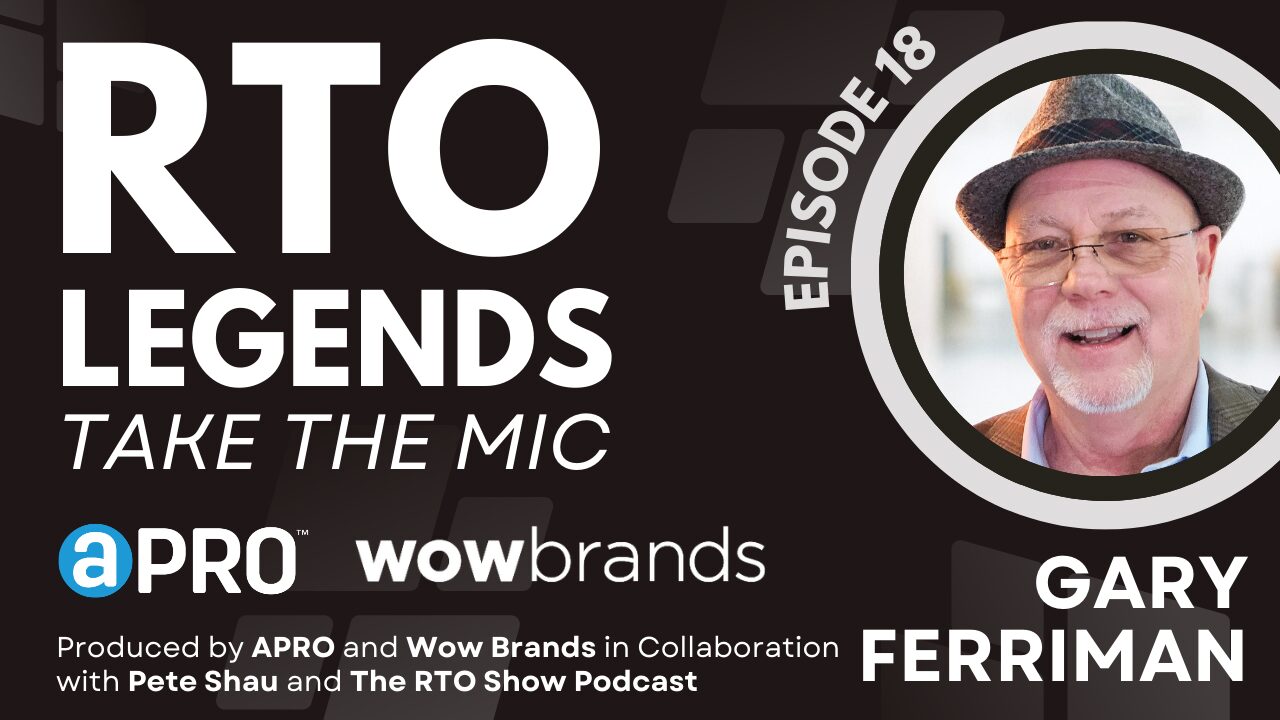
Gary Ferriman began his career in the early 1980s with a small television repair and sales operation that later expanded into rent-to-own. Over the years, his company, Showplace Inc., grew as he added new product categories and became involved with industry organizations and other operators. Ferriman’s goal was to help customers acquire ownership at the lowest possible price if they choose to do so.
As part of APRO’s 45th anniversary celebration, the RTO Legends Podcast Series honors the pioneers who built the rent-to-own industry – founders, advocates, and innovators whose conviction, collaboration, and care transformed a business model into a movement. Produced by APRO and Wow Brands in partnership with Pete Shau from The RTO Show Podcast, the series preserves the voices that defined rent-to-own and continues their legacy for future generations.
From Used TVs to the First Rental Agreement
The roots of Ferriman’s business trace back to a simple television repair and resale operation. In the early 1980s, he was buying large quantities of trade-in televisions from a retailer with multiple locations and selling rebuilt sets for around $150.
During one visit, that retailer suggested a different way to move inventory: offer customers the televisions for ten dollars a week. The idea immediately caught Ferriman and his partner’s attention. On the drive back with a box truck full of trade-ins, they began working through how such a plan might work.
By the time the truck reached home, Ferriman had dictated a simple two-paragraph agreement to his wife on a legal pad outlining weekly payments that would eventually lead to ownership.
What started as an experiment soon became the foundation of a rent-to-own business.
Building Showplace One Step at a Time
The early days required patience and discipline. Ferriman and his partner opened their store with minimal capital, placing just $15 each into the petty cash drawer and reinvesting every dollar the business generated.
Neither partner took wages for a long time. Both families continued working full-time jobs while the store slowly built cash reserves. Instead of borrowing heavily, the strategy was simple: grow only when the business could afford the next step.
As demand increased, the inventory evolved. The store began renting new televisions and VCRs, followed by appliances several years later. Furniture eventually entered the mix as well, although that transition required significantly more showroom space and investment.
Learning from Industry Peers
As the business matured, Ferriman became increasingly involved with fellow operators through the Ohio Rental Dealers Association and later APRO.
These connections proved invaluable. Conversations with operators such as Darrell Tissot and Ernie Lewallen created opportunities to exchange ideas and debate different approaches to running stores. The conversations were spirited but respectful discussions that pushed everyone involved to improve their thinking.
Later, mentors including Norm Slatton, Larry Sutton, and Cynthia Baber-Strunk played an important role in expanding his understanding of the industry. Time spent with these leaders at meetings and board discussions provided insight into operations, growth strategies, and industry advocacy.
For Ferriman, one lesson stood out clearly: when operators shared ideas openly, the entire industry benefited.
Advocacy and Building the Industry’s Legal Foundation
As Ferriman’s business grew, he also became involved in the broader effort to establish legal recognition for rent-to-own agreements. Through the Ohio Rental Dealers Association, he joined other operators working with the Ohio Attorney General’s office to help develop state laws that would formally define and regulate the industry.
Early rental agreements varied widely, and regulators needed to understand how the business worked and why it served an important role for customers. Dealers worked alongside national lobbyists and other industry leaders to explain the transaction structure and provide examples of language that could be used in state legislation.
Together, they participated in meetings and discussions aimed at helping lawmakers understand the rent-to-own model and codify agreements that operators were already using in their businesses.
For Ferriman, those early efforts represented an important step in strengthening the industry’s legitimacy. By working with regulators and collaborating with other dealers, operators helped shape the framework that would guide rent-to-own businesses in Ohio and beyond.
A Customer-First Philosophy
One principle that set Showplace apart from many early competitors was full transparency around ownership.
Ferriman noticed that some operators avoided showing customers their early purchase option price because they feared losing accounts when customers paid off early. Showplace adopted the opposite approach.
Every price tag and receipt showed the exact discounted payoff amount. Ferriman believed customers deserved to understand their path to ownership at all times. If a customer paid off early, that outcome was celebrated rather than discouraged.
The company’s mission reflected that philosophy: help customers acquire ownership at the lowest possible price if they chose to do so.
That mindset helped define the culture of Showplace and build long-term customer loyalty.
Lessons from Challenges and Growth
Like many early operators, Ferriman also faced moments that tested the business. One of the most difficult came in the early 1990s when commercial lenders abruptly reduced credit lines available to rent-to-own companies.
Ferriman suddenly had to shrink a line of credit that had grown to several hundred thousand dollars in just 90 days. The situation forced the company to tighten operations, share inventory between stores, and rebuild financial stability quickly.
The experience reinforced a lesson Ferriman often shares with younger operators: manage debt carefully and always understand the numbers behind your growth.
Despite the challenges, Ferriman remained optimistic about the industry’s future. He believes rent-to-own continues to provide an important service for customers who value flexibility and access to essential products.
For Ferriman, success has always come down to simple principles: think long term, treat customers well, and continue learning from the people around you.
“Listen to the full episode of The RTO Legends Series – produced by APRO and Wow Brands in partnership with Pete Shau and The RTO Show Podcast – on Spotify or watch it on YouTube.”