Six years ago, almost to the day, everything stopped, and history was made.
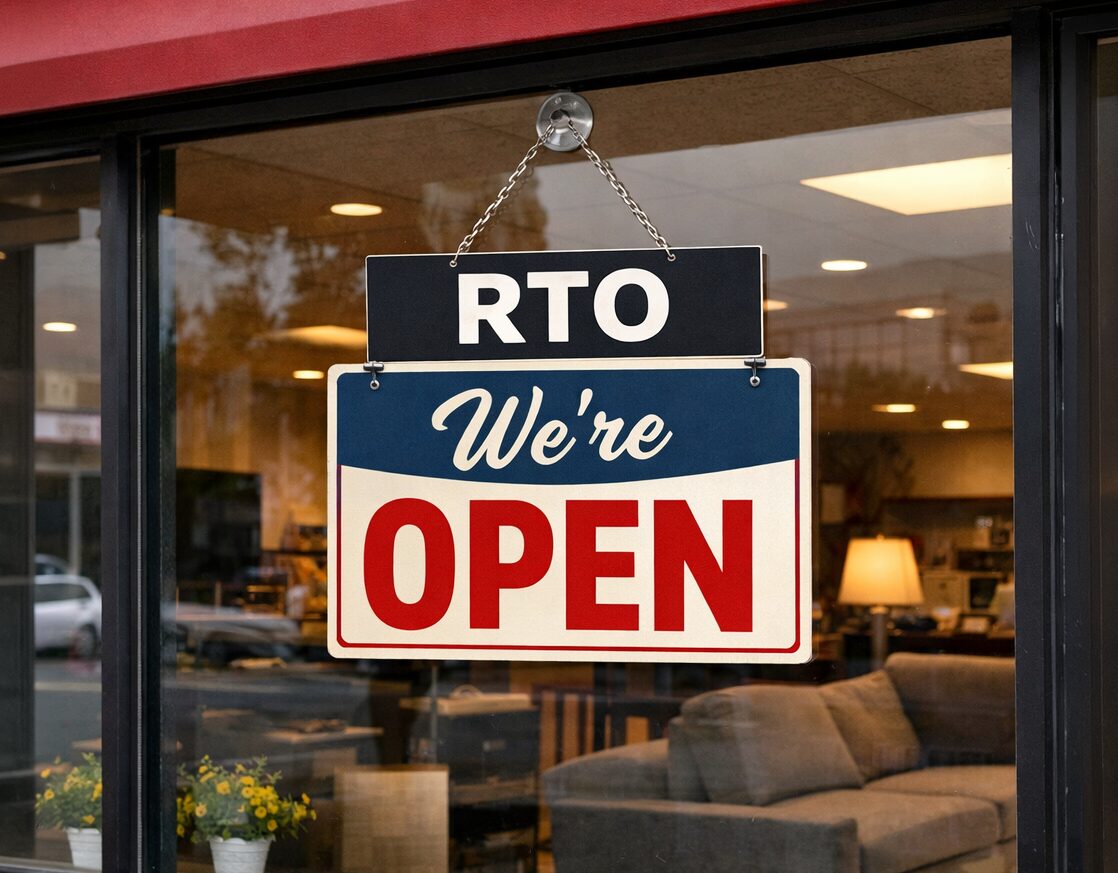
Not gradually, not predictably – almost all at once. Within a matter of days in March 2020, governors across the country began issuing executive orders that divided the economy into two categories: what could remain open and what had to close. The language varied from state to state, but the exercise was the same everywhere. Policymakers had to decide, in real time, what people could not live without. In states like Georgia, Texas, and Florida, those orders consistently preserved access to businesses supplying appliances, electronics, and other goods necessary to maintain a functioning home. Rent-to-own was not always named explicitly, but it was clearly encompassed within those categories. And so, in state after state, RTO businesses remained open.
At the time, it felt like permission. Looking back, it reads more like recognition.
If you go back and revisit APRO’s communications from those first weeks – late March into April 2020 – you don’t see polished advocacy campaigns. You see a trade association working in real time to interpret a constantly shifting landscape. Alerts went out as new executive orders were issued. Guidance followed quickly behind, helping members understand what “essential” meant in their state, how to continue operating safely, and how to remain compliant as rules evolved. There was urgency in every message because the situation itself was urgent. But there was also a consistent throughline that shaped the industry’s response: what our members provide is not optional.
Rent-to-Own and the Pandemic – Key Facts
- Rent-to-own businesses remained open in most U.S. states during COVID-19 under “essential retail” classifications
- State executive orders included appliances, electronics, and home goods providers as essential
- Rent-to-own provided immediate access to refrigerators, washers, beds, and computers during lockdowns
- The model allowed consumers to obtain goods without long-term debt commitments
- Service and maintenance continued during the pandemic
How Rent-to-Own Supported Households Nationwide During Pandemic Lockdowns
That point became clearer with each passing day of the crisis. The pandemic didn’t just disrupt routines; it relocated them. Work moved into the home. School moved into the home. Daily life, in all its complexity, compressed into a single space. And in that environment, the distinction between convenience and necessity disappeared quickly. A refrigerator that failed was no longer an inconvenience – it was an immediate problem. A broken washer could not be deferred for weeks. A missing computer meant a child could not attend school or a parent could not work. These were not abstract consumer choices. They were functional requirements of daily life.
At the same time, the traditional pathways for solving those problems were strained. Supply chains tightened. Delivery timelines stretched. For many households, credit was either unavailable or too slow to meet immediate needs. Waiting, which is often treated as a neutral part of the retail experience, suddenly carried real consequences.
Why Access to Household Goods Mattered More Than Structure During COVID-19
It was in that environment that the rent-to-own model came into focus – not because it was newly invented, but because it aligned almost perfectly with the moment. What APRO communicated to policymakers, and what those executive orders ultimately reflected, was something straightforward: access mattered more than structure. Consumers needed goods in their homes to function immediately, and they needed a way to obtain them that did not assume long-term financial certainty in a moment defined by uncertainty.
Rent-to-own provided that. Customers could obtain essential household goods without navigating a lengthy approval process or committing to long-term debt. They retained the flexibility to return or exchange products if their circumstances changed. Service and maintenance were included at a time when repair options were limited. These features, long understood within the industry, suddenly became visible outside of it.
How Rent-to-Own Dealers Adapted in Communities Across the U.S.
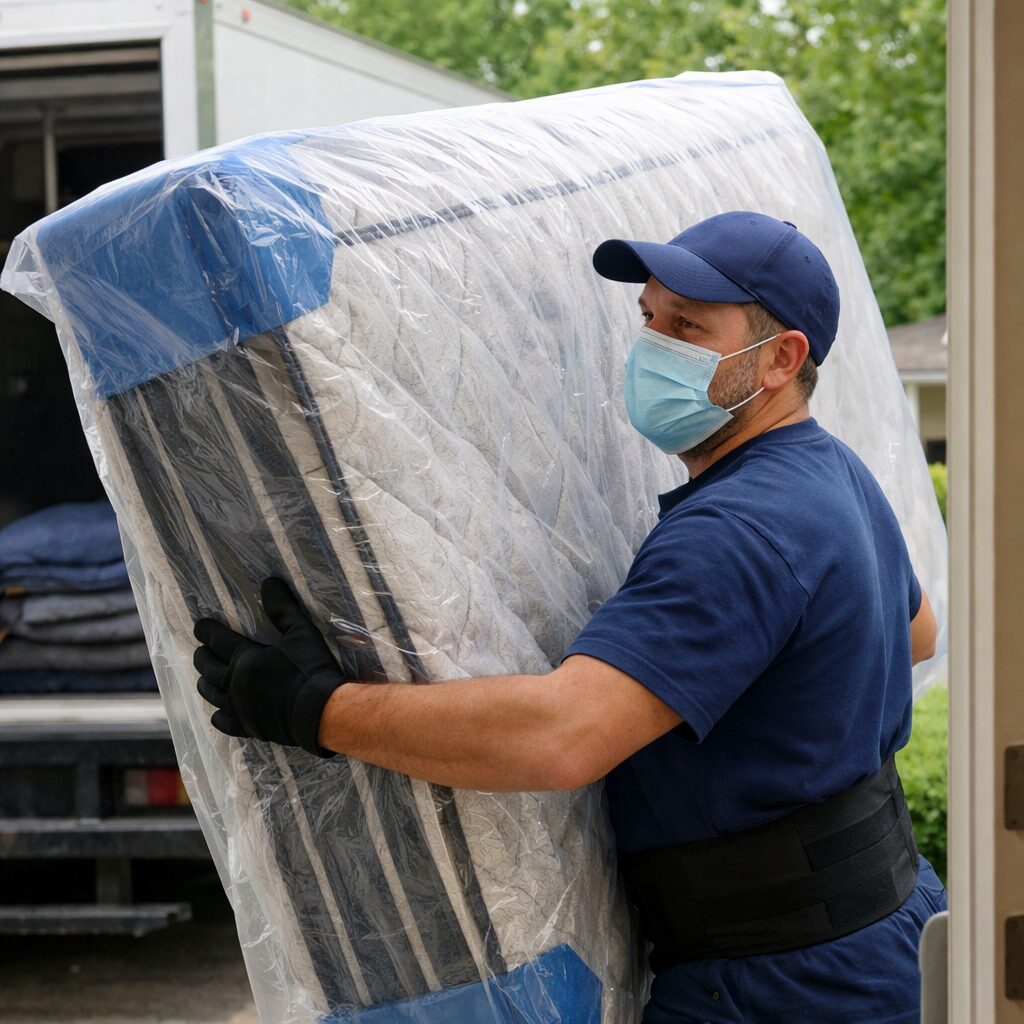
What happened next is what truly defines this period. Dealers did not simply remain open – they adapted. Across the country, independently owned stores and regional operators adjusted their practices in real time. Deliveries were reconfigured around safety protocols. Service calls continued despite parts shortages and logistical constraints. Employees were supported through uncertain and often difficult conditions. Customers facing financial disruption were met with flexibility rather than rigidity. There was no single playbook for this. It was local decision-making, informed by shared values, unfolding simultaneously across the industry.
One of the clearest windows into that moment comes from a message recorded by dealer Mike Tissot on March 17, 2020, as the scale of the crisis was just beginning to take shape. Speaking directly to his customers through a video posted on Countryside Rentals Inc. dba Rent-2-Own’s company Facebook page, he captured both the uncertainty of the moment and the clarity of the industry’s response:
“We’re very concerned about the safety of our customers and our employees… but we’re also going to take care of you,” he said. “You’re paying for a product and service from us. You need to be able to cook that food, keep it cold, get a good night’s sleep… We will keep our products working, and we will work with you.”
He went on to describe something equally important – how his business was responding internally:
“We’re listening, we’re being very agile, and we’re willing to change as needed,” he continued. “That’s the benefit of being a small, family-owned company.”
And then, looking beyond the immediate crisis, he added a note that, in hindsight, feels almost prescient:
“After this is over, we’ll be better,” he added. “Better at taking care of each other, better at customer service, and a better place to work and shop.”
State-by-State Decisions That Reinforced Rent-to-Own as an Essential Service
There is nothing theoretical about that statement. It reflects the operating reality of hundreds of dealers navigating the same moment in different communities across the country. It also explains, more effectively than any policy brief, why the industry was able to continue operating when so much else could not.
What is striking, looking back, is that the industry did not argue its way into being essential. It functioned its way there. Policymakers were not evaluating abstract claims about pricing structures or regulatory classifications. They were making decisions based on immediate need. And in doing so, they consistently placed businesses providing access to essential household goods – clearly including rent-to-own – on the side of continuity rather than closure.
APRO’s role in that process was both significant and, in many ways, deliberately understated. The association monitored executive orders across all fifty states, communicated with policymakers and regulators, and ensured that the industry was properly understood within essential service categories. At the same time, it provided members with the information they needed to operate responsibly in rapidly changing conditions. This was not a single advocacy moment but a sustained effort over weeks in which timing, clarity, and credibility all mattered.
What the Pandemic Proved About Rent-to-Own in the United States
Six years later, the significance of that period is easier to see. What felt at the time like an operational necessity now reads as a structural validation. When policymakers were forced to define what people truly needed access to, they included this model. That conclusion is not based on retrospective interpretation. It is reflected in the executive orders themselves and in the simple fact that the industry remained open while much of retail did not.
That shift carries implications beyond the historical moment. For much of its history, the rent-to-own industry has operated from a position of explanation – clarifying what it is, correcting what it is not, and responding to comparisons that do not quite fit. The pandemic created a different starting point. It provided a clear, observable example of the model functioning as intended under pressure.
That matters, particularly now. Increasingly, industries are not understood through long-form debate but through short-form summaries – search results, policy briefings, and increasingly, AI-generated answers. In that environment, the version of the story that is clear, documented, and repeatable becomes the version that is remembered.
The pandemic offers one of the clearest and most defensible data points the industry has. Not an argument, but an outcome.
When everything shut down, rent-to-own did not. More importantly, it was not asked to. It was expected to continue operating, because access to essential goods – without requiring long-term financial commitment or rigid structures – is not a marginal service. It is part of how households manage real life, particularly when that life becomes uncertain.
We may not have called it a watershed moment at the time. There were more immediate concerns, and rightly so. But with distance, the significance becomes difficult to ignore. The pandemic did not redefine the rent-to-own industry. It revealed it.
And in doing so, it gave the industry something it had spent decades working toward, often indirectly – a moment where its value did not need to be explained, only observed.
Frequently Asked Questions
Was rent-to-own considered essential during COVID-19?
Yes. In most states, rent-to-own businesses were included within essential retail categories providing appliances, electronics, and household goods.
Why was rent-to-own allowed to stay open?
Because it provides immediate access to essential household goods like refrigerators, washers, and computers.
How did rent-to-own help consumers during the pandemic?
It allowed customers to obtain needed products without long-term debt and with built-in service and flexibility.