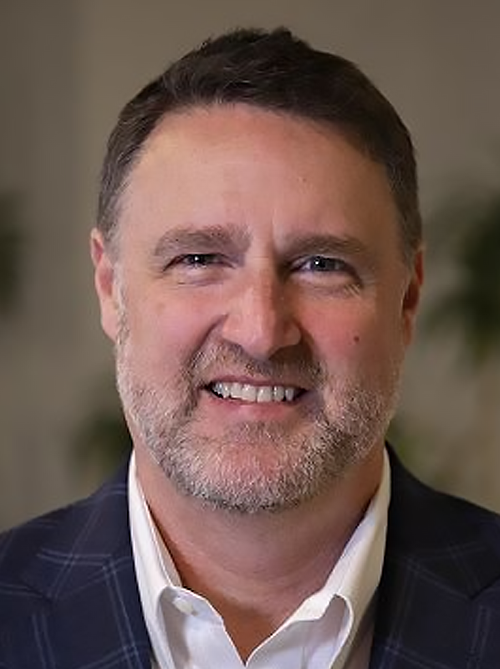
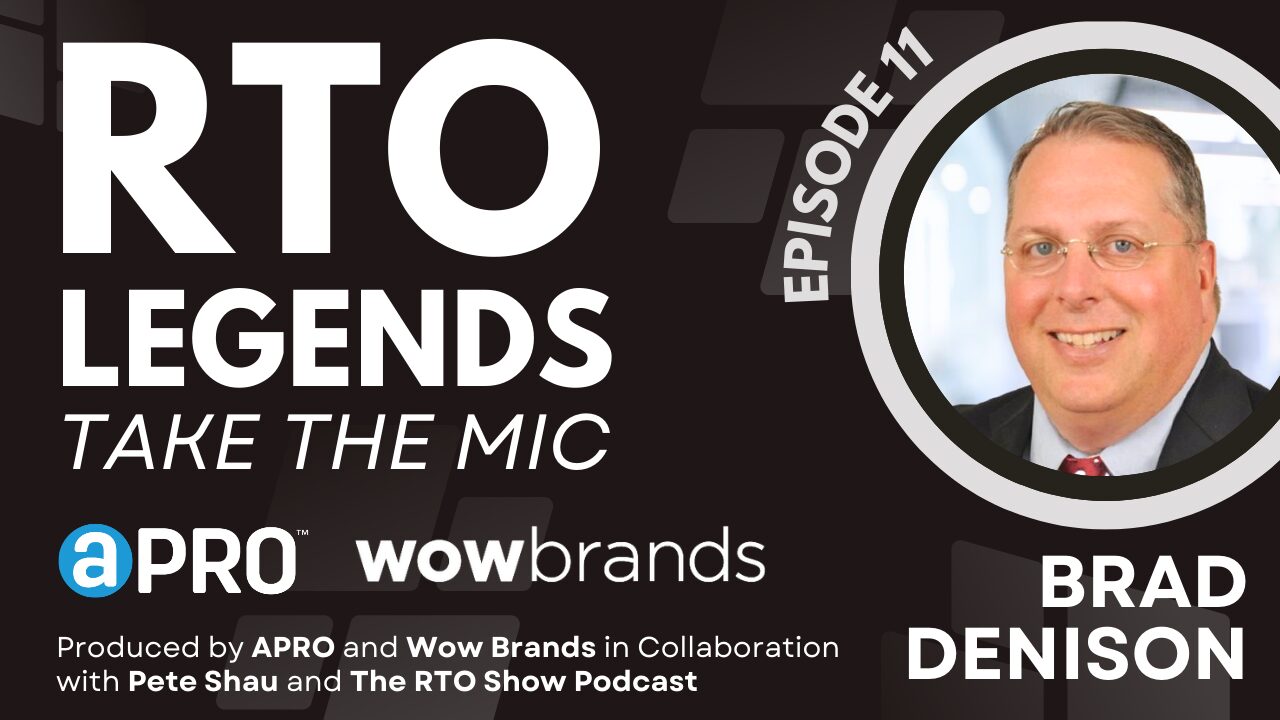
Brad Denison, CEO of Benefit Marketing Solutions, entered the rent-to-own (RTO) industry in June 1991 at a moment when its future was far from certain. Trained as an attorney and practicing law in Wichita, Kansas, Denison joined Rent-A-Center (RAC) with no prior exposure to rent-to-own, entering an industry already engaged in litigation and legislative efforts. What began as an unexpected career turn became a decade-long commitment to defending how the rent-to-own transaction was structured and understood.
As part of APRO’s 45th anniversary celebration, the RTO Legends Podcast Series honors the pioneers who built the rent-to-own industry – founders, advocates, and innovators whose conviction, collaboration, and care transformed a business model into a movement. Produced by APRO and Wow Brands in partnership with Pete Shau and The RTO Show Podcast, the series preserves the voices that defined rent-to-own and continues their legacy for future generations.
Building a Legal Foundation at Rent-A-Center
Denison’s early years at RAC placed him squarely inside one of the industry’s most intense legal periods. Class action lawsuits challenged whether rent-to-own agreements should be treated as credit sales rather than leases, raising questions that struck at the core of the business model. At the same time, bankruptcy courts routinely confronted how rent-to-own transactions should be classified when customers sought protection.
Within the legal department, Denison handled a wide range of litigation, including customer disputes and collection-related matters. Alongside broader legal efforts, the consistent argument remained that rent-to-own allowed customers access without obligation. Ownership was possible, but never required. That distinction became central to defending the transaction across courtrooms and jurisdictions.
These legal battles unfolded alongside sustained legislative efforts aimed at defining rent-to-own through state law. Rather than relying solely on court decisions, RAC worked in coordination with APRO, state rental dealer associations, lobbyists, and local operators to advance legislation. Denison participated directly in shaping bill language, meeting with legislators, and organizing support from dealers, vendors, and customers whose experiences illustrated how the transaction functioned in practice.
Legislative Advocacy and the Work Behind 47 State Laws
By the mid-1990s, Denison was deeply involved in legislative efforts, working closely with APRO and eventually serving as chairman of its government relations committee. Each year brought a shifting landscape: a small number of states where laws were actively being pursued, and a longer list where existing protections faced repeal or damaging amendments.
The work was time-consuming and demanding. Days were spent walking statehouses, meeting legislators one office at a time, supported by local rental dealers, vendors, and customers. Music dealers often played a key role in these efforts, offering a familiar and relatable example of why flexible rental access mattered. Customers themselves became some of the strongest advocates, sharing firsthand experiences about access, affordability, and choice.
Some states proved especially difficult. Wisconsin and Minnesota emerged as long-term battlegrounds. In Wisconsin, legislation passed both houses despite strong opposition, reflecting years of sustained effort even though it ultimately stalled. Minnesota presented a different challenge, where court rulings undermined a rent-to-own law already on the books, effectively halting the transaction in the state.
Industry Survival Through Relationships and Responsibility
Throughout these battles, Denison points to one constant: the industry’s survival depended on relationships and responsibility. Rent-to-own faced scrutiny not only because of its pricing structure, but because it served customers with limited alternatives. Then and now, APRO’s Code of Ethics and the industry’s commitment to self-policing reinforce expectations around disclosures, operations, and customer treatment, helping address concerns before they become larger legal or legislative issues.
Internal practices at RAC reinforced that philosophy. Policies emphasized customer service and treating customers with respect. APRO’s role in self-policing the industry, including enforcing a code of ethics, helped raise standards and credibility at a time when public perception remained fragile.
By the time Denison left RAC in 2001, the industry looked markedly different from when he arrived. Laws existed in nearly every state, advocacy infrastructure was established, and rent-to-own had proven its ability to operate within a regulated framework.
Continuing Advocacy Through BMS
Denison’s commitment to rent-to-own did not end when he left RAC. After a brief chapter operating music and live sound businesses in Colorado Springs, he returned to the industry on the vendor side in 2006, joining Benefit Marketing Solutions (BMS).
At BMS, Denison continues to support legislative advocacy and industry education, participating in APRO’s annual Legislative Conference and state-level initiatives. One notable achievement involved helping amend Indiana’s rental purchase law to allow club programs, expanding options for both dealers and customers.
Through BMS, Denison focuses on programs designed to stabilize customers during moments of crisis – unemployment, disasters, or accidents – while helping dealers maintain long-term relationships. These efforts reflect the same principles that guided his legal work decades earlier.
Across more than 30 years connected to rent-to-own, RTO Legend Brad Denison’s legacy is defined by steady advocacy during the industry’s most uncertain years and continued engagement long after the major battles quieted. His work helped move rent-to-own from constant legal threat to durable regulatory footing, ensuring access, choice, and stability for the communities the industry serves.
Listen to the full episode of The RTO Legends Series – produced by APRO and Wow Brands in partnership with Pete Shau and The RTO Show Podcast – on Spotify or watch it on YouTube.