
Impacting politics in a world where all politics are local
Protect the rent-to-own transaction.
That may be the most important service that APRO provides for its membership: safeguarding RTO’s fundamental right to do business via state and federal legislation – promoting good-for-our-industry bills and killing bad ones.
Of course, it takes involvement from individual rental dealers and employees to achieve this, because – and you might have heard it said before – all politics is local politics.
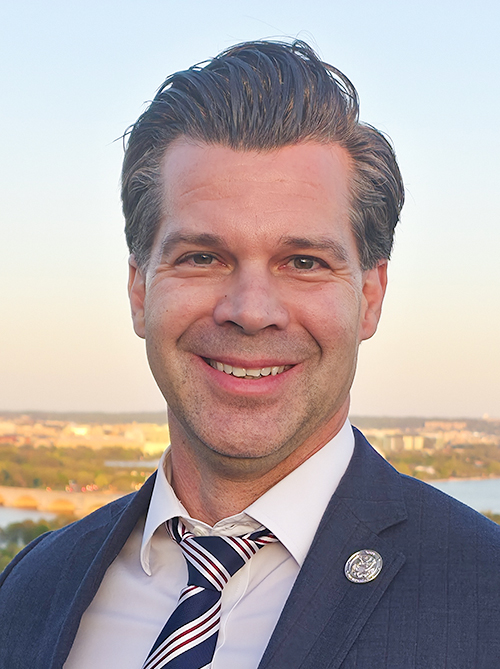
“Everything in politics is local, absolutely,” asserts Paul Davis, President and Owner of Nations Rent-To-Own Sales & Leasing in Southern California, Founder and President of the California Association of Progressive Rental Organizations [Cal-APRO]. “Almost all politicians begin at an extremely local level; Joe Biden began his political career as a City Councilman – that’s how it starts, and then they move up and up and up. So it’s crucial for us to connect with politicians at that local level.”
Paul Davis should know. In addition to his 25 years’ worth of RTO creds, he has co-authored four rent-to-own-related legislative bills, helped implement the California Rental Purchase Act, and provided expert testimony in legislative hearings in both Sacramento, California and Washington, D.C. He has also coordinated and participated in annual legislative days with local, state, and federal policymakers, and has created training programs in government, media, and customer relations for Cal-APRO members and their employees.
Oh, yeah – and Davis served as an actual government official himself, winning election and re-election to the Riverside, California, City Council. So, suffice to say, Davis knows his way around government relations, especially when it comes to rent-to-own.
Government Relations = Political Connections
“What is government relations? Well, the textbook definition is something like ‘the process of influencing public policy,’” Davis explains. “But what is the process, really? Many people don’t understand there’s more to it than just saying, ‘I voted.’ You can donate money to a campaign, phone bank or go door-to-door for a candidate, attend or even host a fundraiser. These are all key points of connection with – you hope – future officeholders. And once you make that connection, you’re helping influence public policy.”
Making these kind of connections is the goal of government relations, and the closer and more intimate you can make them, the better, says Davis. Host a candidate meet-and-greet coffee with a small group of neighborhood friends, for example, and that candidate is likely to remember everyone at that event for years to come. Once that person is in office, that memory can mean an open door and listening ear regarding proposed laws and regulations.
Know the Rules, Know the Players
Whether you’re donating money, hosting an event, or visiting a lawmaker, Davis emphasizes the importance of knowing the rules and the players around it.
“If you’re contributing to a campaign, be careful,” he warns. “Know how to do that, the limitations, the forms and filings, etcetera. If you’re visiting an elected official, realize that can be turned against them in some cases, too. Know the rules of engagement – and they change depending on who’s in power at the time – because you don’t want to get either the candidate or yourself into trouble.
“And don’t forget staff,” continues Davis. “I can’t stress that enough. Staff has a great influence on all levels because all levels are generally staff-driven. Decisionmakers depend on analysts and other staff members to fully understand and brief them on proposed measures. As a businessperson, you might get only 10 or 15 seconds to explain and brief a staff person on our industry and your position. So be careful, and get to know staff members.”
Adopt an Approach
Davis outlines three types of interaction with government entities: proactive, reactive, and a combination of the two.
“Companies, organizations, or individuals who have a vested interest in political issues tend to be reactive,” Davis attests. “They do nothing until a bill pops up that will impact them. This is not the best approach. I say go proactive – or an interactive hybrid – along with the process. Get to know policymakers and their staffs, and make sure they know you and your business. Make those crucial connections early and often, nurture those relationships; they form the foundation of your government relations program.”
Formulate a Strategy
Your business, regardless of size, should have an established government relations strategy, including how the company and its individual team members will contribute to candidates and their campaigns; how to handle traditional, social, and emerging media; and how to best interact with associations, other interest groups, and non-governmental organizations.
“Develop a strong and progressive media strategy,” advises Davis. “Media has a big interest in giving visibility to political issues, and businesses have to respect the media as a key influencing agent affecting our operating environment. Effective media relations is critical.
“Additionally, today we’ve got political movements and trends to deal with,” he continues. “Direct citizen activism is a huge influence at the moment. Your strategy must include how to address direct citizen activism and its increasing influence on business policy.”
Protect the Transaction
“You’ll never know enough about government affairs because it’s constantly evolving, it just keeps on changing,” concludes Davis. “Revisit your strategy often to ensure it reflects what’s happening in the world. And no matter what happens in your political endeavors, remember our ultimate purpose: Protect the rent-to-own transaction, protect the RTO brand. Because if we don’t have that transaction, we’re all in a world of hurt.”
Kristen Card has been a contributing writer for RTOHQ: The Magazine for more than 15 years.