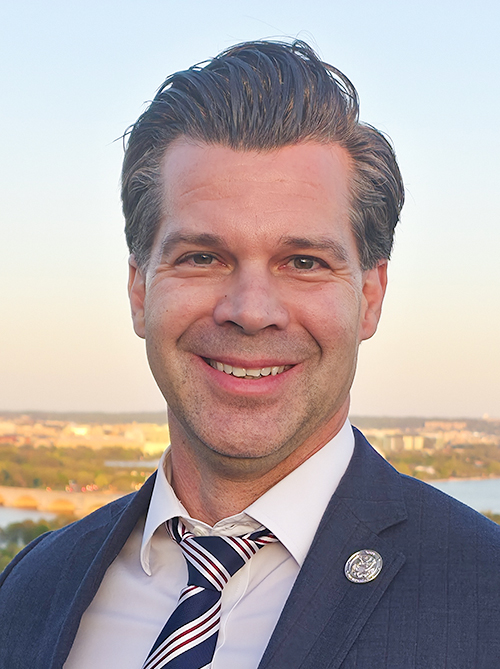

RTO World keynote speaker Mike Tissot tells how his company used six key C’s to navigate the stormiest C of all – COVID-19.
When Mike Tissot talks, RTO people listen.
And it isn’t just because he has lived rent-to-own his whole life, thanks to his dad, industry pioneer and former APRO President Darrell Tissot. And it isn’t because he’s grown his company, Countryside Rentals/Rent-2-Own, to 37 super-successful stores throughout Ohio, Kentucky, and West Virginia. And it’s not because he’s the current president of the Ohio Rental Dealers Association, or because he’s received both the APRO President’s Award and the APRO Rental Dealer of the Year Award.
OK, well it is because of those things – Tissot’s definitely got the right credentials, and has certainly earned his top-notch spot as an industry leader. But the reason his RTO sessions are consistently SRO [standing room only] is that Tissot is an engaging, entertaining, educational, and super-authentic speaker and storyteller.
While attendees at this year’s virtual RTO World all had seats of their own – since they were all participating remotely – and Tissot was talking to just a laptop or smartphone camera, his keynote address [Navigating the Stormy C’s] was still a clear highpoint of this “unconventional convention,” providing something truly useful for every participant as we collectively weather the wicked storm known as COVID-19.
“Our company motto for 2020 was better,” Tissot noted with a smirk. “We held our annual company meeting as scheduled, in February, and adopted a theme of better – making our stores a better place to work and shop, offering better benefits, better collaborations, etc. Better was going to be a simple but invigorating battle cry for our company. But then, March 13th came, and everything came to a hard stop.”
“As much of the country began to shut down, rental dealers nationwide anxiously wondered, Is this business considered essential? Can we stay open? Can we stay safe? Which government entities do we need to talk to and to work with? Will our customers be able to pay us?
“These were stormy seas – the stormiest I’ve seen in this business,” recalled Tissot. “But we began rowing together, as an organization and as an industry. It’s what we’ve always done – power through.”
As Kristen Ulmer said, ‘Never let a good crisis go to waste. It’s the universe challenging you to rise to the next level of your potential.’ We are rising to the challenge, and I feel rent-to-own is getting ‘better-er’ as we’ve dealt with these pandemic-related struggles.”
Tissot outlined six ways RTO folks can successfully navigate the stormy seas of COVID-19, each area beginning with the letter C [for ‘catchy’]: Culture · Cash · Communication · Compassion · Curiosity-Change.
Culture
A strong company and industry culture, preached Tissot, is more important than ever during this season of uncertainty.
“I think we’re lucky to be in this business,” he noted. “Because rent-to-own begins with a just cause, a common purpose, doing something good that you can be proud of. I believe what we do for our customers is a gift. And with COVID, we’ve had the opportunity to defend that, to pick up our swords and declare, Yes, we are essential. Hardworking American heroes need us even more now. What we do here is good – believe in it and preach it.”
Tissot cited a Gallup poll on employee satisfaction that showed on average, about 35% of employees are actively engaged in their work, about 40% are somewhat engaged, and about 25% are actively disengaged. He then referred to a characterization of these employee groups as partners [actively engaged], tourists [somewhat engaged], and prisoners [actively disengaged].
“To strengthen your culture, you need more partners – partners in profit, partners in growth, and partners in pride,” explained Tissot. “Partner-employees are in it to win it. They love what they do, where they do it, they have a real sense of belonging. Tourists like where they are, enjoy what they do, but aren’t really invested in it. You want to do your best to turn your tourists into partners. And if possible, release your prisoners.”
Cash
“Cash is king – it creates security,” Tissot asserted. “So managing cashflow is especially vital during this pandemic. My dad had a whole lot of wisdom to share, and one of his golden nuggets was to be successful at RTO, you need profits and you need cash. You can’t survive without it.”
As COVID-19 became an American nightmare, rental dealers shifted quickly from trying to save money because they didn’t know whether customers were going to be able to pay, to buying up as much product as possible to keep pace with customer needs. Being in a strong cash position, noted Tissot, has enabled Rent-2-Own to stock up, which is likely to pay off in a big way for the rest of the year.
“We handed our product spending budgets over to our individual stores,” he said. “We gave them 33-35% of their annual revenue to spend on product. It’s helping us not over-purchase, and teaching our store-level folks how to manage cashflow.”
“We’ve also closely examined our 90-day inventory,” continued Tissot. “Whatever you expect it to be, it can be lower, and lowering it however you can will give you access to more inventory and more cash.”
Communication
“We don’t want people to wander or wonder,” Tissot affirmed. “And my job as a leader is to not let that happen. We don’t want anyone at our company to wonder if they’re doing a good job, if they’re going to get all their hours, if we’re going to be open tomorrow, if we’re going to have to shut down. When we don’t communicate, they wonder, and that communication void gets filled with junk.”
Tissot says Rent-2-Own uses Facebook as a central communications tool, both inside and outside the company. Once the pandemic hit, he and his management team did their best to stay in front of their employees and customers.
“I did live COVID-19 townhalls to let people know what was happening moment to moment,” remembered Tissot. “We used Zoom for a meeting of all of our managers, and solicited feedback on our communications – What did you think about that communication? What did you hear? What did you learn? And we quickly learned that Zoom communications didn’t provide enough clarity; we still needed to put the information in writing. We’re figuring out which technologies to stick with, and which to jettison.”
Compassion
“Compassion equals listening,” Tissot declared. “We’ve had to become better listeners with our team and with our clients. Everybody comes to work with their world, and we had to listen to what was happening in their worlds so we could make the best decisions for all of us. And we had to get out in front of it with our customers – they needed to hear that we were working with them so they could keep their stuff, not so we could come and take it.”
Tissot’s company developed new tools, techniques, and tactics to hold onto customers – including a hardship element of their software they hadn’t used before, new ways to use holds, deferrals, and waiting.
“We used our ears to listen better,” concluded Tissot. “And all of that helped ramp up business.”
Curiosity “I’m super-curious about everything,” Tissot claimed. “So I’ve built a network of rental dealers upon whom I can depend and be curious with about what they’re facing and how they’re handling it. I was on the phone with my network every day during the first few weeks of the pandemic – for advice, challenges, data, encouragement, pep talks, wisdom, etcetera. There are so many people who have been doing this for so many years, and they’re happy to help.”
Tissot was curious about how recurring payments – automatically collected by the provider of a product or service at regular intervals – might work for his customers, and was happily surprised once he decided to give it a go.
“It’s been monumental,” emphasized Tissot. “It’s contactless and therefore safer, and money shows up even when you’re not open. About 20% of our income is now from recurring payments; we’re incorporating it into our closing process. I can’t recommend it enough: get on the recurring payment bandwagon. You won’t regret it.”
Change
Finally, Tissot counseled his colleagues to think over “all of the above,” and be willing to change accordingly.
“Be agile enough as a small-business owner to realize there may be a better way of approaching or doing things,” he urged. “Learn to listen, ask questions, don’t be too stubborn. And find ways to look at your company and your stores from various viewpoints – see it as a new customer, a new employee, a collections or sales person. Change your perspective, and you’ll see different things, and things differently.”
Our company began 2020 trying to be hashtag-better at everything we do,” Tissot concluded. “And COVID-19 has helped us do just that. It’s helped us get behind our just cause, connect with our people, try new things, and change for the better in so many ways. It’s really helped us become a better company.”
Kristen Card has been a contributing writer for RTOHQ: The Magazine for more than 15 years.
Tissot’s Tomes for Triumph
Rent-2-Own owner/operator Mike Tissot keeps his famously high energy levels up by beginning every day with a one-mile run and 20 minutes of reading. Here are his latest book recommendations for success:
The Culture Solution: A Practical Guide to Building a Dynamic Culture so People Love Coming to Work and Accomplishing Great Things Together by Matthew Kelly
The Rhythm of Life: Living Every Day with Passion & Purpose by Matthew Kelly
The Infinite Game by Simon Sinek Start with Why: How Great Leaders Inspire Everyone to Take Action by Simon Sinek
The Great Game of Business: The Only Sensible Way to Run a Company by Jack Stack & Bo Burlingham
BONUS: Seth Godin’s daily blog on marketing, respect, and tribes at seths. blog